| OCR Text |
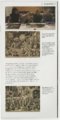
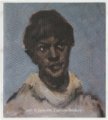
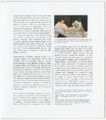
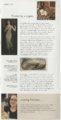
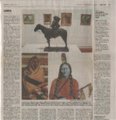
Show Lynette Yiadom-Boakye is British and has never lived in Africa. Her parents have not lived in Ghana for the past forty years, and she does not claim a close relationship to the country. However, she does acknowledge a connection to a Ghanaian way of thinking and seeing that influenced her upbringing .4 "When the issue of colour comes up," the artist says, "I think it would be a lot stranger if they [her painted figures) were white; after all, I was raised by black people. " 5 In this sense, her depiction of black figures is a representation of normalcy rather than defiance or celebration . However, when considering the history of portrait painting and black representation, which Yiadom-Boakye's work clearly references, her ordinary subject matter assumes an additional, subversive role. "This is a political gesture for me," she says. "We're used to looking at portraits of white people in painting . " 6 Yiadom-Boakye recognizes painting's ability to investigate subject- and object-hood, visibility and invisibility. She is comfortable using art history's visual language, and by repurposing familiar tropes, particularly those of portraiture, she subverts traditional signifiers of power. Historically, portraits have conveyed the wealth and authority of their subjects through poses projecting confidence and strength and through clothing, accouterments, and surroundings strategically indicating social status and superiority. However, representations of people of African descent in literature and art history often have been examples of inferiority or spectacle, depicted as possessions, symbols of hypersexuality, or the antithesis of European civilization-the romanticized "noble savage." Conceptually, Yiadom-Boakye's black figures reclaim the strategies of portraiture and interrogate the politics of representation while her use of paint and color gives a literal representation to the question of visibility. In the mid-nineteenth century, Manet's Olympia, 1863 (fig. 2) caused quite a stir. A naked Fig 2. Edouard Manet. Olympia, 1863. Oil on canvas. 103.5 x 190 cm . Musee d'Orsay, Paris, France . Image courtesy Giraudon I The Bridgeman Art Library white prostitute stares out of the painting, directly engaging the viewer with her gaze while a black, female servant presents flowers from a client . As art historian Sander L. Gilman explains, the nineteenth century's misinformed theories of racial evolution situated the black servant as a symbol of hypersexuality and illness 7 , both moral and physical . Yiadom-Boakye has revisited this seminal painting at least twice-each time removing the servant figure entirely-by painting a darkly dressed but equally confrontational black woman (fig. 3) and then a semi-clothed black man (fig. 4) in the prostitute's reclining pose . Although this race/gender swap certainly confronts outdated racial perceptions and the politics of desire, Yiadom-Boakye's consideration of the servant is perhaps a more compelling commentary on subject-hood . Though she has completely omitted the servant from this particular revisionist work, she continually mimics Manet's • Hans Ulrich Obrist, "Hans Ulrich Obrist Interviews the Afropolitan Artist Lynette Yiadom-Boakye ." Kaleidoscope, Summer 2012, Issue 15, pp .102. 5 Higgie, Jennifer. "The fictitious portraits of Lynette YiadomBoakye ." Frieze Magazine, April 2012, Issue 146. pp. 91 . 6 Ibid. 7 Gilman, Sander. "The Hottentot and the Prostitute: Toward an Iconography of Female Sexuality." Difference and Pathology: Stereotypes of Sexuality, Race, and Madness. Ithaca, NY: Cornell University Press. 1985. pp . 101. |