| OCR Text |
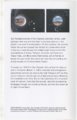
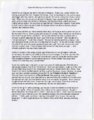
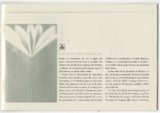
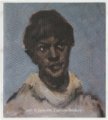
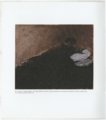
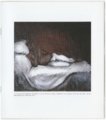
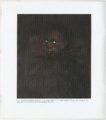
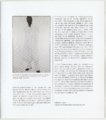
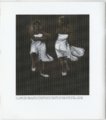
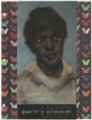
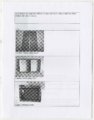
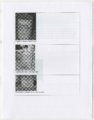
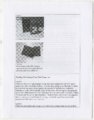
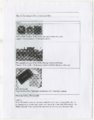
Show salt 7: Lynette Yiadom-Boakye Lynette Yiadom-Boakye paints people, but not real ones . Instead of focusing on the needs of a living subject, she partners with paint, respecting and responding to its formal qualities to elicit a rendering of the world she sees and experiences . Her subjects, almost always black figures, are invented, inspired by various source material including memories, the history of art, found images, literature, and whatever is on her mind that day. In her words, "it might be something as simple as the position of a woman's wrist as she turns a book page on the Underground that I try to remember and re-draw later or an image of a seascape in a magazine that I want to cut out and keep." Yiadom-Boakye's style shows her deep understanding of, and engagement with. the Western history of painting . In a sense. her work is a pastiche of earlier artistic styles. Her shadowy backgrounds and apt use of contrasting color to attract the eye seem indebted to Francisco Goya (Spanish. 1746-1828), particularly his Black Paintings (1819-1823) . Her attention to the materiality of paint and her twodimensional treatment of figures is reminiscent of Edouard Manet's (French, 1832-1883) handling of paint and subject matter. Her depiction of psychological complexity and movement call to mind the masterpieces of Edgar Degas (French, 1834-1917), while her simplified backgrounds and swaths of color, which loosely define space, pay homage to the work of Paul Cezanne (French. 1839-1906). Like these artists, Yiadom-Boakye is less concerned with perfect anatomical representation or the rules of the academy and is more interested in making the esoteric qualities of life tangible through paint. This incompleteness-this rejection of realism-is a tenet of modernism that ultimately led to February 21 through June 23, 2013 abstraction. But. in Yiadom-Boakye's paintings, this subtle digression from realism seems anachronistic . Her new subject matter alters the mood and connotations of the early modernist techniques, highlighting modernism's flawed perceptions of race. In addition to borrowing from the history of art. Yiadom-Boakye appropriates poses and compositions from documentary photographs of the civil rights movement and from regal African portraiture as well as from images culled from today's glossy magazines. She has no interest in reproducing these source images directly, however. and maintains they are "not meant as an explanation of the paintings." Her invented subjects are actually amalgamations of various faces. body parts, and settings that the artist synthesizes into composite figures, building her characters as she paints . "I often have a vague idea of what I want the face to do, but it's so hard to identify because I don't want it to get too firm," she explains. 1 This general lack of firmness leaves very little to suggest a potential narrative, aside from the artist's formal considerations of color and composition. Her figures exist in a timeless, placeless space. Wearing simple. generic clothing and inhabiting indistinct environments devoid of objects, they are detached from anything that could link them to an actual era or location . Yiadom-Boakye intentionally omits visual cues that might hint at the age, economic status. or even the gender of her characters. Many are posed statically, but even the activities of those in motion are ill defined. Are the figures in A Toast to the Health Of. 2011 (fig . 1) holding hands? Or is one trying to pull away from the other? Bollen. Christopher. "Lynette Yiadom-Boakye. " Interview Magazine. Dec 2012 . 1 |