| OCR Text |
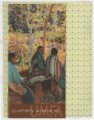
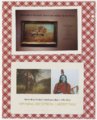
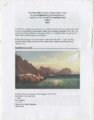
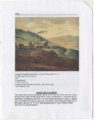
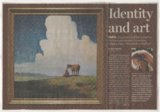
Show Dale William Nichols (1904-1995) I. The Life and Career of Dale Nichols • Life o Born in David City, Nebraska (a small town) • Career o Printmaker, illustrator, watercolorist, designer, writer and lecturer o Studied at the Chicago Academy of Fine Arts, the Art institute of Chicago with Carl Werntz, and with Joseph Binder in Vienna. o During his career, he had eighteen solo exhibitions and exhibited in more than eighty regional and national exhibitions (including the Century of Progress in Chicago and five World's Fairs). o His painting The End ofthe Hunt (1934) won the Hearst Award at an exhibition at the Art Institute of Chicago. o The first Carnegie visiting professor of art at the University of Illinois (1930-40). o Succeeded Iowa artist Grant Wood as art editor of the Encyclopedia Britannica (1942-48). o As an early champion of good art in advertising and illustration, he created artwork for direct-mail industrial advertising (1930s and 40s). • His books A Philosophy ofAesthetics (1935) and Figu.re Drawing (1957) elaborate on his theories of artful illustration. o In the 1960s, Nichols traveled to Guatemala where he was much impressed by the lushness of the landscape, and by Spanish and Mayan culture. Even as he incorporated Guatemalan themes into his artwork, the artist still often painted from memory scenes of the rural Midwest. II. Historical Background: Modernism in the Early 20th Century • Between the two World Wars (1914-18, and 1939-45 respectively), the United States suffered a financial depression (1929-39). This was an era of hardship socially, politically and economically, felt by the country at large as well as the individual. • Modernist art tended to value style and ideas over subject matter and visual narrative; art was often abstract and highly conceptual (Picasso, Braque, Mondrian, Duchamp). o The art scene was international and metropolitan (Paris and New York City were global hubs of artistic production) o But, there was a popular American backlash in the 1930s against Europe and "the big city," which were viewed as out of touch with the average individual (different moral values, economic goals and needs). • Edward Hopper: • "The question of value of nationality in art is perhaps unsolvable. In general it can be said that a nation's art is greatest when it most reflects the character of its people. The domination of France in the plastic arts has been almost complete for the last thirty years or more in this country. If an apprenticeship to a master has been necessary, I think we have served it. Any further relation of such a character can only mean humiliation to us. After all, we are not French and never can be, and any attempt to be so is to deny our inheritance and to try to impose upon ourselves a character that can be nothing but a veneer upon the surface (Oral History Interview with Edward Hopper, June 17)." |