| OCR Text |
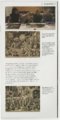
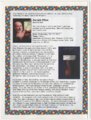
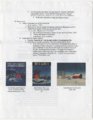
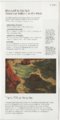
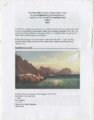
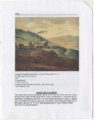
Show September. For the next 11 years he helped pay his rent by painting scenery for the Salt Lake Theater, and he used sketches from the trek west and drawings of Utah landscapes to create paintings that are more fluid and painterly than those of other Utah artists of his time. W eggeland's greatest strength as an artist lay in his ability to record everyday life. He used this strength in producing murals for four LDS temples: St. George, Logan, Manti, and Salt Lake, with his best work in the Salt Lake Temple. Although better than Christensen at composing figures, he was not as effective at producing solidly modeled forms nor at conveying personality. On the other hand, W eggeland was a great teacher of art and a founder of the Deseret Academy. Later he was called "The Father of Utah Art," and was one of the most important influences on the second generation of Utah artists: J. T. Harwood, Edwin Evans, John Hafen, Lorus Pratt, and Phineas H. Young. Because of the quality of his work, his progressive style, and his influence on other artists, Dan Weggeland was probably the most important early Utah painter. He continued to teach in Utah and to exhibit nationally, winning gold and silver medals at the Chicago Columbian Exposition of 1893. He stayed current with artistic direction on a national level and was greatly respected by younger artists, many of whom he influenced to study in Paris, helping to establish an important tradition of European-trained native Utah artists. Biography courtesy of The Springville Museum of Art. |