| OCR Text |
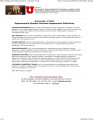
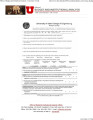
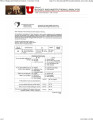
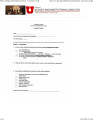
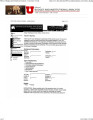
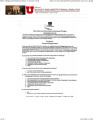
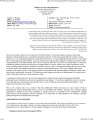
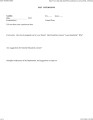
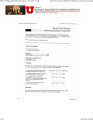
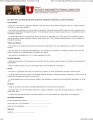
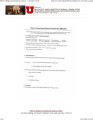
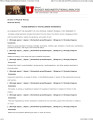
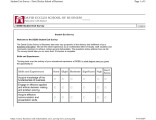
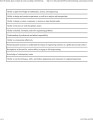
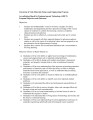
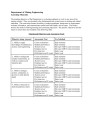
Show The Profile Attributes of the Undergraduate Business Student at the Uni... http://www.obia.utah.edu/2006Accred/soa/learning_outcomes/sob.loc.htm Undergraduate Business Students 1. Critical analysis - Students exhibit an understanding of the economic and social implications of doing business globally, mastery of the functional areas of business, including currently relevant business models, combined with an appreciation of the wisdom gained by studying a broad range of academic disciplines and by interacting with a diverse student body and faculty. 2. Effective communication - Students demonstrate an ability to write and speak clearly and to work within group settings in order to effectively accomplish personal and professional goals. 3. Professional integrity - Students develop a sense of the importance of values and ethics in business, which, in turn, helps evolve their own professional integrity. 4. Entrepreneurial spirit - Students possess the ability to effectively apply their learning experiences to ambiguous and competitive business environments, as well as display initiative, confidence, and competence. Masters Programs The learning goals of the DESB Masters Programs include several key results. The rationale for each and preliminary thoughts regarding their assessment are elaborated below. MBA students will: 1. Acquire knowledge of the fundamentals of business and engage in effective, applied, ethical decision making and problem solving; 2. Acquire effective communication and presentation skills; 3. Acquire leadership and entrepreneurial skills; 4. Acquire effective interpersonal and team skills. 1. Applied Decision Making and Problem Solving: Students should be able to apply fundamental business knowledge in real-world settings, including the ability to generate and analyze market information, make decisions, and solve problems. Emphasis is on state-of-the-art, customer-oriented, ethical business practices to improve company performance in real-world, time-sensitive, volatile environments. Such knowledge and abilities should be demonstrated in both individual and team-oriented contexts. Measurement: Field study performance, Lassonde Center Participation, UTEC participation & performance, possible case competition. Unit-of-analysis: Student 2. Communication & Presentation Skills: Students should be able to produce written communications and oral presentations that are informative, impactful, well organized, concise, and persuasive. Measurement: Field study performance, class presentations, possible case competition, mock-interview performance. Unit-of-analysis: Student 3. Leadership and Entrepreneurial Skills: Each student should engage in at least one leadership or entrepreneurial activity during their tenure in the program that involves starting, running, operating, managing, or otherwise leading an enterprise or venture of some form with the goal of improving their leadership, entrepreneurial, and teambuilding skills, and benefiting the David Eccles School of Business community. Examples would include holding student government office, founding or leading student clubs or other organizations, organizing events, presentations, fundraisers, volunteer projects, increasing alumni and recruiter involvement with the school, etc. Students are encouraged to involve both internal and external parties in such ventures. Measurement: Student activity "portfolio." Unit-of-analysis: Student. 4. Interpersonal and Team Skills: Students should possess practical, cooperative, ethical interpersonal skills for implementing effective strategies in group situations in both classroom and real-world experiences. Students should be able to operate effectively in teams / groups. Measurement: Field study performance, class group assignments, possible case competition. Unit of analysis: Student. 1 of 2 10/13/2006 3:56 PM The Profile Attributes of the Undergraduate Business Student at the Uni... http://www.obia.utah.edu/2006Accred/soa/learning_outcomes/sob.loc.htm Masters - Executive The learning goals for the Executive Masters of Business Administration (high level of experienced professionals) are as follows: 1. Develop general management perspective including a strategic and global orientation. 2. Develop ability to apply principles and concepts in the core areas of accounting, finance, marketing, management, and operations management. 3. Develop a clear understanding of the role values, ethics, and professional integrity play in decision-making, corporate culture and personal actions. 4. Develop problem solving and decision making skills in the face of incomplete and/or ambiguous information including global and technological uncertainties. 5. Develop verbal, written and interpersonal (particularly teamwork) skills and the ability to use appropriate technologies in communication and collaboration. MS in Finance 1. To present a thorough coverage of advanced concepts in finance with application to corporate finance, investments, risk management, financial institutions, and other areas of finance. 2. To present a stimulating mix of classroom and real-world applications of financial concepts. 3. To provide the coverage of all the major topic areas that would enable interested students to take and pass Levels 1 and 2 of the nationally administered Certified Financial Analysis examination by AFMR. 4. To discuss and promote the ethical practice of finance. 5. To provide students with a global perspective to finance. Master of Accounting 1. Technical competence in one of the three areas of emphasis: accounting/auditing, tax or information systems. 2. Problem solving ability based on professional literature research or appropriate diagnostic and problem solving techniques, including technological tools where appropriate. 3. Professional communication and presentation skills. 4. Awareness and understanding of professional ethical responsibilities. PhD Program The PhD program at the David Eccles School of Business seeks to train students to conduct rigorous and meaningful research and to communicate that research effectively to their various audiences; to practice the skills that will help students become excellent teachers; and to help students become well-respected colleagues to others at their institutions and across their disciplines. Assurance of Learning Standards: 1. Mastery of relevant past work in the field of specialization. 2. Development of advanced theoretical and methodological research skills. 3. Demonstrated ability to create original, new knowledge pertinent to managerial problems. 4. Demonstrated ability to communicate new knowledge to peers both orally and in writing. 5. Preparation for teaching responsibilities in higher education. 2 of 2 10/13/2006 3:56 PM |