| OCR Text |
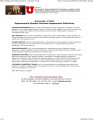
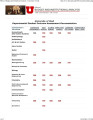
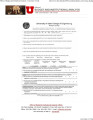
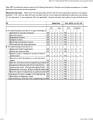
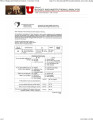
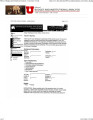
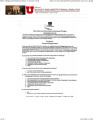
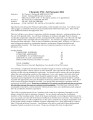
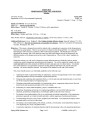
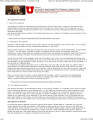
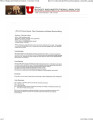
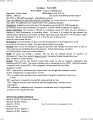
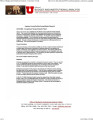
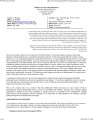
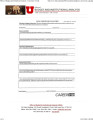
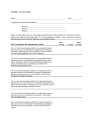
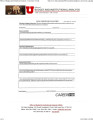
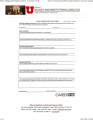
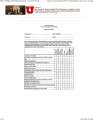
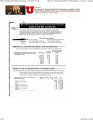
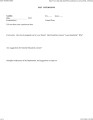
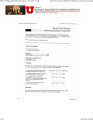
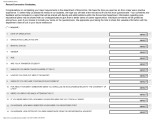
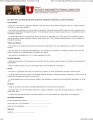
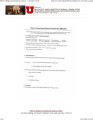
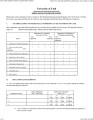
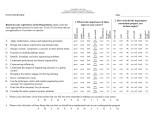
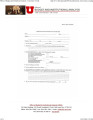
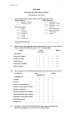
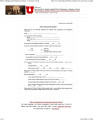
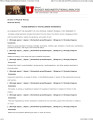
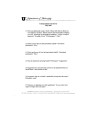
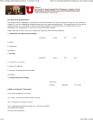
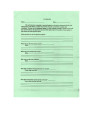
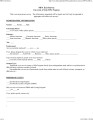
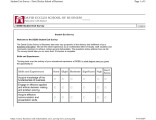
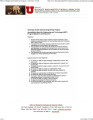
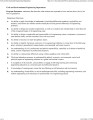
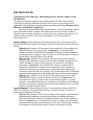
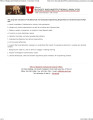
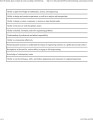
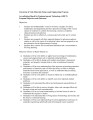
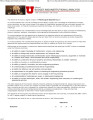
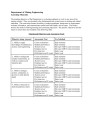
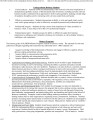
Show Office of Budget and Institutional Analysis - University of Utah http://www.obia.utah.edu/2006Accred/soa/learning_outcomes/mte_loc.php The objectives of the B.S. degree program in Metallurgical Engineering are: To provide students with a sound knowledge and the ability to apply their knowledge of fundamental principles, current practices, and key current issues in all aspects of metallurgical engineering that are broadly grouped into three thrust areas: ( i ) mineral processing and particle technology, ( i i ) chemical metallurgy, and ( i i i ) physical metallurgy. To provide students with a fundamentally sound knowledge base and the ability to apply principles of mathematics, physics, chemistry, statistics, computation, and engineering fundamentals to solve practical problems. To provide students with the opportunity to develop all the essential technical and interpersonal skills and an appreciation for the need for lifelong learning that will allow them to become successful as socially responsible engineers and professional leaders. To provide students with a broad-based education in aspects outside of engineering and science that will help them appreciate the opportunities and responsibilities they have in molding the future of our society. Effectiveness of the program in meeting the departmental objectives and satisfying the ABET criteria are assessed using the following outcomes: • An a b i l i t y to apply knowledge of mathematics, science, and engineering. • An a b i l i t y to design and conduct e x p e r i m e n t s , and i n t e r p r e t data. • An a b i l i t y to design technically and f i n a n c i a l l y sound metallurgical processes, equipment or materials in a manner t h a t reflect a environmental and social r e s p o n s i b i l i t y . • An a b i l i t y to understand s t r u c t u r e - p r o p e r t y - p r o c e s s i n g relationships in m e t a l l i c materials. • An a b i l i t y to f u n c t i o n on m u l t i d i s c i p l i n a r y teams. • An a b i l i t y to i d e n t i f y , f o r m u l a t e , and solve engineering problems. • An understanding of professional and ethical r e s p o n s i b i l i t y. • An a b i l i t y for e f f e c t i v e oral and w r i t t e n communication. • An appreciation for t h e global impact of metallurgical engineering p r o f e s s i o n / p r a c t i c e . • An a b i l i t y to recognize t h e need for and to engage in l i f e - l o n g learning. • An understanding of c o n t e m p o r a r y issues in metallurgical engineering. • An a b i l i t y to use t h e t e c h n i q u e s , s k i l l s , and modern engineering tools necessary for metallurgical engineering practice. The other objectives of the program indirectly linked to satisfying the departmental B.S. degree requirement and the ABET criteria are ( i ) to carry out research in frontier areas to generate new knowledge and ( i i ) provide technical help, consulting service, and a framework for collaborative research for state-wide agencies, industries, and other entities concerned with broad metallurgical practices, processes and applications. These activities help undergraduate education as they often involve student participation. The objectives of the program thus fulfill the mission of the department and university, and satisfy the ABET criteria for a B.S. degree program in Metallurgical Engineering. The objectives are linked to one or more outcomes as shown in the following table. Objectives Outcomes 1 2 3 4 1 of 2 10/13/2006 4:01 PM Office of Budget and Institutional Analysis - University of Utah http://www.obia.utah.edu/2006Accred/soa/learning_outcomes/mte_loc.php A.Ability to apply knowledge of mathematics, science, and engineering X X B.Ability to design and conduct experiments, and interpret data X X C.Ability to design technically and financially sound processes, equipment, or materials to reflect environmental and social responsibility D.Understand structure-property-processing relationships in metallic materials X X E.Function on multi-disciplinary teams F.Ability to identify, formulate, and solve engineering problems X X G.Understanding of professional and ethical responsibility X X H.Ability for effective oral and written communication X X I.Appreciate the global impact of metallurgical engineering profession/practice X X J.Ability to recognize the need for and to engage in life-long learning X X K.Understand contemporary issues in metallurgical engineering L.Ability to use techniques, skills, and modern engineering tools necessary for engineering practice X X X X X X X X X X X X Office of Budget & Institutional Analysis (OBIA) 110 Park Building, 201 South President's Circle, Salt Lake City, UT 84112 Office: 801-581-6948 | Fax: 801-581-7541 | Email: info@obia.utah.edu The University of Utah © - Disclaimer 2 of 2 10/13/2006 4:01 PM |