| OCR Text |
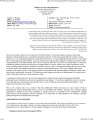
Show PS 5810 Senior Seminar http://www.obia.utah.edu/2006Accred/soa/capstone_courses/pols_cap.htm Politics of Voice and Resistance PS 5810 Senior Seminar University of Utah Spring 2005 Claudio A. Holzner Lectures: Tue. And Thursday 10:45-12:40 in Office: 212G OSH JTB 120 Email: claudio.holzner@poli-sci.utah.edu TA: Kristian Alexander, OSH 307 Office Hours: Tuesday 2-4 pm and by appt. Office Hours: Thurs. 1:30-3:30 Phone:585-7988 Phone: 581-6047 Email: K.Alexander@utah.edu A stupid despot may constrain his slaves with iron chains; but a true politician binds them even more strongly by the chain of their own ideas; it is at the stable point of reason that he secures the end of the chain; this link is all the stronger in that we do not know of what it is made and we believe it to be our own work; despair and time eat away the bonds of iron and steel, but they are powerless against the habitual union of ideas, they can only tighten it still more; and on the soft fibres of the brain is founded the unshakable base of the soundest Empires. (J. Servan, quoted in Foucault, p. 102-103) What needs to be explained are the methods whereby "time and labor' can be extracted from bodies, when those modern bodies are not necessarily physically constrained, possess legal rights preventing exploitation, and are 'free' from direct forms of control" (McHoul and Grace p. 63) This senior seminar explores two core puzzles in Political Science: why people endure grievances, and tolerate injustices without speaking up or voicing their discontent; and why at other times people find the courage to resist, speak out, or even rebel against injustices at great risk to themselves. To gain insight into these puzzles we will explore the ways that quiescence and rebellion, voice and resistance are related to power and power relations in societies. Some of the questions we will tackle include: How is power exercised? Does the way power is exercised differ over time and in different political systems? How does power constrain behavior, silence certain voices, and set boundaries on the kinds of political activities that are possible or desirable? If power works to develop and maintain the quiescence of the powerless, under what conditions can the powerless resist and challenge power? The course combines theoretical readings on the nature of power with empirical studies of participation and non-participation in different countries and time periods, including the American Civil Rights movement, squatter movements in authoritarian Peru, union activity in the United States, and non-violent resistance in India. A central goal of this course is to give you the opportunity to explore the causes and consequences of political participation and of political movements in a significant research paper. You will have significant leeway in selecting your topic and cases, but the paper topic should relate to issues of political action and political participation. I must approve the final topic of your paper. This is not a lecture class; it is a seminar. The basic philosophy behind each and every class session is that by discussing the material and sharing ideas, we make our individual and collective ignorance less. Because student participation is integral to the course, attendance is required and you are expected to have completed the readings before class and come prepared to actively contribute to our discussion. A critical attitude to the reading is expected; debate and argument are desired and encouraged. ASSIGNMENTS AND GRADES A core objective of this class is to improve your research and writing skills. One of the most effective ways to improve your writing is to rewrite papers, honing your ideas, argument and style with each draft. As such, all of your assignments will be written papers of various lengths, including several drafts of the final research paper. • Attendance and In-Class Participation (20%) 1 of 6 10/13/2006 2:33 PM PS 5810 Senior Seminar http://www.obia.utah.edu/2006Accred/soa/capstone_courses/pols_cap.htm • Short Paper (10%) - Topic to be handed out in class. - First Draft due February 14 (We will give a provisional grade) - Final Draft: due February 24. • Final Research Paper (50%) A 20 page research paper based on your independent research on a topic related to this course. This final draft of your research paper should incorporate revisions made in response to comments made by classmates and the instructor. The final paper should be typed using a standard 12-point font and 1 inch margins on all sides. Make sure you number your pages. Take special care to properly cite your sources, to use footnotes when appropriate, and to properly format your bibliography. Final Papers Due April 29 by 4 pm. • Writing Assignments Related to the Final Research Paper 1. Research Proposal: Due February 3. The research proposal is a statement of the research question that you want to address in your seminar paper. It should be no longer than 1 double spaced page, consisting of two or three paragraphs. Though it is useful to describe your broad topic of interest, you should strive to come up with a very specific research question that you will seek to answer. The proposal should also clearly state how the topic is relevant for issues of power, political participation, social movements, and other topics covered in this class. (5%) 2 . Literature Review: Due March 10. A literature review is a selective and critical discussion of the relevant research that deals with your research topic. Yours won't be the first attempt to answer the question (or a similar one) you posed in your research proposal, and it is important to both acknowledge and consider other scholars' efforts. The literature review provides you with an opportunity to familiarize yourself with this body of work, to critically assess other attempts to address your research topic, to better formulate your arguments (and counterarguments), and incorporate other people's insights. Your literature review should consist of a short discussion of at least four scholarly sources that directly pertain to your research topic, and should make clear which positions or approaches shed the greatest clarity on your question. (5%) 3. First Draft of Final Paper: Due March 31. Submit the most complete draft of your seminar paper that you are able to provide, incorporating revisions of your research question and of your literature review. By this time you should have completed much of your library research and this draft should incorporate as much of your research and analysis as possible. This draft will not be graded, but you should make an appointment to discuss the draft and your progress toward the final paper. Though this draft will not be graded, it is to your advantage to turn in as complete and polished a draft as you can, since that will enable us to provide you with more detailed and constructive suggestions for improving your paper. 4. Second Draft of Final Paper: Due April 14. I expect this version of your research paper to be very close to the final draft. As such, I will grade this draft as if it were your final draft, which means it should have a clear statement of the research question and of your argument, it should incorporate all of your research and evidence, it should be well structured and organized, and it should be free of grammatical errors. Although it will be graded as stringently as a normal paper, I will provide you with suggestions for revision and you will have the opportunity to make improvements towards the final draft. (10%) POLICIES AND PROCEDURES Attendance Since the purpose of meeting together is discussion, attendance is required. You will be allowed three absences (excused or unexcused) before your grade will suffer. Beginning with your fourth absence I will deduct a half letter grade (i.e. an A- will become a B+) from your participation grade. 2 of 6 10/13/2006 2:33 PM PS 5810 Senior Seminar http://www.obia.utah.edu/2006Accred/soa/capstone_courses/pols_cap.htm Participation and Readings If the class is to work, you must do all of the assigned readings before we meet for class. Some of the readings are quite difficult and complex, the authors' arguments subtle and the implications of their claims not always obvious. After completing each reading you should at a minimum be able to restate the main argument and how the author goes about convincing the reader of the argument. You should also strive to engage with the argument, deciding for yourself whether the claim is convincing, well supported, and useful for understanding real-life phenomena. You may not understand each piece when you first read through them. I have three suggestions in this regard: 1) Re-read the piece, 2) Re-read the piece, 3) Ask questions in class. Come to class prepared to participate. As you do the reading, jot down questions that you have about terminology, about the argument, etc. to share with us. It is likely others have similar questions. These questions can form the basis of a healthy participation. On occasion I will also provide questions for you to think about as you read each piece. Try to formulate answers to these questions before class. Extensions andMake-Ups Extensions will not be granted. The due dates for each assignment are stated on the syllabus, which allows you to plan ahead. Late papers will be penalized by a half-grade each day they are late. Academic Dishonesty Don't even think about it. If I suspect that you have plagiarized a paper or cheated on an assignment I will follow university procedures to the letter. Dishonesty has no place in the classroom, or in research. If you are not sure what constitutes plagiarism or a violation of academic honesty, consult the student handbook or ask! For more information on the University of Utah's policies pertaining to Academic Misconduct and Dishonesty see pages 11-14 of the 2002-2004 General Catalog and in the electronic Policy and Procedures Manual at http://www.admin.utah.edu/ppmanual/8/8-10.html Plagiarism is defined as the "use of another person's ideas or expressions in your writing without acknowledging the source. Plagiarism constitutes intellectual theft." The University of Utah Department of Political Science seeks to provide equal access to its programs, services and activities for people with disabilities. If you will need accommodations in this class, reasonable prior notice needs to be given to the instructor and to the Center for Disability Services, http://disability.utah.edu/ 162 Olpin Union Bldg, 581-5020 (V/TDD) to make arrangements for accommodations. This information is available in alternative format with prior notification. REQUIRED BOOKS The following books are available for purchase at the bookstore and for consultation at the Reserve Desk. Feel free to shop around the on-line sources for better deals. Foucault, Michel. 1979. Discipline and Punishment: The Birth of the Prison. Translated by A. Sheridan, New York: Vintage Books Gaventa, John. 1980. Power and Powerlessness: Quiescence and Rebellion in an Appalachian Valley, Oxford: Clarendon Press Payne, Charles M. 1995. I've Got the Light of Freedom: The Organizing Tradition and the Mississippi Freedom Struggle, Berkeley: University of California Press Stokes, Susan C. 1995. Cultures in Conflict: Social Movements and the State in Peru, Berkeley: University of California Press. COURSEPACK READINGS In addition to the required books, you are required to do the readings in the course pack (marked by a CP in the syllabus). I have placed three copies of the coursepack on reserve at the Marriott Library for your convenience. Although you will be able to check it to do the readings, I strongly recommend each of you to check out a copy and 3 of 6 10/13/2006 2:33 PM PS 5810 Senior Seminar http://www.obia.utah.edu/2006Accred/soa/capstone_courses/pols_cap.htm make photocopies of the entire coursepack at the beginning of the semester. In consideration to your classmates, please return the coursepack to the Reserve Library as soon as you are done with it, and do not alter the order of the readings: leave it as you found it. SCHEDULE OF READINGS 1. January 11: Introductions and Housekeeping 2. January 13: Citizens and the State: Power and resistance - Martin Luther King Jr. "Letter from a Birmingham Jail." (CP) - Thoreau: "On the Duty of Civil Disobedience" (CP) Attend Keynote address by Carlos Munoz Jr. Noon at the Olpin Union Ballroom 3. January 18-27: First Face of Power 1/18 Political Violence and Resitance - Gaventa ch. 1. - Foucault pp. 3-6, all of Ch. 2 (pp. 32-69) - Coleman on Power, excerpt from Foundations of Social Theory, pp. 131-134. (CP) - Dalton, Dennis, ed. 1996. Excerpts from Mahatma Gandhi: Selected Political Writings. (CP) Tour of the Writing Center at the Marriott Library 1/20 Resisting Violence - M.K. Gandhi. 1961. Non-Violent Resistance (excerpts). (Beginning with "How to work non-cooperation.") and excerpts from Civil Disobedience and Violence. (CP) - McAdam, Doug. 1982. Political Process and the Development of the Black Insurgency•, Ch. 1: pp 5-19 (CP) - Navarro, Marysa. "The Personal is Political: Las Madres de Plaza de Mayo," ch. 7 from Eckstein's Power and Popular Protest: Latin American Social Movements. Berkeley: California University Press. (CP) - Garreton, Manuel. "Popular Mobilization and the Military Regime in Chile," ch. 8 from Eckstein's Power and Popular Protest: Latin American Social Movements. Berkeley: California University Press. (CP) - Scott, James. Weapons of the Weak. Ch. 1-2 (CP) A Force More Powerful (Movie): Gandhi and Non-Violent Resistance 1/25 Economic Inequality and Power - "Income Inequality in the United States: 1913-1998," (data tables). (CP) - Piven and Cloward: "Low income people and the political process." pp. 271-285. (CP) - Tarrow, Sidney, Power in Movement, Ch. 2: "Modular Collective Action, pp. 29-42. (CP) - McAdam, Doug. 1982. Political Process and the Development of the Black Insurgency•, Ch. 2: pp 20-35. (CP) 4. January 27- Feb 8: The Second Face of Power 1/27 Second Face of Power - "Two Faces of Power," Bacharach and Baratz (CP). - Piven and Cloward: "Movements and Dissensus Politics" pp. 286-305. (CP) - Oxhorn, Philip. 1994. "Understanding Political Change after Authoritarian Rule: the Popular Sectors and Chile's New Democratic Regime," Journal of Latin American Studies, 26 (3): 737-759. (CP) - Articles on the 2004 elections: "An Alternative Account of the 2004 Presidential Election," and "Up, Up, and Away! Voter Participation in the 2004 Presidential Election," in The Forum 2(4). 4 of 6 10/13/2006 2:33 PM PS 5810 Senior Seminar http://www.obia.utah.edu/2006Accred/soa/capstone_courses/pols_cap.htm http://www.bepress.com/forum/ (CP) Tarrow, "Framing Contention," Ch. 7 of Power in Movement. (CP) 2/1 I've Got the Light of Freedom - Ch. 1-4 2/3 I've Got the Light of Freedom - Ch. 5-7 Research Paper Proposal Due 2/8 I've Got the Light of Freedom - Ch. 8-11 A Force More Powerful: The Civil Rights Movement 2/10 I've Got the Light of Freedom - Ch. 11-14, plus Bibliographic essay. 5. February 15-March 1: The Third Face of Power 2/15 Peer Review Workshop NOTE: First Draft of Short Paper Due Monday Feb. 14 by 5pm! 2/17 Gaventa Ch. 1-4 2/22 No Class: Work on revisions to paper 2/24 Gaventa Ch. 5-7 Final Draft of Short Paper Due 3/1 Gaventa 8-10 6. March 3-10: Hegemony: Overcoming "Spontaneous Consent" 3/3 Stokes Ch. 1-4 3/8 Stokes Ch. 5-7 3/10 No Reading, in-class writing exercise Literature Review due today 7. March 15-17 SPRING BREAK: NO CLASS OR READINGS 8. March 22-29: Every-day Forms of Power: The Fourth Face of Power? 3/22 Foucault pp. 3-103, 126-131. The passing of torture and the emergence of "lenient" controls 3/24 Foucault pp. 135-228. Disciplinary Power 5 of 6 10/13/2006 2:33 PM PS 5810 Senior Seminar http://www.obia.utah.edu/2006Accred/soa/capstone_courses/pols_cap.htm 6 of 6 10/13/2006 2:33 PM 3/29 Resisting Capillary Power - Excerpts from Gandhi. 1961. Non-Violent Resistance. (CP) - McHoul and Grace: A Foucault Primer, Ch. 3 "Power", pp. 57-90 (CP) 9. March 31-April 26: Paper Consultations and Presentations 3/31 No Class: PAPER CONSULTATIONS/ INDEPENDENT RESEARCH F I R S T D R A F T O F F I N A L P A P E R D U E 4/5 No Class: PAPER CONSULTATIONS/ INDEPENDENT RESEARCH 4/7 No Class: PAPER CONSULTATIONS/ INDEPENDENT RESEARCH 4/12 No Class: PAPER CONSULTATIONS/ INDEPENDENT RESEARCH 4/14 Class Presentations SECOND DRAFT OF FINAL PAPER DUE 4/19 Class Presentations 4/21 Class Presentations 4/26 Class Presentations 4/29 [FINAL DRAFT OF PAPER DUE BY 4 pm. *Provide a self-addressed and stamped envelope if would like your final paper and drafts returned to you. |