| OCR Text |
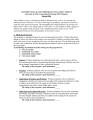
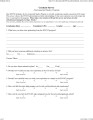
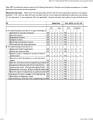
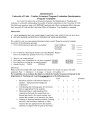
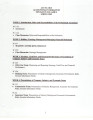
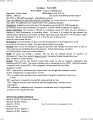
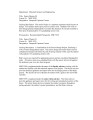
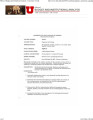
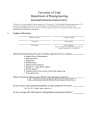
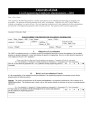
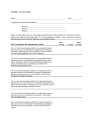
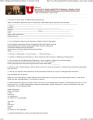
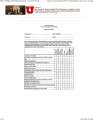
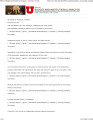
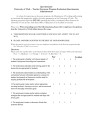
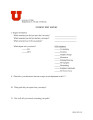
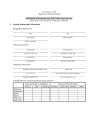
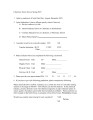
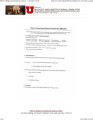
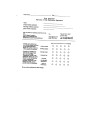
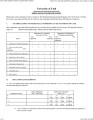
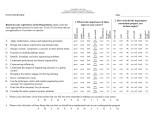
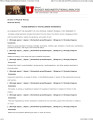
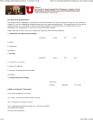
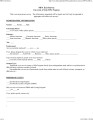
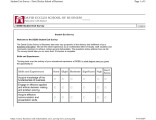
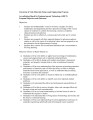
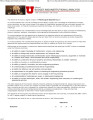
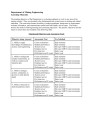
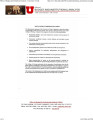
Show University of Utah Department of Bioengineering Biomedical Engineering Exit Interview Survey (please come to your exit interview with this survey filled out) I. Student Demographic Information Biographical Information Name Date Age (optional) Gender (optional) Ethnicity (optional) Address Information Current Street Permanent Street Current City, State, Zip Permanent City, State, Zip Current Phone Permanent Phone Email Address Secondary Email Address Graduation Informa tion Anticipated Graduation Date (Month - Year) Degree Type Years at U of U Years at other Higher Education Institutions Expected Cumulative GPA Area of Specialization Track Estimated Work Load (during fall and spring semester) Hours per Week on Academics Hours per Week Working Classes Labs Studying Industry Acad. Lab Donated Other Freshman Sophomore Junior Senior Fifth Year Sixth Year II. Educational Background High School Graduation Information Name of School Year of Graduation Overall GPA Ranking Percentile (higher better) ACT Composite SAT Composite Other Colleges and/or Universities that You have Attended School GPA Degree Y/N Type of Degree Quality of Program Compared to U of U SLCC UVSC SUU WSU BYU USU Other: Other: Ranking of Motivating Factors Behind Choosing U of U and its BME Major (-2 = Strong Deterrent, -1 = Deterrent, 0 = No Influence, 1 = Promoter, 2 = Strong Promoter) Influence of U of U literature, orientation program, and school recruitment U of U's reputation in the job market Advice of friends or relatives Availability of scholarships or financial aid Geographic location of the campus Tuition costs Availability of a biomedical engineering program Other (specify): III. Undergraduate Curriculum General Education Courses (-2 = Strongly Disagree, -1 = Disagree, 0 = No Opinion, 1 = Agree, 2 = Strongly Agree) G.E. requirements have helped me have a broader view of society. G.E. has helped me understand my professional and ethical responsibilities. G.E. should be more focused to engineering issues. What is the best GE course you have taken at the U of U? Why? What is the worst GE course you have taken at the U of U? Why? Preengineering Courses at the U of U (-2 = Poor, -1 = Marginal, 0 = OK, 1 = Good, 2 = Great, NA = Not Applicable) Quality of the Calculus Series and which series: Quality of the Diff Eq / Linear Algebra (MATH 2250) Quality of the PDE's for Engineers (MATH 3150) Quality of the Physics Series (PHYCS 2210 and 2220) Quality of the General Chemistry Series and Lab (CHEM 1210 and 1220) Quality of the Organic Chemistry Series and Lab (CHEM 2310 and 2320) Quality of the Computing Elective and which class: Quality of the Cell Biology Class (BIOL 2020) Quality of the Genetics Class (BIOL 2030) Quality of College Writing (WRTG 2010) Biomedical Engineering Core Courses (-2 = Poor, -1 = Marginal, 0 = OK, 1 = Good, 2 = Great, NA = Not Applicable) Quality of Funds of Bioeng I (BIOEN 1101) and year taken: Quality of Funds of Bioeng II (BIOEN 1102) and year taken: Quality of Physiology I (BIOEN 3201) and year taken: Quality of Physiology II (BIOEN 3202) and year taken: Quality of Eng Progect I (BIOEN 4201) and year taken: Quality of Eng Progect II (BIOEN 4202) and year taken: Quality of Biophysics (BIOEN 5001) and year taken: Quality of Bioinstrumentation (BIOEN 5101) and year taken: Quality of Biomechanics (BIOEN 5201) and year taken: Quality of Biomaterials (BIOEN 5301) and year taken: Quality of BIOEN Labs Overall Importance in my Development as a Biomedical Engineer (-2 = Poor, -1 = Marginal, 0 = OK, 1 = Good, 2 = Great, NA = Not Applicable) Funds of Bioeng I (BIOEN 1101) and year taken: Funds of Bioeng II (BIOEN 1102) and year taken: Physiology I (BIOEN 3201) and year taken: Physiology II (BIOEN 3202) and year taken: Eng Progect I (BIOEN 4201) and year taken: Eng Progect II (BIOEN 4202) and year taken: Biophysics (BIOEN 5001) and year taken: Bioinstrumentation (BIOEN 5101) and year taken: Biomechanics (BIOEN 5201) and year taken: Biomaterials (BIOEN 5301) and year taken: BIOEN Labs Ranking of Facilities and Teaching (-2 = Poor, -1 = Marginal, 0 = OK, 1 = Good, 2 = Great, NA = Not Applicable) Overall quality of the departmental lab facilities Overall quality of the departmental classrooms Overall quality of the departmental A/V equipment Overall quality of the departmental computers Overall access to lab facilities Overall access to computers Overall quality of departmental teaching Overall quality of departmental advising Overall quality of assistance provided by office staff Which biomedical engineering course had the best lab? Why? Which biomedical engineering course had the worst lab? Why? How would you suggest improving the biomedical engineering courses? How would you suggest improving the accompanying labs? Elective Track Courses (-2 = Poor, -1 = Marginal, 0 = OK, 1 = Good, 2 = Great, NA = Not Applicable) Quality of track classes taken in Bioengineering Quality of track classes taken in Biology Quality of track classes taken in Chemical and Fuels Engineering Quality of track classes taken in Chemistry Quality of track classes taken in Computer Science Quality of track classes taken in Electrical Engineering Quality of track classes taken in Material Science and Engineering Quality of track classes taken in Mathematics Quality of track classes taken in Mechanical Engineering Quality of track classes taken in Physics Quality of other track classes (list): Quality of other track classes (list): What is the best Track course you have taken at the U of U? Why? What is the worst Track course you have taken at the U of U? Why? Which track class was not beneficial and should be replaced? Why? Why did you pick the track that you studied? Intellectual Challenge (-2 = very easy, -1 = easy, 0 = appropriate, 1= difficult, 2 = very difficult, NA = not applicable) Intellectual difficulty of GE courses at the U of U Intellectual difficulty of Preengineering courses at the U of U Intellectual difficulty of Core courses at the U of U Intellectual difficulty of Core course labs at the U of U Intellectual difficulty of Track courses at the U of U Work Load (-2 = strongly disagree, -1 = disagree, 0 = no opinion, 1= agree, 2 = strongly agree, NA =not applicable) GE courses required an appropriate amount of time Preengineering courses required an appropriate amount of time Core courses required an appropriate amount of time Core course labs required an appropriate amount of time Track courses required an appropriate amount of time Overall Education (-2 = strongly disagree, -1 = disagree, 0 = no opinion, 1= agree, 2 = strongly agree) Core courses provided adequate training in engineering Core courses increased my desire to investigate topics outside of class I am likely to continue my educational development throughout my life I will likely attend graduate or professional school in the future The BME training provided has prepared me for my next career step I would recommend BME as a major to others I would recommend the U of U as a school to others IV. Professional Development Preparations for Post Graduation Life Have you taken the fundamentals of engineering exam? What year did you successfully complete it? What graduate school entrance exams have you taken (i.e. GRE, MCAT, LSAT)? What percentile did you achieve overall (higher better)? How could our program have better prepared you for the next step in your career? Industrial experience related to biomedical engineering while attending the U of U (please provide information about your most recent experience) Name of Company Months with Company Name of Contact Person Phone Number Your Position Was this a funded position? If so include $/hour What were your chief responsibilities with the company? Was this an industrial internship position? How did you learn about the position? Have you received a permanent job offer from the company? And if so, are you planning to take the offer? Have you had industrial experience in addition to the above? And if so, how many additional months of experience? Please include names of companies: Academic Research Experience (please provide information about your most recent experience) Academic Department Months actively Working Name of Principle Investigator Phone Number Your Position Was this a funded Position? If so include $/hour What were your chief responsibilities in the lab? Was funding provided through an undergraduate research fellowship? How did you learn about the position? Based on your experience are you planning to pursue a career in academic research? And if so, are you planning to continue with your present lab? Have you had academic research experience in addition to the above? And if so, how many additional months of experience? Please include Principle Investigators' names: Career Objectives After graduation, What I plan to do for the following year (fill in the area most appropriate): A. Work in Industry: What field best describes the industry position you are seeking: a. Medical Device Manufacturer b. Pharmaceuticals c. Diagnostics d. Biotechnology e. Medical Instrumentation f. Regulatory / Legal affairs support g. QA/QC support h. Engineering position outside biomedical engineering i. Non-engineering career How many job interviews have you had? How many job offers have you had? Salary range of your average offer excluding benefits: | <18 | 18-26 | 27-34 | 35-40 | 41-46 | 47-52 | 53-65 | >65 Have you accepted a permanent position? If so, please fill in the following table: Name of Company Company Location Name of Contact Person Phone Number Your Position Type of Company (Large corp., small corp., small business, fed, state, local, nonprofit, educational inst., self employed) How did you learn about this position? Salary range of the position (excluding benefits)? | <18 | 18-26 | 27-34 | 35-40 | 41-46 | 47-52 | 53-65 | >65 Why did you pick this position? How strongly does this position relate to your major? (not related, slightly, moderately, highly) What is the most productive avenue for job searching in your opinion? Has student career services been helpful in your employment search? If you have not received an offer, what reasons were given? If you have not received an offer, what are your plans for the coming year? B. Enter Graduate School: Name of University University Location Department Program Title Name of Contact Person Degree Sought Amount of Financial Assistance (excluding benefits)? <8 | 8-11 | 12-14 | 15-17 | 18-20 | 21-23 | 24-28 | >28 Other schools that you applied to and were accepted at? C. Enter Military Service: Branch Location Period of Obligation Rank Why did you choose to enter military service? D. Other: V. Core BME Skills Rank your ability or understanding and the program's potential for teaching the following core engineering skills (please be candid). (-2 = Poor, -1 = Marginal, 0 = OK, 1 = Good, 2 = Great) Skill Your Ability Curriculum Potential A Ability to apply knowledge of mathematics, science, and engineering. B Ability to conduct experiments, and analyze and interpret data. C Ability to design an experiment, system, component, or process to meet desired needs. D Ability to function on multi-disciplinary teams. E Ability to identify, formulate, and solve engineering problems. F Understanding of professional and ethical responsibility. G Ability to communicate effectively in an oral format. H Ability to communicate effectively in a written format. I Understanding of the impact of engineering solutions in a global and societal context. J Understanding of the need for and the ability to engage in lifelong learning. K Understanding of contemporary issues. L Ability to apply the techniques, skills, and modern engineering tools necessary for engineering practice. Matrix of where core skills were learned. For each class, please rank between 1 and 5 with respect to the above questions (1 = Not Mentioned, 2 = Mentioned, 3= Covered in a Lecture, 4 = Major Learning Objective, 5 = Primary Focus of the Class). BIOEN Fund 1 BIOEN Fund 2 Physiology 1 Physiology 2 Sr Project 1 Sr Project 2 Biophysics Bioinstument. Biomechanics s ial ri t a m io A B B C D E F G H I J K L Provide the best example of where and how each skill was learned. Class Example A B C D E F G H I J K L VI. BME Program Skills Program Criteria for Biomedical Engineering Programs: The structure of the curriculum must provide both breadth and depth across the range of engineering topics implied by the title of the program. The program must demonstrate that graduates have: and understanding of biology and physiology, and the capability to apply advanced mathematics (including differential equations and statistics), science, and engineering to solve the problems at the interface of engineering and biology; the ability to make measurements on and interpret data from living systems, addressing the problems associated with the interaction between living and non-living materials and systems. Based on the above statement rank your ability or understanding and the program's potential for teaching the following biomedical engineering skills (please be candid). (-2 = Poor, -1 = Marginal, 0 = OK, 1 = Good, 2 = Great) Skill Your Ability Curriculum Potential Overall understanding of biomedical engineering 1 Understanding of Biology 2 Understanding of Physiology 3 Make measurements and interpret data from living systems 4 Can address the problems associated with the interaction between living and nonliving materials and systems Capability to solve the problems at the interface of engineering and biology by applying the following: 5 Advanced math including differential equations 6 Statistics 7 Science 8 Engineering Matrix of where BME skills were learned. For each class, please rank between 1 and 5 with respect to the above questions (1 = Not Mentioned, 2 = Mentioned, 3= Covered in a Lecture, 4 = Major Learning Objective, 5 = Primary Focus of the Class). Bioen Fund I Bioen Fund II Physiology I Physiology II Sr Project I Sr Project II Biophysics Bioinstrument. Biomechanics Biomaterials 1 Understanding of biology 2 Understanding of physiology 3 Make measurements and interpret data 4 Interaction between living and nonliving 5 Advanced math including differential eq. 6 Statistics 7 Science 8 Engineering Provide the best example of where and how each skill was learned. Class Example 1 2 3 4 5 6 7 8 |