| OCR Text |
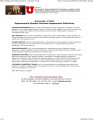
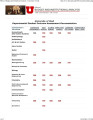
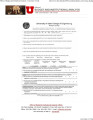
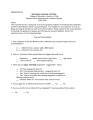
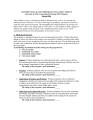
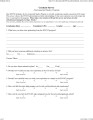
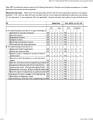
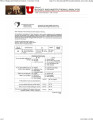
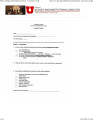
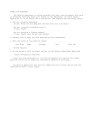
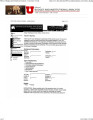
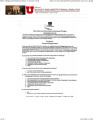
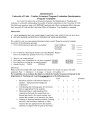
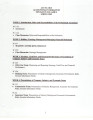
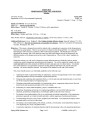
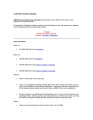
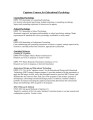
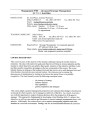
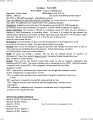
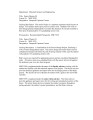
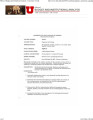
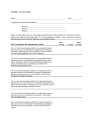
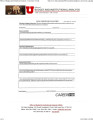
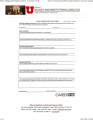
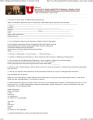
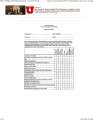
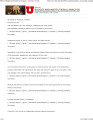
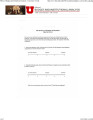
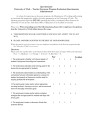
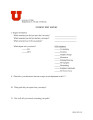
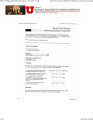
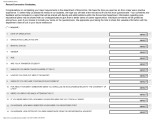
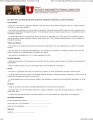
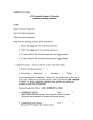
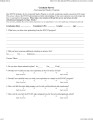
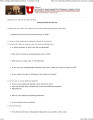
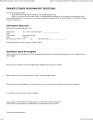
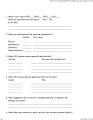
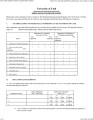
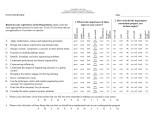
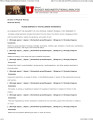
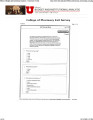
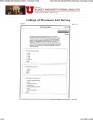
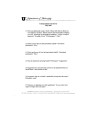
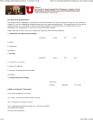
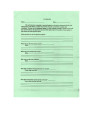
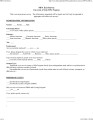
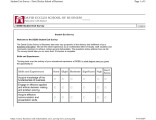
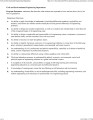
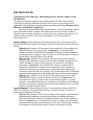
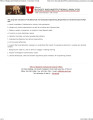
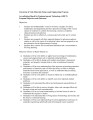
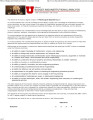
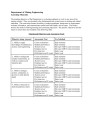
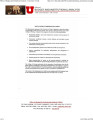
Show CONFIDENTIAL AL UMNI PROGRAM EVAL UATION SURVEY University of Utah Counseling Psychology PhD Program Spring 2006 This evaluative survey is designed to help us determine how well we are meeting our stated goals and objectives, as well as assessing our graduates' perceptions of various elements of the doctoral program. The thoughtful and candid feedback you provide will help us know what we are doing right as well as how we can continue to make changes to enhance the quality of the program. This confidential portion of the survey will be separated from the previous demographic section upon receipt. I. PROGRAM GOALS The program is organized around the seven broad goals listed below. Please indicate the degree to which you believe the program was successful in helping you attain each stated goal at the point of your graduation and entry into the profession. Use the following scale to make your evaluations, and list the appropriate number in the box at the end of each of the seven goals. In facilitating my attainment of the stated goal, the program was: 1 = very successful 2 = moderately successful 3 = moderately unsuccessful 4 = very unsuccessful 1. Science: Produce graduates who understand and apply various inquiry skills in their professional careers, thus demonstrating that research and scholarly activities are an integral component of their professional identity. My rating of the program's goal attainment: 2. Practice: Produce graduates who have the requisite knowledge and skills for entry into the practice of professional psychology. My rating of the program's goal attainment: 3. Integration of Science and Practice: Produce graduates who are skilled in integrating scientific principles and knowledge with professional practice in order to address more effectively the needs of individuals, families, groups, organizations and public mental health policy issues. My rating of the program's goal attainment: 4. Individual and Cultural Diversity: Produce graduates who have the awareness, knowledge, and skills necessary to address issues of multiculturalism and human diversity broadly defined and who are capable of advocating for the needs and issues of various client populations. My rating of the program's goal attainment: 2 5. Optimum Human Functioning and Lifelong Learning: Produce graduates who are committed to facilitating optimal human functioning and adaptation across the adult lifespan as well as to their own lifelong learning. My rating of the program's goal attainment: 6. Professional Identity and Special Proficiency: Produce graduates whose core professional identity is counseling psychology and who also have begun to explore and develop special proficiencies that complement this identity and facilitate their subsequent careers. My rating of the program's goal attainment: 7. Ethical Behavior, Legal Issues, and Professional Integrity: Produce graduates who consistently apply accepted ethical and legal standards to their work and who are exemplars of professional integrity. My rating of the program's goal attainment: Additional Comments and Suggestions related to Section I: II. PROGRAM SPECIFIC OBJECTIVES AND COMPETENCIES In addition to the seven broad goals stated above, the program has a number of related and more specific objectives and competencies. Please indicate the degree to which you believe the program was successful in helping you attain each specific objective or competency at the point of your graduation and entry into the profession. Use the following scale to make your evaluations, and list the appropriate number in the box at the end of each of the objectives or competencies. In facilitating my attainment of the stated objective or competency, the program was: 1 = very successful 2 = moderately successful 3 = moderately unsuccessful 4 = very unsuccessful 1. Developing understanding and competence in the breadth of scientific psychology including the following content areas: a. Biological Aspects of Behavior b. Cognitive and Affective Aspects of Behavior c. Social Aspects of Behavior d. History and Systems of Psychology e. Psychological Measurement f. Research Methodology g. Techniques of Data Analysis My rating: My rating: My rating: My rating: My rating: My rating: My rating: 2. Developing understanding and competence in the foundations of practice in counseling psychology including the following content areas: a. Counseling Psychology as a substantive area b. Human Development c. Dysfunctional Behavior/Psychopathology d. Professional Standards and Ethics My rating: My rating: My rating: My rating: 3. Diagnosing or defining issues and problems through assessment and implementing intervention strategies (including empirically supported procedures) including exposure to the current body of knowledge in the following areas: a. Theories & Methods of Assessment and Diagnosis b. Effective Intervention in general c. Individual Counseling/Psychotherapy d. Group Counseling/Psychotherapy e. Career/Vocational Assessment & Counseling f. Consultation g. Supervision h. Evaluating the Efficacy of Interventions My rating: My rating: My rating: My rating: My rating: My rating: My rating: My rating: 4. Issues of cultural and individual diversity relevant to all of the above. My rating: 3 5. Attitudes essential for life-long learning, scholarly inquiry and professional problem solving in the context of an evolving body of scientific and professional knowledge. My rating: 6. Adequate and appropriate practicum experiences that included: a. "Core" practicum at University Counseling Center My rating: b. "Field" practicum at other community/university sites My rating: c. Placement in settings committed to training My rating: d. Adequate and appropriate supervision My rating: e. Integration of the practicum component with other aspects of the program My rating: f. Sufficient preparation for my doctoral internship My rating: 7. Effective mentoring and advising for developing research competency including satisfactory completion of the doctoral dissertation: My rating: Additional Comments and Suggestions related to Section II: 4 I. STUDENT-FACULTY RELATIONS Please indicate the degree to which you believe the program was successful in implementing and maintaining the following student-faculty relationship characteristics.. The program was: 1 = very successful 2 = moderately successful 3 = moderately unsuccessful 4 = very unsuccessful 1. Treating students with courtesy, respect, collegiality, and ethical sensitivity: My rating: 2. Being informed upon admission of program requirements, expectations, continuance, due process and grievance policies and procedures: My rating: 3. Faculty accessibility, guidance, role-modeling. My rating: 4. Respect for individual and cultural diversity. My rating: 5. Receiving at least annually written feedback on your performance: My rating: 6. Help in securing financial assistance including part-time paid positions: My rating: 7. Support for securing your predoctoral internship: My rating: 8. Help in your search for an initial professional position: My rating: Additional Comments and Suggestions related to Section III: University of Utah School Psychology Ph.D Program Please return the completed form as soon as possible (or before) in the return envelope that is provided. I. Personal Information Name: Date: Address: Phone: (work/cell) (home) E-mail: A graduate assistant or staff person will separate this Personal Information page from the sections that follow, and your responses then will be processed anonymously in order to preserve confidentiality. The survey has been constructed in a comprehensive but time efficient format and should take no more than 15-20 minutes to complete. As you may know, since the reorganization of 1996 the APA Accreditation Committee has been placing much greater emphasis on evaluating program outcomes in relation to training objectives. Hence, we very much need to hear from all the alumni whom we are surveying. And finally, your help and continuing support of the program is very much appreciated. II. Demographics a) Gender: (female) (male) b) Year Doctorate Received: c) Current Age: d) Ethnicity/Cultural Heritage: (1) African American/Black (4) Caucasian (2) American Indian (5) Hispanic/Latino/Latina (3) Asian/Pacific Islander (6) Other e) Other Attributes you wish us to report (e.g., international status, disability, sexual orientation, etc.) III. Employment a) Current Status: (6) (full time); (2) (part time); (3) (not employed); (4) (retired) b) Current Activities: Please indicate the approximate number of hours per week you spend in each of the following activities: (1) Administration/Management (7) Research/W riting (2) Assessment/Diagnosis (8) Manuscript/Grant Reviews (3) Consultation (9) Supervision (4) Counseling/Psychotherapy (10) Teaching/Advising (5) Parent Training/Family Ther. (11) Other (Specify): (6) Social Skills/Group Work c) Current Setting: Please enter a "1" by your primary work setting, a "2" by your secondary work setting if applicable, and a "3" by your tertiary setting if applicable: (1) Public or Private School System (2) Psychiatric Facility (e.g., UNI) (3) Medical Facility (e.g., PCMC) (4) Day Treatment Program (e.g., Children's Center, CBTU) (5) Community Mental Health Center/Community Specialty Agency (6) Higher Education: Faculty or Administration (7) Rehabilitation Center (e.g., Olympus Care, Learning Services) (8) Independent Practice (Individual or Group) (9) Consulting Firm Working with Business, Industry or other Organizations (10) Corrections/Criminal Justice System (11) Other Work Setting (specify): d) Current Job Title: e) Current Client/Student Populations Served: f First Professional Position After Completing Ph.D: (1) Job Title: (2) Work Setting (see above listing for categories): (3) Employer Name: (4) Populations Served: (5) Brief Job Description: g) How satisfied are you with your current position and work situation ? (Check one) (1) Very Satisfied (4) Somewhat Dissatisfied (2) Some Satisfied (5) Very Dissatisfied (3) Neutral/Mixed Comments: h) How satisfied are you with your choice of psychology as a career? (Check one) (1) Very Satisfied (4) Somewhat Dissatisfied (2) Some Satisfied (5) Very Dissatisfied (3) Neutral/Mixed i) Major Administrative Assignments: Check all of the titles listed below of administrative positions you have held during your professional career: (1) Director, Pupil Personnel Services (2) Director, Training, Hospital or Clinic (3) Chief, Psychology Service (4) Dean/Associate Dean, College or School (5) Director, Training, Academic Masters/Doctoral Program (6) Director, Internship (7) Director, Personnel (8) Other (Specify): IV. Scholarly Contributions a.) The list below includes items related to research, publications, and presentations at various professional meetings. Using the scale below, please make a check mark in the box that represents the number of contributions for each listed category. Add additional categories at the bottom as needed. Publications and Presentations 0 1 to 5 6 to 10 11 to 15 16 to 19 20 to 29 30 + Referred Publications Non-refereed publications Books Book Chapters Presentations at national conventions & meetings Presentations at state/local conventions & meetings Other Scholarly Contributions (please list) b) Briefly describe substantive program development and/or program evaluation projects you have completed or worked on during your professional career: V. Professional Achievements, Leadership, Honors and Service Listed below are various achievements and recognitions that you may have received during your career as a counseling psychologist. Please check all that apply, listing the specifics of each achievement as noted, and in the space provided at the bottom of the table, describe other honors that have been bestowed on you. Achievements and Honors Check Licensed as a psychologist in (list state or province): Certified as school psychologist: Listed in the National Register of Health Service Providers in Psychology Board certified ("diplomate") in the following ABPP specialty list): Fellow of the APA (list divisions): Editor/Associate Editor of the following professional journals (list): Leadership positions in professional organizations or boards (e.g., UASP, NASP, UPA, UPA, state licensing board, etc.) as follows: b) c) Other achievements, honors and awards (please list): a) b) Elected civic office (list): VI. Graduate Education and Training Experiences a) Listed below are major curricular areas for education and training that traditionally have been part of professional preparation in psychology. Using the scale below, please circle the number that best represents your judgment about the graduate preparation you received in the School Psychology Program at the University of Utah. In addition, please make check marks in the right-hand column indicating training areas you consider to have been of greatest value to you. Training Areas Very Inadequate Training.... .... Excellent Training Most Valuable Psychoeducational Assessment 2 3 4 5 6 7 Behavioral Interventions 2 3 4 5 6 7 Consultation 2 3 4 5 6 7 Statistics and Research Design 2 3 4 5 6 7 Multicultural/Diversity/Gender Issues 2 3 4 5 6 7 Ethical/Professional/Legal Issues 2 3 4 5 6 7 Individual Psychopathology 2 3 4 5 6 7 Individual & Group Counseling 2 3 4 5 6 7 Biological Aspects of Behavior 2 3 4 5 6 7 Cognitive and Affective Aspects of Behavior 2 3 4 5 6 7 Social Aspects of Behavior 2 3 4 5 6 7 Lifespan Development 2 3 4 5 6 7 Supervision 2 3 4 5 6 7 Program Evaluation 2 3 4 5 6 7 Teaching 2 3 4 5 6 7 Preparation for Conducting Scholarly Research 2 3 4 5 6 7 Broad Theoretical Knowledge of Psychology 2 3 4 5 6 7 Integration of Science and Practice 2 3 4 5 6 7 Preparation for Licensing Exam in Psychology 2 3 4 5 6 7 Preparation for Practice 2 3 4 5 6 7 Knowledge of Current Mental Health Market 2 3 4 5 6 7 Other (specify): 2 3 4 5 6 7 Overall Evaluation of the training you received in the School Psychology Program at the U of U 2 3 4 5 6 7 b) Considering the training areas listed in the table immediately above, please indicate the tree training areas that were most valuable for you and the three areas in which you wish you had received more training. Most Valuable: Wish I had received more training: (1) (1) (2) (2) (3) (3) c) Various training sites have been available over the past several years to students in the School Psychology Program. Based on your experiences, please check those sites that were most valuable for you in your training and professional development needs. Site Check Site Check School District Psychoeducational Clinic University Neuropsychiatric Institute Department Teaching Assistantships Children's Center Department Research Assistantships Primary Children's Medical Center Counseling Center Teaching Children's Behavior Therapy Unit Departmental Course Teaching Family Support Center Other (specify): Neurology, Behavior and Learning Center Other (specify): Other (specify): Other (specify): Other (specify): Other (specify): d) Additional Comments on your Educational and Training Experiences: VII: Student-Faculty Relations Listed below are a variety of items that describe relationships between students and faculty. Using the scale provided, please circle the numbers that best represent your experiences with faculty members during your graduate preparation at the University of Utah. Relationship Areas Very Poor. Excellent Academic Advising 2 3 4 5 6 7 Research Supervision 2 3 4 5 6 7 Professional Mentoring 2 3 4 5 6 7 Respect for individual differences/cultural diversity 2 3 4 5 6 7 Respect for personal/professional boundaries 2 3 4 5 6 7 Help in Securing part-time paid positions while a student 2 3 4 5 6 7 Help in securing your doctoral internship 2 3 4 5 6 7 Help in securing your initial professional position 2 3 4 5 6 7 Other (specify): 2 3 4 5 6 7 Other (specify): 2 3 4 5 6 7 VII. Final Comments: We will appreciate any additional suggestions that will help us to make our school psychology doctoral program better. |