| OCR Text |
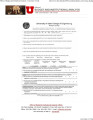
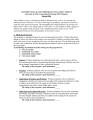
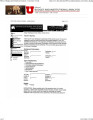
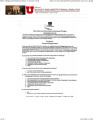
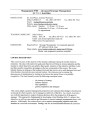
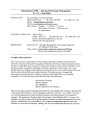
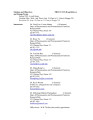
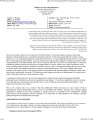
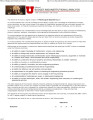
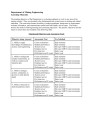
Show Syllabus and Objectives PHCEU 5125-Drug Delivery and Dosage Forms Spring 2005, 4 credit hours Lectures Mon., Wed., and Thurs. from 10:45am to 11:35am in Skaggs 250 Recitation Fri. from 10:45am to 11:35am in Skaggs 250 Instructors: Dr. Carol Lim, Course Master (18 lectures) Dept. of Pharmaceutics and Pharmaceutical Chemistry Research Park 421 Wakara Way, Room 305 ph 587-9711 carol.lim@deans.pharm.utah.edu Dr. Bruce Yu (6 lectures) Dept. of Pharmaceutics and Pharmaceutical Chemistry Research Park 421 Wakara Way, Room 311 ph 581-5133 yby1@utah.edu Dr. You Han Bae (5 lectures) Dept. of Pharmaceutics and Pharmaceutical Chemistry Research Park 421 Wakara Way, Room 315 ph 585-1518 you.bae@m.cc.utah.edu Dr. Zheng-Rong Lu (3 lectures) Dept. of Pharmaceutics and Pharmaceutical Chemistry Research Park 421 Wakara Way, Room 320 ph 587-9450 ZhengRong.Lu@m.cc.utah.edu Dr. Kevin Warner (3 lectures) ZARS, Inc. (drug delivery tech company) ph 350-0202 kwarner@zars. com Dr. Githarangi Mahika Weerasekare. (3 lectures) Dept. of Pharmaceutics and Pharmaceutical Chemistry Research Park 421 Wakara Way, Room 312 ph 585-1669 mahikaw@hotmail.com Office hours: M W Th after class and by appointment 1 Teaching Assistants: Vijay Sethuraman phone: 581-8848 office: 421 Wakara Way #304 vas2@utah.edu Mudit Kakar phone: 581-7120 office: 421 Wakara Way #306 muditkakar@yahoo.co.in Kristin Satterfield (grader) phone: 581-7125 office: 421 Wakara Way #300 Kristin.S atterfi eld@utah. edu Terminal Behavior Objectives 1. The student should know the objectives of dosage form design, and why dosage forms and drug delivery systems are needed. 2. The student should be familiar with the factors to be considered prior to drug formulation including physical and chemical properties, functions of excipients, biopharmaceutical/pharmacokinetic considerations, and therapeutic considerations. 3. The student is responsible for performing calculations associated with the physical and chemical properties of drug delivery and dosage forms. 4. The student is responsible for understanding different dosage forms (solutions, solid dosage forms, coarse dispersions, and others), and the physico-chemical background for each dosage form. 5. The student should know the factors involved in drug product design, including novel drug delivery systems, and molecular imaging. 6. The student should be familiar with biotechnology derived drugs and their drug delivery related issues. 7. The student should understand drug kinetics and drug binding phenomena. 8. The student should be aware of and understand targeted drug delivery systems such as radioimmunotherapy. Understanding the fundamental principles of drug delivery and dosage forms allows for a thorough comprehension of the drugs that she/he will be dispensing on a daily basis. Grading: Written Exams 80% (3 exams plus 1 non-cumulative exam during finals week) Weekly Homework and Quizzes 15% Group Projects 5% Exams will be during class hours unless otherwise indicated. Grading scale (minimal grades): 90-100% A's 80-89% B's 70-79% C's 2 |