| OCR Text |
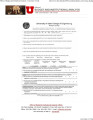
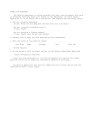
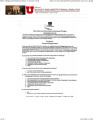
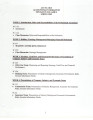
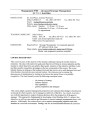
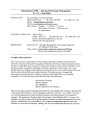
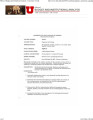
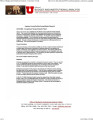
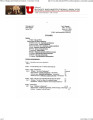
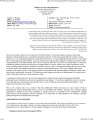
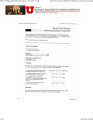
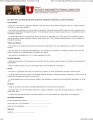
Show Chemistry 5730 - Fall Semester 2004 Instructor: Dr. Thomas G. Richmond, HEB 2404, 581-7487 E-Mail: Richmond@Chemistry.Utah.edu Office Hours: MWF, 10:30 - 11: 30; stop by anytime or by appointment. Secretary: Ms. Donna Keyes, HEB 2108, 581-5074 Lectures: TH, 9:40 - 10:30 AM, HEB 2006 Lab Sections: 2, MW, 1:00 PM; 3, TH, 1:00 PM; 4, TH, 5:00 PM; 5, MW 5:00 PM Experiments, some devised by Professor Goji Kodoma, will be handed out in class. You will also need safety goggles, a combination lock and a bound numbered lab notebook for this course. There will be some additional handouts throughout the term. This term will give you a chance to experience synthetic inorganic chemistry - making molecules from the rest of the periodic table. You will learn techniques of synthesis and apply them to classical coordination compounds, solid state systems, and organometallic compounds. You will work with high and low oxidation states and high and low temperatures. You will learn and apply techniques to characterize these molecules - some as old as coordination chemistry itself. In lecture, we will cover some background material on coordination chemistry, mechanisms of ligand substitution and organometallic chemistry. The Final Exam will cover material presented in lecture as well as laboratory work. Grading Scheme LABORATORY NOTEBOOK 40 LITERATURE ASSIGNMENT 20 LAB REPORTS (5 @ 40 POINTS EACH) 200 CHECK-OUT & LAB CLEANLINESS 20 FINAL EXAM (Thursday, December 5, in class) 40 TOTAL POSSIBLE 320 {Please Check on University Regulations if you decide to Drop This Course} You will keep a complete lab notebook that is detailed enough so someone could repeat the experimental procedure without reference to other materials. Most experiments will be done in pairs and only one lab write-up submitted for each group. You should work in concert with your lab partner rather than only performing a portion of the experiment. Leave a few pages at the front of the book blank to prepare a table of contents which should be updated weekly. A brief reason for doing the experiment and or hypothesis to be tested should be included. All measurements should be carefully recorded with appropriate units and calculations of derived quantities should be shown. Observations of the reaction in progress should be recorded. Any special safety precautions or problems with the experiments should be noted. Please have a colleague or TA review your lab book each day as you leave lab and initial and sign the pages as a witness to work completed. Your laboratory notebook will be occasionally reviewed by a course instructor without advance notice and a preliminary grade assigned after the coordination chemistry experiment. This will be an exciting quarter for me. Somehow in the course of my education I managed to avoid taking a formal lab course in inorganic chemistry! You are already exploring the coordination chemistry of the transition metals. Much of the classic mechanistic work on ligand substitution in this area was carried out in the labs of Professor Fred Basolo at Northwestern University. The synthesis of peroxydisulfate that you will accomplish later in the quarter reminds me of elegant mechanistic work on this system which is used for oxidation of organic compounds (Caro's Acid) performed by Professor John O. Edwards at Brown University. I am fortunate to be able to count both of these distinguished inorganic chemists as mentors in my career. I hope you will enjoy this term of exploration! |