| OCR Text |
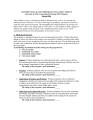
Show Management 5700 - Advanced Strategic Management CH 3 0 0 2 - F a l l 2004 INSTRUCTOR: Dr. Arm Phene, Assistant Professor Office: KDGB 215 Tel.: (801) 587 9055 Fax: (801) 581 7214 Email: mgtap@business.utah.edu Website: www.business.utah.edu/-mgtap Office Hours: Tuesday 11:00 am - 12:30 p.m. Wednesday 10:30 am - 12:00 noon and By appointment TEACHING ASSISTANT: Julie Feickert Office : BUC 38 Tel: (801) 587 9323 Fax: (801) 581 7214 Email: julie.feickertf@business.utah.edu Office hours: By appointment RESOURCES : Required Text: Strategic Management: An integrated approach (6t h edition); Hill & Jones Class website: www.business.utah.edu/~mgtap/mast5700.htm (Slides, case assignment questions available) COURSE DESCRIPTION This course focuses on the analysis of the strategic challenges facing the modern business enterprise. The class will explore the goals and objectives of firms in various industries and THE manner in which these firms can achieve these goals. Analyses of the industry, mterfirm rivalry and firm specific competitive advantage are the key components of the course. The course initially focuses on strategy at the business level and then moves on to multi-business firms AND firms that have diversified across national borders. The class goes on to examine the phenomenon of globalization by looking at the factors that permit firms to be globally competitive. The class formally covers the following conceptual areas: » the concept of strategy - industry analysis firm capabilities - global competition and strategies This course adopts a general management perspective and maintains that strategy is FUNDAMENTAL to not just the chief executive, but to managers at all levels of the firm. As a result, it PROVIDES you with the opportunity to analyze business decisions from the perspective of the general manager. This approach is fundamental for developing critical thinking skills. To ACHIEVE THIS objective, we will use case analysis and discussion to connect strategic management THEORY WITH practice. Additionally, this course allows you to practice management judgment, and MAKE mistakes in a cost-free environment. Strategy can also be uncomfortable because the QUESTIONS 1 and answers are often ambiguous and the solutions unclear. However, there are frequently better alternatives that can be reached through careful understanding of the competitive environment. The overarching goal of this course is to enable students to develop, and/or fine tune skills in the analysis of strategic and organizational problems and issues. These skills include: a) Diagnosis: Critically diagnosing strategic and organizational problems at various levels (e.g. individual, group, division, firm, industry group, society, and global) and developing an awareness of the fundamental assumptions involved. b) Recommendation: Developing viable solutions and implementation strategies to those problems. c) Communication: Articulating the above both orally and in writing. The specific objectives for the course are: (a) To gain an understanding of the role of the manager in formulating and implementing strategy. (b) To gain an appreciation of how the different functions contribute to the strategic success of the business as a whole. (c) To develop a competence in applying techniques in industry and competitive analysis. (d) To gain an understanding of how to evaluate firm resources and activities and to identify competitive advantages and disadvantages. (e) To gain a sensitivity to ethical issues in strategy making. (f) To gain an understanding of the basic issues in multinational strategy. COURSE FORMAT This is a case/discussion method course. The primary instruction vehicle will be the analysis of selected management, strategy, and policy cases. Short lectures and discussions of assigned readings will be used to complement the discussion of the case material. In addition, readings in the popular business press will be used to supplement the conceptual readings and formal case material. This material will be used primarily to understand the practical application of the competitive strategy frameworks. Note: The professor reserves the right to change assignments and cases as necessary to facilitate an improved learning experience. Preparation for the case discussion should begin with a rapid reading of the assigned case and other materials. It is also helpful to review the assignment questions for guidance regarding which particular issues require special attention. The next step is to re-read the case carefully3 taking notes and sorting information, facts, and observations under a number of relevant headings. Most students will then want to evaluate the financial information to develop a more in-depth understanding of the firm's position. Finally, preparation should include notes that can be used to help your participation in class discussions. 2 Students often feel uncomfortable in this course because of the high level of ambiguity and the lack of "precise" answers. We will, however, examine real problems, messy problems, and problems without "optimal" solutions. Tools are important, but are inadequate by themselves and the ever changing conditions of today's business world quickly renders yesterday's analysis inappropriate for tomorrow. Consequently, it is critical to develop skills in both the "art" and the "science" of strategy. COURSE EVALUATION 1. Strategic analyses 15 % 2 individual assignments (@ 5%) 1 team assignment 5% 2. Major Project (team assignment) 25% Written report 20% Presentation 5% 3. Exams (2) 50% Exam 1 (25%) Exam 2 (25%) 4. Class participation 10% 100% Assignments Cases provide important windows into the real problems that firms face. The use of cases provides students the opportunity to evaluate and make recommendations in an environment that is "safer" than having to make choices that have immediate and real business implications. 1. Strategic Analyses a. Individual, written strategic analyses are required for two cases. You may choose any 2 cases out of 10 (indicated in bold, in the schedule). An individual strategic analysis may not be submitted for a case, that your group is presenting. One individual strategic analysis is required before the mid term. Please do not select Minicases. The strategic analysis should address the questions assigned for the particular case and utilize theory and concepts from the relevant chapter (the chapter immediately preceding the case as outlined in the session plan). Case questions are available at the class website. The analysis should support your position and relate the concepts to evidence from the case. The strategic analysis involves responding to the questions by expressing what you believe the firm should do. Recommendations should be clearly supported, indicating why you think a particular course of action makes sense. Cases should be evaluated at the point in time in which they were written. Case analyses are due at the beginning of the session in which the relevant case is discussed. 3 These assignments are limited to one page of discussion (single spaced, essay style, instructor legible font size) and additional discussion will not be reviewed. The one page limit will help you focus both your thinking and writing. The analysis should not be a summary of the case or a list of issues. Such statements will be awarded 0 points. You may choose to submit one additional case analysis, in addition to the two assignments. If you do so I will consider the two best scores (out of the three submitted) for calculation of your final grade. b. Team Assignment: Each team will be assigned one case from the 10 cases indicated in bold in the schedule, during the course of the semester. The team assignment involves two components i) leading and managing class discussion for the relevant case session (45 minutes - 1 hour) and ii) a written team analysis for the particular case. The team presentation and class discussion should address the individual assignment and class discussion questions posted for the case. The team is responsible for stimulating class discussion. Therefore credit will be given for raising issues and questions that go beyond what is obvious and for creativity in involving the class. The team will also turn in a one page written strategic analysis for the group. For the written analysis, please follow the guidelines indicated for individual strategic analysis assignments. Turning in assignments The assignments must be handed in at the beginning of class (for case analyses at the beginning of the session in which the relevant case is discussed) and should be identified with your name, course name and section number. If for some reason you are unable to attend class the day an assignment is required (e.g., illness, business trip), you may submit it before class to my office, or use alternative technologies such as fax, or email. Be sure to have the secretary date and time your papers before they go into my mailbox. Please let me know in advance if you will be submitting your assignment using one of the alternative approaches. Such submissions are still due before the start of class time. Late assignments will not be accepted in fairness to other students. Evaluation Exceptional analyses that address the assigned questions, support assertions, show substantial insight, integrate concepts from the text and attempt to draw conclusions regarding the implications of the issue will receive 5 points. Analyses/commentaries that make general comments, generally support the assertions, but do not folly draw conclusions or insights regarding the implications of the issue will receive 4 points. 3 points will be awarded to underdeveloped analyses/commentaries that make statements generally, but do not support positions or draw any conclusions. Zero points will be awarded to bullet lists that do not include support, evidence or rationale for the position. 2. Major Project (Team) The large strategic analysis project will be conducted in teams of 6-7 students. Teams are not assigned by the professor and students choose their own project partners. Because students select their own project partners, team management is the responsibility of the members. One of the most important developments in the workplace today is the idea of 4 self-managed teams. The self-selection approach is designed to encourage students to practice constructive self-management techniques. Each team selects a publicly-held corporation that is discussed in the current business press and facing interesting strategic problems. The use of a publicly-held firm rather than one that is closely-held is important to ensure adequate access to important corporate information such as financial statements. All teams will develop both a written analysis and a brief oral presentation. The final written report should follow the outline attached at the back of the syllabus. This outline should be viewed as the firm's strategic balance sheet. Groups are expected to use the professor as a resource throughout the process. Fundamentally, the team project allows you to use both the "art" and "science" of strategic management by developing your research skills in competitive analysis, applying the strategic tools learned in class, and using your imagination and judgment to formulate the recommendations and implementation plan. a) Written project The written analysis should be about 20-25 pages, double-spaced, not including exhibits. The paper should describe and evaluate the firm's current position, and include an analysis of the relevant industry issues. Finally, the paper should conclude with recommendations for both future strategy and implementation. Please see the attached outline for the specific points to be included in the report. Using the questions outlined at the end of each chapter, under the Strategic Management Project Module, will help you to link some of the theory to your specific case. Papers are required to be fully referenced in the body of the paper and with a complete bibliography of sources. A lack of appropriate referencing is considered plagiarism. Although some firms are more heavily cited in the business press than others, a minimal bibliography should have at least ten major references. b) Oral presentation Oral presentations will be conducted at the end ofthe semester in class. Each presentation should last about 12 minutes and focus on the key strategic issues and recommendations facing the firm investigated. Teams must provide an executive summary of the firm to the class summarizing the central issues and recommendations. Order of presentation will be determined by a random draw of dates. All members ofthe team are expected to participate in the final presentation. Students should use visual materials such as overhead slides or power point to support their presentations. Presentation style and creativity as well as efforts to engage the participants will be rewarded. c) Choice of company Each team must indicate their choice of the company for the team project by October 6t h An early choice is recommended, since duplication of companies across teams, is not permitted. 3. Exams There will be two exams that will cover the general strategic frameworks discussed in class. Cases and other material discussed in class (e.g., current news articles) not in the text will also be included in the exam. The format ofthe exam may be short answer, multiple choice, and/or short essay. Exams must be taken at the times indicated in the class schedule. 5 4. Class participation Individual: An important aspect of learning by the case method is class discussion of the issues, problems, and solutions. This approach, however, depends on students being thoroughly familiar with the details of the case under consideration. The quality of individual preparedness in case discussions is important. Although it can be difficult, students should anticipate being called on at random, and attendance at all classes is expected. If you are not present, you cannot participate. Criteria which will be used to judge case preparedness include: * Are the discussion points relevant to the case? * Do the points go beyond recitation of the case facts? * Is there evidence of analysis to back up statements? * Are the implications of facts clearly drawn and stated? * Are comments linked to those of others? * Do comments further the class understanding of issues discussed? * Do comments raise interesting questions? * In discussion, do the comments fit in the class context? * Does the analysis make use of models and techniques from the readings or lectures? * Are comments made in a respectful, professional, and constructive manner? Students should not expect to receive full points for participation. Simply being present does not warrant full credit, nor does frequent participation that does not advance the learning of the class. Academic standards All students are expected to pursue the highest standards of academic honesty. Any assignments not meeting such standards are subject to failure. The Student Code (University Regulations - Chapter X , Article X I of the Student Code) defines academic dishonesty as "including, but not limited to, all forms of cheating, plagiarism, research misconduct, misrepresenting one's work, and/or inappropriately collaborating." Plagiarism and misrepresentation specifically refer to the copying of another person's material, even with modification, that is not fully referenced. Specific details of each of these issues are discussed in the University of Utah Class Schedule. In addition, papers that are acquired (either for free or for a fee) through electronic or nonelectronic methods also will be considered to have been plagiarized and are subject to failure. Finally, students should not use the same or substantially similar paper to meet the requirements of more than one course. If the same firm is used for a project in another class, there should be no more than 20% overlap of material. Papers exceeding this level of overlap will not be accepted. Adding a course Students have the option of adding a class the first three days of the term if seats are available. After these three days of the term, students must have a permission number to add the class until the last day to add, which is September 7, 2004 for Fall 2004. The University Registrar allows students to add a course late by completing the Late Add Form and paying a $50 fee; however, the departments have discretion on permitting late additions to their courses. The Management and Marketing Departments will not permit students to add 6 courses past the add deadline stated above. In the case of compelling, non-academic emergencies students can add a course by submitting a Late Add Form and supporting, written documentation to the instructor and the Chair of Management and Marketing Departments. Dropping a course Students may drop a class through the seventh calendar day of the term (September 3, 2004). Dropped classes are deleted from the student's record, and no tuition is charged. Beginning the eighth calendar day of the term and extending through the October 22,2004, a student may withdraw from a class or from the University. A "W" is recorded on the academic record. Students may appeal the deadline for withdrawal in the case of compelling, non-academic emergencies by submitting a petition and supporting documentation to the Dean of the College of their major department. For extraordinary reasons approved by the student's Dean and the Registrar, the grade of "W" may be given after the end of the term. Such requests must be submitted within three years of the affected term(s) or prior to graduation from the University, whichever comes first. Prerequisites The prerequisites for this course are MKT 3010, FIN 3040, MGT 3660 and MGT 3680. If you have not completed the prerequisites for the class, please drop this course as soon as possible. If you have questions concerning the prerequisites, please contact the Business Undergraduate Advising Office in KDGB 440. Final Examinations and Papers Students who wish them back may either pick them up from the faculty member, or provide a self-addressed envelope for the exam/paper to be mailed. Student Absences Excused Absences: Students absent from class to participate in officially sanctioned University activities (e.g., band, debate, student government, intercollegiate athletics) or religious obligation, or with instructor's approval, shall be permitted to make up both assignments and examinations. The University expects its departments and programs that take students away form class meeting to schedule such events in a way that will minimize hindrance of the student's orderly completion of course requirements. Such units must provide a written statement to the students describing the activity and stating as precisely as possible the dates of the required absence. The involved students must deliver this documentation to their instructors, preferably before the absence but in no event later than one week after the absence. Americans with Disabilities Act The University of Utah David Eccles School of Business seeks to provide equal access to its programs, services and activities for people with disabilities. If you will need accommodations in this class, reasonable prior notice needs to be given to the instructor and to the Center for Disability Services, http://disability.utah.edu/. 160 Olpin Union Building, 581-5020 (V/TDD) to make arrangements for accommodations. All written information in this course can be made available in alternative format with prior notification to the Center for Disability Services. Student Responsibility It is the student's responsibility to contact instructors and submit necessary forms. If you have a problem with a course, please deal with it immediately. 7 TEAM PROJECT STRUCTURE I. EXECUTIVE SUMMARY AND GENERAL INTRODUCTION II. CORPORATE DESCRIPTION A. Company and Industry Description 1. History of firm 2. Ownership characteristics 3. Financial condition: past, present, trends a) Analysis of financial statements and performance b) Performance and soundness in comparison to industry/ competitors B. Industry type: Manufacturing/Service/Labor/Capital/Talent/Knowledge Intensive (for example) C. Organization and Structure 1. Diversification and Centralization 2. Differentiation and Integration 3. Type of organizational structure II. EXTERNAL AND INDUSTRY ANALYSIS A. Macroenvironment 1. Stakeholders (other than core 5 forces) 2. Social/demographic trends 3. Governmental issues 4. Technological issues 5. Global issues 6. Other issues of particular importance to specific firm B. Industry environment and strategic groups (5 Forces evaluation) 3. Competitors 2. New entrants, entry barriers 3. Substitutes 4. Suppliers 5. Buyers C. Summary of opportunities and threats D. Evaluation of strategic fit with external environment and industry III. INTERNAL STRATEGIC EVALUATION A. Strategic condition of the Firm 1. Mission statement (if exists) 2. Resources and capabilities 3. Distinctive competencies B. Organizational Culture 1. Norms, assumptions and expectations 2. Traditions, ways of doing things, personality C. Summary of strengths and weaknesses D. Current Strategies 1. Current functional strategy 2. Current business-level strategy 3. Current global strategy 4. Current corporate strategy E. Evaluation of strategic fit with internal organization IV. COMPETITIVE EVALUATION AND RECOMMENDATIONS 1. Key strategic issues (synthesis and ranking of critical external and internal issues that affect sustained competitive advantage) 2. Prioritized ranking of strategic issues 3. Recommendations and Required Actions a. Critical recommendations and alternatives firm should pursue b. Rationale for recommendations c. Choose and prioritize recommendations d. Analysis of potential resistance and outcomes e. Implementation plan (timeframe, control and structural issues, politics and change issues) V. EXHIBITS AND REFERENCES 8 SCHEDULE OF READINGS, CASES, AND ASSIGNMENTS SECTION: 001 TIME: MAV 9:10 a.m. - 10:30 a.m. PLACE: CRCC 215 SECTION: 002 TIME: MAV 12:25 p.m. -1:45 p.m. PLACE: CRCC 215 STRATEGIC MANAGEMENT INTRODUCTION Aug 25 Course Overview - Introduction to Strategic Management Case: To be handed out in class Aug 30 Strategic Management Process Reading: Chapter 1: Strategic Management Process Analyzing and writing a case study Minicase: The Genesis of Autonomous Action at 3M (page 20) Sept 1 The external environment Reading: Chapter 2: External analysis: Industry opportunities and threats Activity: The blue chip game Team identification due Sept 6 Labor Day Holiday Sept 8 The external environment Case: #1 Vail Resorts Inc Ind. Assn: Strategy analysis - Individual choice NATURE OF COMPETITIVE ADVANTAGE Sep 13 Internal issues Reading: Chapter 3: Internal analysis: Distinctive competencies, competitive advantage Minicase: BJ's Wholesale - Competitive advantage (page 74) Sep 15 Internal issues Case: #5 Perdue Farms Inc Ind. Assn: Strategy analysis - Individual choice STRATEGY FORMULATION Sep 20 Functional strategy Reading: Chapter 4: Competitive Advantage through functional level strategies Minicase: CSX - Getting the trains to run on time (page 109) 1 Sep 22 Functional strategy Case: #15 Toyota Ind, Assn: Strategy analysis - Individual choice Group project guidelines Sep 27 Business level strategy Reading: Chapter 5: Business level strategy Chapter 6: Competitive strategy and industry environment Exam format Sep 29 Business level strategy Case: #31 Blockbuster in 2002 Ind. Assn: Strategy analysis - Individual choice Oct 4 Strategy in high technology industries Reading: Chapter 7 Minicase: Where is the standard for DVD recorders? (page 229) Oct 6 Strategy in high technology industries Case: #19 The home video game industry Ind. Assn: Strategy analysis - Individual choice Group project: Company choice due Oct 11 Review Oct 13 Mid-Term Exam Oct 18 Corporate Level Strategy Reading: Chapter 9: Horizontal integration, vertical integration and outsourcin; Chapter 10: Diversification, acquisitions and internal new ventures Minicase: Horizontal integration in health care (page 305) Oct 20 Corporate Level Strategy Reading: Chapter 10: Diversification... (Continued) Oct 25 Corporate Level Strategy Case: #33 AOL Time Warner Ind. Assn: Strategy Analysis - Individual choice Oct 27 Global Strategy Reading: Chapter 8: Global Strategy Minicase: Ikea's Swedish ways (page 273) Nov 1 Global Strategy Case: #40 Whirlpool Corporation's global strategy Ind Assn: Strategy analysis - Individual choice 2 Nov 3 NO CLASS - PROJECT TIME STRATEGY IMPLEMENTATION Nov 8 Corporate Governance Reading: Chapter 11: Corporate performance, governance and business ethics Minicase: The agency problem and the collapse of Barings Bank (page 384) Nov 10 Corporate Governance Case: #10 Nike Ind Assn: Strategy analysis - Individual choice Nov 15 Strategy implementation Reading: Chapter 12: Strategy implementation in single industry companies Chapter 13: Strategy implementation in multi industry & multinational cos. Minicase: Gateway's new rules backfire (page 425) Nov 17 Strategy Implementation Case: #16 Nucor in 2001 Ind Assn: Strategy analysis - Individual choice N.ov.2.2. Strategy Implementation Case: #41 You push the button we do the rest... Eastman Kodak Ind Assn: Strategy analysis - Individual choice Ind Assn: Optional news commentary TEAM PAPERS DUE Nov 24 NO CLASS Nov 29 Team presentations Dec 1 Team presentations Dec 6 Team presentations Dec 8 Team presentations/ class wrap-up Dec 15 Final Exam (Sec 001) 8:00 a.m. -10:00 a.m. Dec 17 Final Exam (Sec 002) 10:30 a.m. - 12:30 p.m. 3 |