| OCR Text |
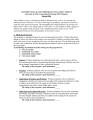
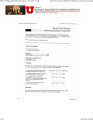
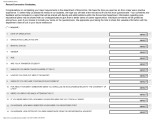
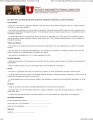
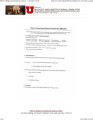
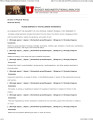
Show Office of Budget and Institutional Analysis - University of Utah http://www.obia.utah.edu/2006Accred/soa/capstone_courses/nrs_cap.php Office of BUDGET AND INSTITUTIONAL ANALYSIS THE! UNIVERSITY OF UTAH 1 of 3 10/13/2006 2:28 PM Office of Budget and Institutional Analysis - University of Utah http://www.obia.utah.edu/2006Accred/soa/capstone_courses/nrs_cap.php 9. The student will demonstrate professional behavior at all times. Dismissal from a course and/or the College can result from unprofessional behavior. Types of clinical experiences All University of Utah Capstone students are expected to complete 270 program-related hours during the semester, Of the 270 hours, 30 hours are designated for leadership/management experiences and 240 hours arc for direct clinical experiences. Students will satisfy these requirements through one of three types of clinical placements. Students currently working as a SPA II may qualify to choose experiences 2 or 3. All students will meet the course requirements as outlined in the syllabus, 1) Regular Capstone experience: 270 hours in a community setting 2) Capstone/SPA experience: 270 hours at University Hospital on cither the home unit or may split clinical lime between two units. 3) Capstone Community experience/SPA UUHC experience: ISO hours {includes leadership of 30 hours| at a community site, and 120 hours at the University Hospital experience. In order to successfully pass this course, students must passed the clinical component from both settings. To qualify for this experience: • SPA must have been employed for a minimum of 3 months at greater than 60% FTE; and • SPA must have completed the SPA checklist received upon employment from the University Hospital. Americans with Disabilities Act The University of Utah seeks ro provide equal access to its programs, services and activities for people with disabilities. In order to establish the existence of a disability and/or request reasonable accommodations for this class, you should contact the Center for Disabled Student Services (160 Olpin Union Building at 581-5020, voice or TDD), Accommodations can then be made with reasonable prior notice to the instructor, University of Utah Student Code The Student Code is spelled out in the Student Handbook. Students have specific rights in the classroom as detailed in Article III of the code. The code also specified proscribed conduct (Article XI) that involves cheating on tests, plagiarism, and/or collusion, as well as fraud, theft, etc, Students should read 2 of 3 10/13/2006 2:28 PM Office of Budget and Institutional Analysis - University of Utah http://www.obia.utah.edu/2006Accred/soa/capstone_courses/nrs_cap.php the Code carefully and know they are responsible for the content. Students will receive sanctions for violating one or mors of these proscription a. The. faculty will enforce the code. Students have the right to appeal such action to the Student Behavior CoCmemolgittleee. af Nunsrgi Civ uia I i ms: All students in the College of Nursing are also expected to maintain professional behavior in both the clinical and classroom settings. The professional behaviors Listed below maybe modified at the discretion of the faculty member based on course requirements. These behaviors are not ii roiled to; • Attending orientations, class and clinical • Taking exams as scheduled •• A rriAvincg caenndpgi lteavin ger clsasps aondn yctlsiibnliicial as scheduled For hteri own actions • Giving prior notification to the faculty when they are unable to meet commitments and detailing how and when they will make-up requirements • Dealing with others {peer3, faculty, patients and clients) in a respectful, sensitive and nonjudgmental manner The faculty acknowledges that true life emergencies do exist and will work with students in these situations as they arise. Note: Below are listed some examples that arc not considered true life emergencies; + Scheduling work or vacation during class or clinical times • Non-emergent doctor or dental appointments • Being fatigued due to your own actions • Planning 'special'events that interfere with class or clinical time •aT nhedDeer Ho fulcnwnlitl cinaigl b eaheraovsir ex opferocaitnt bsoht an dsutde pnsortefs soainndal saaftncduadytrls. ofra cslsorom 1, Respecting others - space, quiet (i.e., no pagers, cell phones) 2, Start and end class on time 3, Professional appearance - image in clinical setting? 4, Be accountable lor preparation for class and clinical 5, Constructive verbal and non-verbal behavior c. Care for others in a empathetic manner 7. Honest, open, assertive communication 8. Confidentiality of all patient information 9. Teamwork, helping behavior for colleagues 10. Honesty, Integrity 11. Personai/profcssional ethics 12. Respecting all individual differences {i.e. culture, ethnicity, religion, work experience, gender, age, sexual orientation, etc), Office of Budget & Institutional Analysis (OBIA) 110 Park Building, 201 South President's Circle, Salt Lake City, UT 84112 Office: 801-581-6948 | Fax: 801-581-7541 | Email: info@obia.utah.edu The University of Utah © - Disclaimer 3 of 3 10/13/2006 2:28 PM |