| OCR Text |
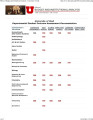
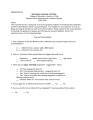
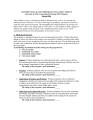
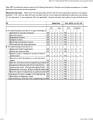
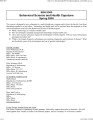
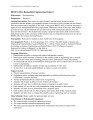
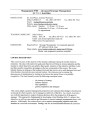
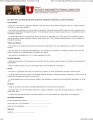
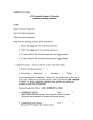
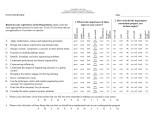
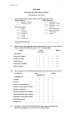
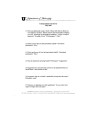
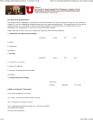
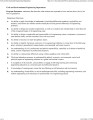
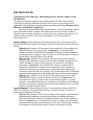
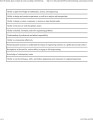
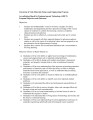
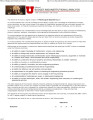
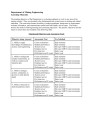
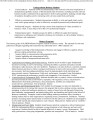
Show CVEEN 4910 PROFESSIONAL PRACTICE AND DESIGN Syllabus University of Utah Spring 2006 Department of Civil & Environmental Engineering EMRL 204 Tuesday & Thursday 9:10am - 12:05pm Faculty Coordinator: Dr. Larry Reaveley EMRO 213, reaveley@civil.utah.edu Office Hours: Tuesday & Thursday 9:00am-12:00noon and by appointment TA: Tyler Ross tyler.ross@hotmail.com Office Hours: Monday and Friday 10:00 am - 12:00 pm Text: Walesh, Stuart G., Engineering Your Future 2n d Edition, ASCE Press, Reston, VA 20191, 2000. Additional References: Covey, Stephen R., The 7 Habits of Highly Effective People, Simon & Schuster, NY 1990. Ellis, Monica D., The Role of Engineering in Sustainable Development, American Association of Engineering Societies, Washington, DC, 1994. Objectives: This course is designed to provide the student with a comprehensive experience in the design process that mirrors an actual project. There is no one answer or solution to this design problem. It is expected that the final design(s) will be based on a collective effort of all registered students. The final design will evolve throughout the semester, and will be based on many large and small changes that will be suggested by the different members of the design teams and the owner's representatives. There will be a heavy emphasis on teamwork. During the semester you will receive instruction on many different aspects of feasibility analysis, design, construction, project management and professional development. You will be required to compile your own course journal based on the comments of different lecturers and upon your own observations. You should have some notations in your journal for each class meeting and from individual work sessions and team meetings. All memos should be included. The journal will be handed in at the end of the semester. This course should increase your individual capabilities in the following ways: a. Applying previously acquired knowledge of mathematics, sciences and engineering to solve more complex engineering problems such as encountered in professional practice. b. Designing and conducting data acquisition efforts, as well as analyzing and interpreting data, in more than one of the recognized major civil engineering areas. c. Designing constructible and sustainable civil engineering systems, components and processes that meet desired needs and incorporate principles of life cycle costing. d. Functioning on a team (multi-disciplinary, project, consultant-client, etc.). e. Identifying, formulating and solving civil engineering problems in several of the following areas: structural, geotechnical, transportation, environmental, public works and water resources. f. Developing a clear understanding of the civic, professional and ethical responsibility of the engineering profession, especially as it relates to health and safety, and the importance of professional licensure. g. Communicating effectively using written, graphical and verbal skills. Your proposal and reports will be presented orally as well as in written form. h. Developing a clear understanding of the ethical, economic, environmental, social and political impact of civil engineering in a society and global context. i. Learning the importance of continued education and life-long learning in the civil engineering profession. Spring 2006 Syllabus.doc Page 1 of 2 1/9/2006 14:55 A1/P1 j . Learning how to gain knowledge of contemporary issues that are affecting our infrastructure and environment. k. Developing the ability to use the techniques and skills, including engineering economics, and modern engineering tools necessary for professional civil engineering practice. In addition, you will: l. Learn to be accountable for the work you perform as a member of a team. m. Learn to independently get needed information to perform the correct analysis and design. n. Learn to record information, analyze that information, then organize and present the results of that effort both orally and in writing. Grading Since the product of this course is based on a team effort, attendance is required for each scheduled class session. Do not plan to leave early. In addition, there will be three oral presentations that are part of the required deliverables. These may be at a time other than the scheduled class time. Each team will utilize a different team member to deliver the oral portion of each of their team's three presentations. Each student will also be expected to contribute to the oral and written presentations. Your grade for this class will be based on your individual effort and participation. Participation is described as contribution to written and graphic products and verbal interaction with the other team members. Interaction is vital. A project manager and team leaders will be selected and they will be asked to evaluate the performance of their team members. This information will be held confidential and is one of the many considerations that will determine your grade. Specific grading criteria will include: 1. Attendance - Each unexcused absence will result in a 1/3-point decrease in your grade, e.g. A- to B+. Excused absences are possible with prior request, or in cases of emergency with appropriate documentation. 2. Daily assignments and Quizes (30%) - Based on assigned reading and (previous) lecture materials 3. Journals (20%) - Class notes, speakers log, field trip and site notes, notes from team meetings, significant decisions reached 4. Peer Evaluations (10%) 5. Team projects (40%) a. Project Proposal (10) b. Team Feasibility Study (10) c. Preliminary Engineering Report (10) d. Personal Presentation (10) The Project Process A Summary Project Description is included as a separate item in this package. You will be expected to participate in a team that will develop a detailed proposal (task descriptions, time budget and schedule) for the assigned work area. After your proposal is accepted, your team will be authorized to commence its work. Your Team Leader will meet regularly with other Team Leaders for purposes of coordinating the efforts, sharing information, modifying the work plans where appropriate, and planning for delivery of reports and presentations. The process will take each team and team member from developing Proposals (learning to assess and communicate capabilities and skills) through defining the work to be done in a Feasibility Study (developing, analyzing and defining alternatives to a problem) to preparation of a Preliminary Engineering/Design Report (applying sound civil engineering knowledge and skill to solving a client's problem). Spring 2006 Syllabus.doc Page 2 of 2 1/9/2006 14:55 A1/P1 |