| OCR Text |
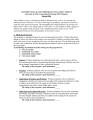
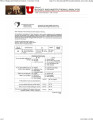
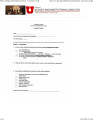
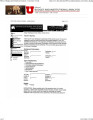
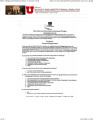
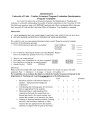
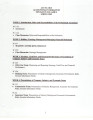
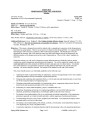
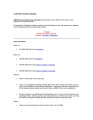
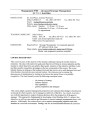
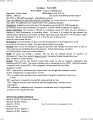
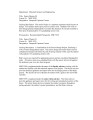
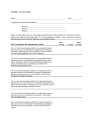
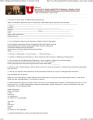
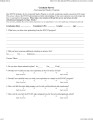
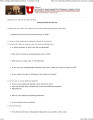
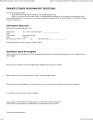
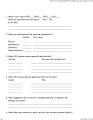
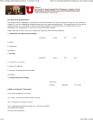
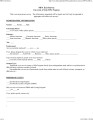
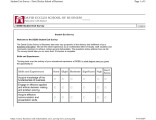
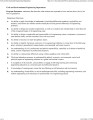
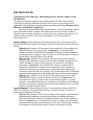
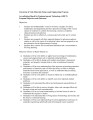
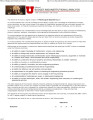
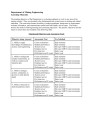
Show Self-Study Report for Biomedical Engineering November 2003 BIOEN 4201, Biomedical Engineering Project 1 Department: Bioengineering Designation: Required Catalog Description: This course uses each student's required senior project as source information that the student will repeatedly present to the class in both a written and oral format. Due the communication emphasis of the class, it along with BIOEN 4202 covers the University's upper-division communication/writing requirement. During the course of the class, each student provides several oral presentations that are followed-up with instructional criticism from the class and the instructor. The students also prepare a progress report and a draft version of their final project poster at the conclusion of the semester that are critiqued and returned at the start of BIOEN 4202 for revision and resubmission. Prerequisite: Restricted to students in their fourth year of the program Text (required): Pardis, J. G. & Zimmerman, M. L. (2002) "The MIT Guide to Science and Engineering Communication" and/or Pfeiffer, W. S. (2004) "Pocket Guide to Technical Writing" Committee on Science, Engineering, and Public Policy (1995) "On Being a Scientist. Responsible Conduct in Research" on the Web at: http://www.nap.edu/books/0309051967/html/index.html Learning Objectives: 1. Demo nstrate the ability to design and conduct independent research 2. Develop the skills necessary to function in the modern world of engineering and to succeed in their chosen career paths including graduate school, professional school, and industry 3. To understand and utilize several different analytical tools used to examine and solve ethical issues in engineering 4. Demonstrate the ability to prepare written and oral reports of one's work 5. To learn how to provide useful feedback to others in a team environment Topics Covered: • Ethical responsibilities of being a scientist • Engineering ethics including analytical approaches to making ethical decisions when confronting a complex decision • Various professional ethical creeds found in engineering • Students will prepare an ethical review of their senior project • Students will learn how to effectively present a proposal in a public forum • Each student will provide two oral presentations during semester on their research • Student's will learn how to present and write a progress report • Each student will provide a written progress report and a draft of their research poster • Student's will learn how to critique the scientific and/or engineering merit of a project Class Schedule: Meets weekly for approximately one hour Contribution to Professional Component: • The course teaches biomedical engineering science. • The course teaches biomedical engineering design. • The course provides general education that complements the technical content of the curriculum. Self-Study Report for Biomedical Engineering November 2003 During the course of the semester each student is provided several opportunities to present his/her individual project in both a written and oral format. In their presentations, they are encouraged to provide the relevant context within which their project is generated. This leads to discussion of various engineering standards and constraints including economic, environmental, sustainability, manufacturability, ethical, health and safety, social, and political. In addition, they are asked to provide an ethical review of their individual projects and to seek out appropriate solutions to any ethical dilemmas found within their projects. Relationship to Program Outcomes: Outcome % Effort* A Ability to apply knowledge of mathematics, science, and engineering. 5 B Ability to conduct experiment s and analyze and interpret data. 5 C Ability to design an experiment, system, component, or process to meet desired needs. 5 D Ability to function on multi-disciplinary teams. 10 E Ability to identify, formulate, and solve engineering problems. 5 F Understanding of professional ethical responsibility. 8 G Ability to communicate effectively in an oral format. 20 H Ability to communicate effectively in a written format. 25 J Recognition of the need for and an ability to engage in lifelong learning. 5 K Knowledge of contemporary issues. 2 L Ability to use the techniques, skills, and modern engineering tools necessary for engineering practice. 10 *Percentage of time and effort of a course dedicated to a specific outcome Assessment Tools: • Oral presentations: presentations will be reviewed by class and section instructor • Written progress report: all reports will be evaluated by the four class instructors • Ethic Homework assignment: graded by ethics instructor • Class teaching survey Prepared by: Kelly W. Broadhead, Nov 19, 2003 Self-Study Report for Biomedical Engineering November 2003 BIOEN 4202, Biomedical Engineering Project 2 Department: Bioengineering Designation: Required Catalog Description: This course is a continuation of BIOEN 4201 where each student was required to present his or her senior project. The class requires each student to further refine both the oral and written presentation of his or her senior project to a professional level through additional presentations in several different time formats and through submitted drafts of his or her senior thesis. Due to the communication emphasis of the class, it along with BIOEN 4201 covers the University's upper-division communication/writing requirement. At the conclusion of the semester, each student provides a senior thesis and participates in a public senior project fair where they provide a five-minute oral presentation followed by a twenty-minute poster presentation. Prerequisite: BIOEN 4201 Text (required): Pardis, J. G. & Zimmerman, M. L. (2002) "The MIT Guide to Science and Engineering Communication" and/or Pfeiffer, W. S. (2004) "Pocket Guide to Technical Writing" Committee on Science, Engineering, and Public Policy (1995) Learning Objectives: 1. Demonstrate the ability to design and conduct independent research 2. Develop the skills necessary to function in the modern world of engineering and to succeed in their chosen career paths including graduate school, professional school, and industry 3. Demonstrate the ability to prepare written and oral reports of one's work 4. To learn how to provide useful feedback to others in a team environment Topics Covered: • Students will be instructed on the appropriate statistical analysis that should be run on their individual projects • Each student will provide one fifteen minute oral presentation and one five minute presentation during the semester on their research for instructional feedback • Students will provide a draft of their senior thesis for feedback before submitting a final version • Each student will present a five minute oral presentation followed by a twenty minute presentation of their Senior Project Poster in a public forum • Student's will participate in critiquing fellow students' work Class Schedule: Meets weekly for approximately one hour Contribution to Professional Component: • The course teaches biomedical engineering science. • The course teaches biomedical engineering design. • The course provides general education that complements the technical content of the curriculum. During the course of the semester each student is provided several opportunities to present his/her individual project in both a written and oral format. In their presentations, they are encouraged to provide the relevant context within which their project is generated. This leads to discussion of various engineering standards and constraints including economic, environmental, Self-Study Report for Biomedical Engineering November 2003 sustainability, manufacturability, ethical, health and safety, social, and political. In addition, they are asked to provide an ethical review of their individual projects and to seek out appropriate solutions to any ethical dilemmas found within their projects. Relationship to Program Outcomes: Outcome % Effort* A Ability to apply knowledge of mathematics, science, and engineering. 5 B Ability to conduct experiments and analyze and interpret data. 5 C Ability to design an experiment, system, component, or process to meet desired needs. 5 D Ability to function on multi-disciplinary teams. 10 E Ability to identify, formulate, and solve engineering problems. 5 G Ability to communicate effectively in an oral format. 25 H Ability to communicate effectively in a written format. 25 J Recognition of the need for and an ability to engage in lifelong learning. 5 K Knowledge of contemporary issues. 5 L Ability to use the techniques, skills, and modern engineering tools necessary for engineering practice. 10 *Percentage of time and effort of a course dedicated to a specific outcome Assessment Tools: • Oral presentations: presentations will be reviewed by class and section instructor • Written progress report: all reports will be evaluated by the four class instructors • Class teaching survey Prepared by: Kelly W. Broadhead, Dec 2, 2003 |