| OCR Text |
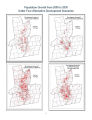
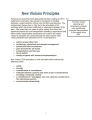
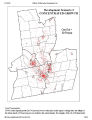
Show urban riverfront development, a region known for its high quality transit service and walkable, attractive cities and suburbs. Managed lanes would have the highest potential for success under this scenario and would provide options for commuters to avoid congestion and provide for better conditions for goods movement and vacation travel. The largest budget for street reconfiguration and streetscaping would be available under this scenario, while the need to widen suburban arterials would be minimized. Under a high growth scenario, a concentrated pattern of development is not likely to evolve unless strong regional policies and investments are implemented in advance of growth. Many of the big ticket transportation initiatives discussed in this paper would encourage urban reinvestment and concentrated development, but strategic investments and policies related to water, sewer, schools, and other infrastructure and services would also be necessary to encourage a concentrated development pattern. Strong community planning will be required to encourage smart growth development. Early and continuing investments in transit, greenways, urban development, and other initiatives can support and protect future quality of life for the whole region. Conclusions The big ticket initiatives represent an investment tool that will help manage growth in a way that will sustain the Capital District as a quality region. Investments in the big ticket initiatives can catalyze a more concentrated development pattern under any growth scenario. The caveat is that the big ticket initiatives are currently unfunded, and by themselves will not induce high growth. However, if the region does experience high growth, these investments provide an opportunity to protect the quality of the region's transportation system, while at the same time encouraging urban investment and concentrated growth. In the event that higher growth does not materialize, partial implementation of the big ticket items, to the extent feasible, can be pursued. Failure to invest in transportation initiatives will result in lost opportunities to provide mobility and quality of life, and to shape the future of the region. The New Visions Plan already calls for transportation investments that support urban reinvestment and high quality suburban planning. The public dialogue that has occurred in the development of the 2030 Plan-New Visions for a Quality Region has reaffirmed and broadened the support for policies that lead to healthy economic growth while sustaining quality walkable communities. Groups such as the Center for Economic Growth, the Business - Higher Education Roundtable and ARISE have also engaged extensively in the subject of regional transportation system needs and wants, with CEG producing a collaborative "regional development strategy" and the roundtable authoring a white paper on transportation. The regional urban empowerment group ARISE has also engaged extensively in the regional development agenda discussion. These groups are both supportive of and engaged in CDTC's processes. The result is a consensus that seeks to use transportation policy (and other public policy) in the region to: Encourage sustainable economic growth with good-paying jobs; Revitalize urban areas; Help build community structure in growing suburbs; Preserve open space and agricultural land; 1/7/2010 Effects of Alternative Development Sc… cdtcmpo.org/policy/june07/wa-doc.htm 58/60 |