| OCR Text |
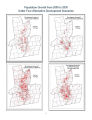
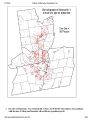
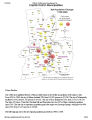
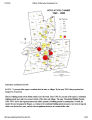
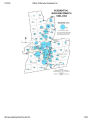
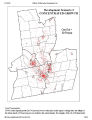
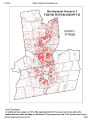
Show Under this scenario, some suburban and rural communities that are presently seeking to grow in population and tax base would not be able to achieve these goals until the existing urbanized areas are more highly developed and until there is high enough regional population growth to create a demand for additional outward expansion. Landowners and developers in outlying areas that are hoping to capitalize on the development of green-field properties would likely see their anticipated profits reduced or eliminated if the demand for green-fields is attenuated. Development Scenario 3 - Trend Hyper-Growth Under Growth Scenario 3 - Trend Hyper-Growth, the region would develop in a low-density, centrifugal pattern, similar to the pattern of regional development over the last half-century, however at a much accelerated growth rate. Whereas the regional population is projected by CDRPC to increase by 90,538 persons by 2040 (Scenario 1 - Status Quo Trend), under Scenario 3, the regional population would increase by 309,190 during this same period. This amount of population growth at low-densities could result in nearly 150,000 additional acres of land being developed. This represents an approximate doubling of the overall developed land area of the region, with 65% of this development occurring in Saratoga County, 24% in Albany County, and only 11% of the growth occurring in Schenectady and Rensselaer Counties combined. In order to realize this large population increase, there would need to be major successes in the various economic development efforts to attract and nurture new employers. For a population increase of 309,190 persons, approximately 160,000 new jobs would have to be created and/or attracted to the region (this figure is based on region's current population to labor force ratio). This amount of new job activity would attract an in migration of population from other parts of the country, and, depending on U.S. immigration policies, would attract new immigrants from outside the U.S. The regional development patterns under Scenario 3 would be characterized by growth patterns similar to those that have occurred in the region in recent decades. This includes growth that is in large part low-density (2 persons/acre on average) single-family housing developments in separate, disconnected subdivisions. This separation will be the result of land use policies that continue to prohibit (or don't require) interconnected streets and require buffers between subdivisions. The road patterns will be predominately dendritic, with dead-end cul-de- sac streets discharging at collector roads. Moreover, similar to trends seen in other parts of the country, a portion of the new residential developments will likely be private gated communities governed by "common-interest development" (CID) regulations. The predominance of gates will further add to the isolated character of these areas. The CID fees for private road and amenity maintenance within these developments will be viewed as duplicative of municipal taxes, creating new pressures for succession from the wider municipal community outside the gates. Because of the isolated, disconnected nature of these residential areas, most of these subdivisions will lack both sidewalks and destinations/services within walking distance. Recreational paths will be created, but they won't serve as viable alternatives for commuting. The overall pattern of suburban land use will continue to be represented by developments mostly segregated by use, as required by zoning codes. Commercial big-box retail will be located along high-traffic highway corridors. These commercial landscapes will be dominated by signs, parking and buildings made of low-grade materials 1/7/2010 Effects of Alternative Development Sc… cdtcmpo.org/policy/june07/wa-doc.htm 33/60 |