| OCR Text |
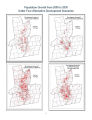
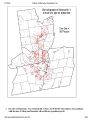
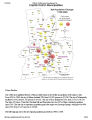
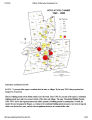
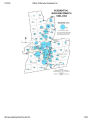
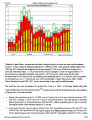
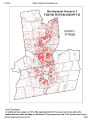
Show Digital technology has also begun to play an important role in helping urban planners and decision makers envision alterative future growth scenarios. Geographic Information Systems, which allow the integration and analysis of multiple layers of "geo-referenced" data, have come into widespread use. Three-dimensional animation and visualization software, which is currently used for both military training and movie-making, will likely also come into more widespread future use, allowing building proposals to be visualized and modified before they are approved and built. Web-based services will also greatly improve communication between citizens and their local governments. Finally, and perhaps most importantly, from land use and transportation perspective, the success or failure of technological innovations related to the development and implementation of alternative fuels will greatly influence whether the statues quo of regional land development patterns in the U.S. can continue, or whether a fundamental reorganization of the existing order will ensue. Peak Oil Of all the future trends discussed in this report, the trend in the price and availability of oil and gas has the potential to have the biggest impact on future land development patterns in the U.S. Each of the trends discussed so far appears to support a further continuation of the spread out, isolated, auto-dependent development patterns that have characterized the last half-century of U.S. land development. This would mean that the general dispersal of growth portrayed by "Growth Scenario 1 - Statues Quo Trend" and the "Growth Scenario 3 - Trend Hyper-Growth" in the first part of this report would likely be closest in portraying the future growth pattern of the region. The magnitude of future growth would drive which one specifically. If oil and gas remain widely available and relatively inexpensive, this would also support the likelihood of one of these two scenarios. However, if oil becomes scarce, and its price subsequently skyrockets, then we will have no choice but to significantly alter the manner in which we build and travel. Non-motor travel, such as walking and biking, will become more common. We will be need to live close to where we work, while the kind of work we do will likely change dramatically. We will need to assemble our entire built environment much closer together, at higher densities, to try and eliminate long distance travel for everyday tasks. We will also be forced to localize our economy, including producing much of our food from within the local region. Under these conditions, "Growth Scenario 2 - Concentrated Growth" would likely be closest to representing the kind of land development pattern that would result. The evidence emerging from the world's leading geologists and oil analysts strongly suggests that oil and gas will not remain widely available or inexpensive, and that our future building and traveling patterns will need to be fundamentally altered. For example, the world currently consumes approximately 84 million barrels of oil per day, with the U.S. using 21 million gallons alone. Most oil experts believe that oil-producing nations have only 1.5 million gallons per day of currently unused production capacity. Moreover, global demand for oil grows daily, particularly from the industrializing, fast-growing populations of China and India. The problem with oil is not only one of production capacity, but also one of overall supply. Global discovery of oil sources peaked in the 1960's. The world's leading geologists, are largely in agreement that the world is either at, or quickly approaching "peak oil production," which is the point at which the highest rate of global annual oil production occurs. After this point, global oil production will continually decline, at about 4% per year, because at this point the world will have extracted and used approximately half of the two trillion barrels of oil that experts 1/7/2010 Effects of Alternative Development Sc… cdtcmpo.org/policy/june07/wa-doc.htm 44/60 |