| OCR Text |
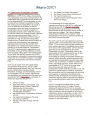
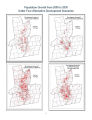
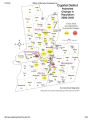
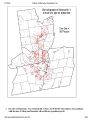
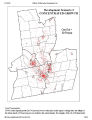
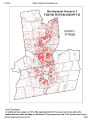
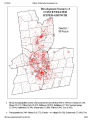
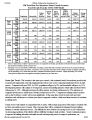
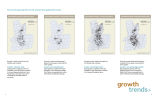
Show opportunities for walking instead of driving for work and shopping will remain limited. Maintaining quality of life, walkable streets, and liveable communities will be a challenge as urban areas decline and traffic congestion increases. Concentrated Growth-This scenario, with more urban reinvestment and suburban containment, will result in the same growth in population and households as the baseline scenario, but with 7% less vehicle miles of travel than the baseline scenario. Hours of travel would be 11% less than the baseline, while hours of congested travel would be 28% less than the baseline. Transit service will be more frequent, and ridership would be higher, given the higher number of riders within walking distance to arterials with transit, and the higher number of activities along transit corridors. It is likely that additional corridors beyond the Route 5 corridor will have Bus Rapid Transit service, increasing the number of residents and communities benefiting from this premium service. It can be expected that segments of a regional greenway program could be built, with increased opportunities for walking and bicycling; and the higher number of people living near existing sidewalks and paths will significantly increase walking access and the ability to make more work and shopping trips by transit, walking, or bicycling. The feasibility for a managed lane on the Northway or in other corridors would be higher than in the baseline, and therefore the potential for better commuting options to avoid the high levels of congestion that will still be found in critical corridors. Further progress can be expected in implementing suburban town centers, riverfront access and urban development, resulting in tangible improvements in quality of life and attractiveness of the region. Because of lower VMT levels, less investment will be necessary for work to maintain pavement conditions, freeing funds for greater investment in street reconfiguration, enhancement and streetscaping. At the local level, due to smarter growth patterns, there will be less mileage of new residential streets (compared with the base scenario) and therefore lower maintenance costs for local municipalities. Greater protection of open space and environmentally valuable lands will result from this growth scenario. Trend Hyper Growth-This scenario represents high growth occurring in current trend dispersed patterns with low density development occurring in currently undeveloped lands. Compared with year 2000, by 2030 population would grow by 29% and households would grow by 35%. While vehicle miles traveled would increase by 33%, congested travel time ("excess delay") would more than triple in the Capital District. On a per capita basis, congestion would increase by 136% under this scenario. Based on analysis of the 85 largest urban areas by the Texas Transportation Institute, the Capital District was ranked 66th out of 85 urban areas for delay per traveler (in 2003; #1 being the worst). If delay per traveler increased by 136%, compared with the 2003 levels of delay in urban areas, the Capital District rank would increase to 30th out of 85 urban areas. Based on the TTI numbers, future congestion under this scenario could be compared to current congestion in Cincinnati, Ohio; Las Vegas, Nevada; Albuquerque, New Mexico; Salt Lake City, Utah and Columbus, Ohio. Travel on roads that are currently rural collectors would increase by 65% to 95% under this scenario. Of the scenarios tested, this scenario represents the highest vehicle operating costs, which would also correspond to the highest fuel consumption and the highest greenhouse gas emissions. Transit service frequency and ridership would be comparable to the base scenario, and since much of the new housing would be inaccessible to transit, a smaller percentage of the residents of the region would have transit access. Problems related to the lack of transit and walking access to activities for those without automobiles, 1/7/2010 Effects of Alternative Development Sc… cdtcmpo.org/policy/june07/wa-doc.htm 56/60 |