| OCR Text |
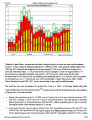
Show The scenarios described above are partly based on the assumption that many of the same economic, social, and political trends in evidence today will continue, and will condition land use patterns in a similar fashion throughout the next 35 to 40 years. This may or may not be the case. A global war or global economic depression may knock the future course of history off it linearly projected track. In addition, technological inventions may enable paradigm shifts in behavior (and development patterns), as they have in the past, which may be impossible to predict today. However, there are a number of trends taking shape, which may be considered potential harbingers of future conditions that will affect land use patterns. These trends may already be taking place in some parts of the U.S. and may eventually see more widespread manifestation in the Capital District. There are also several global trends that have the potential to greatly shape land use patterns in the future. Following is a summary of these trends and associated issues. Demographics Aging Population The aging of the population has the potential to alter both the pattern and the politics of land use in the United States. The U.S. population of persons 65 years or older numbered 35.9 million in 2003 (the latest year for which data is available), representing approximately 12% of the U.S. population. The Capital District population of persons 65 or older in 2000 was 110,658 persons, which is 14% of the total population. By 2030, there will be approximately 71.5 million people 65 and up in the U.S., more than twice their number in 2000. Whereas people 65+ represented approximately 12% of the U.S. population in the year 2000, they are expected to grow to be 20% of the population by 2030. In the Capital District by 2030, there will be approximately 163,464 persons 65+, which will be 19% of the regional population. The aging of the U.S. population is the result of several related factors. Perhaps one of the greatest achievements of twentieth-century medicine in the U.S. was the raising of life expectancies at birth from 48.3 years for men and 46.3 for women in 1900 to 74.2 for men and 79.9 for women in 2000. And longer life expectancies have been accompanied by declining birth rates in much of the developed world. In the U.S. this decline in fertility rates along with longer life expectancies has shifted the median U.S. age from 19 in 1850 to 34 in the 1990s. It is projected that by 2050, the median U.S. age will be 40 years old. The "baby boom" generation - the large number of people born in the U.S. from 1946 to 1964 - is also contributing to the growing increase in the elderly population in the US as this group ages. In 2005, baby boomers were between 41 and 59 years old. There are about 76 million boomers in the U.S., representing approximately 29% of the population. There are several ways in which the aging of the U.S. population may affect regional land use patterns. Traditionally, upon retirement, many seniors have migrated from the Northeast to warmer climates, such as Florida. Many other have become "snowbirds," living in warmer climate second homes for the winter months. For this second group and for those who live in the region all year long, most will want to continue to live in the 1/7/2010 Effects of Alternative Development Sc… cdtcmpo.org/policy/june07/wa-doc.htm 37/60 |