| OCR Text |
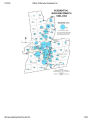
Show resources at a time of growing demand. However, as long as the disparity of wealth and opportunity exists between the United States and other countries, people will try to find a better life elsewhere, even if it means risking your life to do so. Moreover, the views of opponents to immigration conflict with the goals of many employers who prefer illegal labor because these people will work for low wages, will take undesirable jobs, and are easy to exploit. Needless to say, the nation built by immigrants may not be a welcoming place for immigrants in the future, regardless of the necessity of their labor. And with climate of job insecurity, threats of foreign terrorists, and escalating taxes, future battles over immigration are likely to continue. Regardless of future U.S. immigration policies, however, the growth of Hispanic immigrants will continue to increase. According to Mike Davis, "the total fertility rate for women born in Mexico is more than double that of Anglo women. Even if all immigration were ended tomorrow, the dramatically younger Latino population (median age twenty-six) would continue to increase rapidly at the statistical expense of aging, non-Hispanic whites (median age thirty-eight)." [3] This growth may lead to future social conflicts as a large, increasingly elderly native-born population confronts the claims of an even larger, culturally different and substantially younger immigrant population. And one way of confronting these changes may simply be to leave: as Sociologist Janet Abu-Lughod has noted, the growth of Mexicans in Los Angeles "may be contributing to the further exodus of Anglos and the withdrawal of many of the remaining into defensive gated communities in the outlying suburban and exurban areas." [4] Uneven Development One of the more pronounced (and troubling) patterns of land development in the U.S. is the geographic polarization of regional populations by race and income. The term "uneven development" has been used to describe this pattern. This is an important factor to consider when evaluating the likelihood of concentrated or dispersed regional settlement patterns. As indicated in the discussion of regional demographics under the "Historic Perspective on Status Quo Trend" section earlier in this report, the majority of both the Capital District's poorest residents and minority residents are concentrated in the region's cities. They are often one in the same. Conversely, the region's growing suburbs are largely made up of middle and upper income residents, mostly non-Hispanic whites. Regional maps of household income and race display these conditions (see: http://cdrpc.org/GIS/2K-Thematic-Maps.html). And while uneven development has been a long-standing feature of U.S. land development, the simultaneous hyper-spread of regional population growth and urban abandonment over that last half-century has exacerbated these patterns. In ascertaining the future implications of regional uneven development, it may be instructive to examine the poles of this polarization: urban ghettos at one extreme, and suburban (and exurban), gated developments at the other. As things presently stand, both of these extremes may be poised to greatly expand in the future. U.S. urban ghettos are the poignant physical manifestation of racial segregation in America. [5] There have been 1/7/2010 Effects of Alternative Development Sc… cdtcmpo.org/policy/june07/wa-doc.htm 40/60 |