| OCR Text |
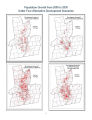
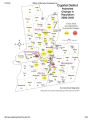
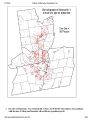
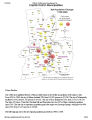
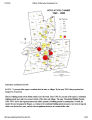
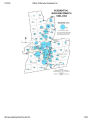
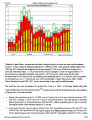
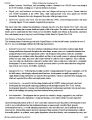
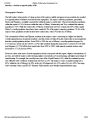
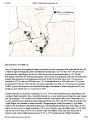
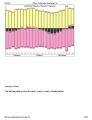
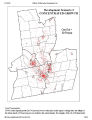
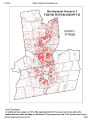
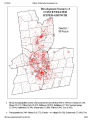
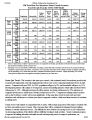
Show Development Scenario 4 - Concentrated Hyper-Growth Compared to Scenario 3 - Trend Hyper-Growth, where the cities of Albany, Schenectady and Troy would decline in population by a combined total of 2,226 persons, under Scenario 4 - Concentrated Hyper-Growth, these three cities would increase in population by a total of 44,942 persons. And as with the urban concentration in Scenario 2, the population of the cities and villages would see significant population increases, though they would still be below historic population peeks. What would also be significantly different from the concentrated growth of Scenario 2, is that there would be a much higher concentration of growth under Scenario 4 - Concentrated Hyper-Growth, which would result in much higher population increases to the more-developed suburban towns such as Colonie, Clifton Park, Guilderland, Bethlehem and Halfmoon. For this high growth to occur in these suburban areas, the growth would have to occur at significantly higher densities than have historically transpired. In order for this high-density growth to occur, the suburban communities that have low density patterns of development would need to revise their land use regulations to accommodate higher density/mixed-use development alternatives. This could include adopting transect zoning, utilizing official maps to layout public right-of- ways, creating town centers, permitting higher concentrations of town houses and apartments, and providing both pedestrian and mass transit amenities. In addition, similar to Scenario 2, major land use policy changes at the local and regional levels would be necessary in order for this scenario to materialize. For example, rural and semi-rural communities on the fringe of the region's urbanized area would have to strictly limit expansion into their communities. Land use tools such as large-lot zoning, farmland preservation zones, open spaces purchases and easements, and transfer of development rights programs would need to be implemented. In addition, in order to maintain rural character and limit urbanization, many of these outlying communities would have to limit or disallow the creation or extension of municipal services such as public sewer and water systems into their municipalities. In order to achieve the concentrated growth depicted in this scenario, communities would also need to endorse the adoption of growth boundaries. These boundaries would need to be designed at both the local and regional scale so as to concentrate rural growth in villages and hamlets and major regional growth within the already urbanized areas. However, these growth boundaries, if not sufficiently large enough to accommodate the anticipated increase in growth thereby limiting the supply of developable land, will drive up the demand for land in the urbanized area, which will escalate regional land and housing prices. Similar to Scenario 2, with the infusion of 81,656 people back into the region's cities and villages, the issue of vacant and decaying buildings would be greatly ameliorated and there would be opportunities for "brownfield" and "greyfield" redevelopment. Moreover, the added tax base would provide the revenue necessary to fund maintenance and upgrades to public sewer, water and road systems. A factor that would differ from Scenario 2 is that because of the much higher population growth under Scenario 4, at much higher densities, growth in the more developed suburban towns would require new public investments in sewer, water and road infrastructure, as well as, the expansion of municipal service delivery capabilities such as police and fire protection, municipal planning, code enforcement, property assessment, and other municipal 1/7/2010 Effects of Alternative Development Sc… cdtcmpo.org/policy/june07/wa-doc.htm 35/60 |