| OCR Text |
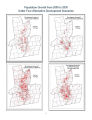
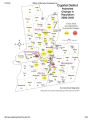
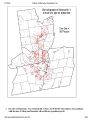
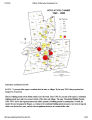
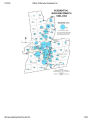
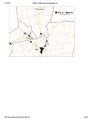
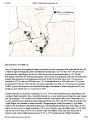
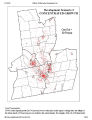
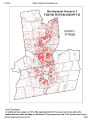
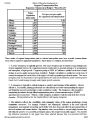
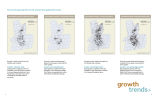
Show Spatial Distribution of Status Quo Trend The resulting TAZ projections are shown on the "Development Scenario 1 - Status Quo Trend" map. This "dot density" map shows the distribution of the new population growth projected from 2000 to 2040 by TAZ (90,538 persons). One dot on the map equals 50 new persons. Areas without dots are either projected not to grow, or could be projected to loose population. The "Development Scenario 1 - Status Quo Trend" map, along with the "Projected Change in Population: 2000-2040," represents the most likely future population growth scenario of those considered in this report. It is what is projected to occur based on historical trends and future expectations including development policies presently in place. The most salient characteristics of the distribution of growth projected in the Status Quo Trend are: • Of a total projected population growth of 90,538 persons, 65% will be located in Saratoga County (58,850); 24% in Albany County (21,729); 9% in Rensselaer County (8,148); and 2% in Schenectady County (1,810); • New development in Albany County will be primarily focused in Bethlehem, Guilderland and Colonie; • New development in Rensselaer County will be primarily focused in East and North Greenbush, with some spread into Sand Lake; • Schenectady County will grow the least of the four counties, with moderate growth in Niskayuna, Glenville, Princetown, Duanesburg and the western part of Rotterdam. • The eastern, older parts of Rotterdam adjacent to the City of Schenectady show a loss of population; • Saratoga County will experience the most growth of the four counties, with particularly large amounts of growth in Halfmoon, Clifton Park, Malta, Milton, Wilton, and the city of Saratoga Springs. The towns of Ballston, Stillwater and Moreau will experience comparatively moderate growth, though high by historic regional standards; 1/7/2010 Effects of Alternative Development Sc… cdtcmpo.org/policy/june07/wa-doc.htm 7/60 |