| OCR Text |
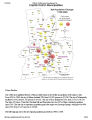
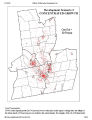
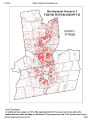
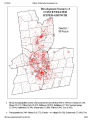
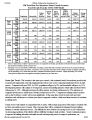
Show including the elderly, will be significantly more pervasive than the baseline scenario. Loss of open space, lack of investment in urban areas, and levels of congestion would be the worst under this scenario than any of the other scenarios, significantly reducing quality of life. Expansion of existing suburban towns, as well as towns that are presently rural, with low density suburban development will increase local highway maintenance costs, in addition to other, non-transportation costs. The sharp increase in population and households could present opportunities for increased funding levels from greater generation of user fees (for example, gas taxes) and other revenues such as mortgage recording fees. The severe levels of congestion could create a sense of crisis that would provide public support for other local revenues. For these reasons, there would likely be opportunities to fund some of the big ticket initiatives. Bus Rapid Transit investments would be possible, although reduced densities and higher congestion levels would reduce the efficiencies and benefits of such service. Roadway widenings might be supported in some suburban corridors that would not be needed in the other scenarios, trading off walkability and attractiveness for arterial development and higher traffic conflicts in a number of communities. While investments in big ticket investments could encourage concentrated development, lack of investment and planning would encourage the dispersed settlement patterns. Once high growth occurs in dispersed patterns, a significant opportunity will have been lost. Lower density development, in turn, will make transit investments much more difficult. Concentrated Hyper Growth-This scenario represents high growth occurring in concentrated patterns corresponding to urban investment and high quality suburban planning. Population and household growth would be roughly the same as in the Trend Hyper-Growth Scenario. But while households would grow 18% more than the base scenario, VMT growth would only be 7% higher than the base. While congested hours of travel ("excess delay") would still be 51% higher than the base, this measure would be 18% less than the Trend Hyper- Growth scenario. On a per capita basis, congestion would increase by 92% under this scenario. Based on analysis of the 85 largest urban areas by the Texas Transportation Institute (TTI), the Capital District was ranked 66th out of 85 urban areas for delay per traveler (in 2003). If delay per traveler increased by 92%, compared with the 2003 levels of delay in urban areas, the Capital District rank would increase to 48th out of 85 urban areas. Based on the TTI numbers, future congestion under this scenario could be compared to current congestion in Raleigh- Durham, NC; Birmingham, AL; Charleston, SC; and Colorado Springs, CO. Transit service frequency and ridership would be highest under this scenario. Because of the potential funding increases related to higher growth, as well as the opportunities for greater efficiencies, this scenario has the strongest potential for Bus Rapid Transit and fixed guideway transit. Smart development patterns will increase the number of residents within walking distance of high quality transit corridors. A significant percentage of residents would have access to transit and walking for work, shopping and other activities. This would provide a great benefit for those without cars, including the elderly, but also will provide opportunities for those with cars to use transit when convenient as an alternative to driving under congested conditions and searching for parking. This transportation and land use system would provide the best overall ability for the region to deal with any future fuel availability issues. Most of the big ticket initiatives would have the highest feasibility under this scenario, as well as the highest level of success. The opportunity would be provided to make this region famous for its system of greenways and 1/7/2010 Effects of Alternative Development Sc… cdtcmpo.org/policy/june07/wa-doc.htm 57/60 |