| OCR Text |
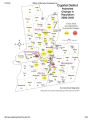
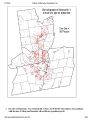
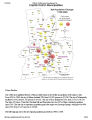
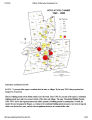
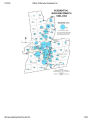
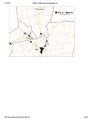
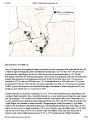
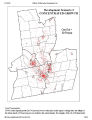
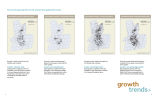
Show In the Capital District, the number of foreign-born persons in 2000 that entered the U.S. between 1990 and 2000 was 14,044, which represents 84% of the region's total population growth from 1990 to 2000. Thirty-nine percent of these new residents live in one of the region's four central cities. A map showing the distribution of the region's recent immigrants can be accessed at: http://cdrpc.org/GIS/2K-Theme-foreign%20born90-00-P.jpg. Hispanics account for almost 50% of legal immigrants in the U.S. and all but a small portion of illegal immigrants. The majority of Hispanic immigrants are from Mexico, comprising approximately two-thirds of the U.S. Hispanic population. Hispanic (or Latino) is not a racial class; it is an ethnicity. Hispanics can be of any race or mix of races (i.e., Hispanics can be white, black, Asian, Indian, or a combination.) And not all Hispanics are immigrants, because Puerto Ricans are both Hispanics and U.S. citizens. Moreover, Hispanics are not a homogeneous group. While the unifying factor is the Spanish language and Spanish imperial history, there are considerable cultural differences between and within the countries of South America, Central America, Mexico and the Caribbean. The U.S. Census Bureau estimates that as of 2004 there were approximately 41.3 million Hispanics in the U.S., approximately one of every seven people. According to population projections by the U.S. Census Bureau, the nation's Hispanic population would triple over the next half century. This would mean that nearly 67 million people of Hispanic origin would be added to the nation's population between 2000 and 2050. Their numbers are projected to grow from 35.6 million to 102.6 million, an increase of 188 percent. Their share of the nation's population would nearly double, from 12.6 percent to 24.4 percent. At this point, non-Hispanic whites would represent only one-half of the total population by 2050, verses a 69% share in 2000. The exponential growth of the Hispanic population in the U.S. represents an epochal demographic transformation with extraordinary cultural and political implications, particularly for U.S. cities. In six of the ten biggest U.S. cities, New York, Los Angeles, Houston, San Diego, Phoenix, and San Antonio respectively (with the exception of Phoenix, all in states with large electoral votes), Hispanics outnumber blacks; and in Los Angeles, Houston and San Antonio, non-Hispanic whites as well. Los Angeles and New York City account for nearly one-third of the total U.S. Spanish-surname population. One of the outcomes of these demographic transformations, which is likely to eventually be repeated elsewhere, is that in 2005, Los Angeles elected its first Hispanic mayor. In the Capital District there are 19,777 Hispanics (2000 census), which is 2.5% of the total population. Fifty-seven percent of these residents live in one of the region's four central cities. And while this number is small compared to many other U.S. cities, the regional Hispanic population increased by 72% from 1990 to 2000, which is the fastest rate of increase of any racial or ethnic group. Moreover, in 2000 there were 2,982 Hispanics living in the nearby city of Amsterdam, which is 16% of the city's population (City of Amsterdam figures are not included in the Capital District totals, though the commuting time from Amsterdam to Albany (1/2 hour) is less than many municipalities included in the Capital District). The influx and growth of Hispanics and other immigrants in the U.S. has caused a public backlash where some people have expressed resentment toward immigrants (particularly illegal), believing that they are taking jobs from U.S. citizens, overcrowding public schools and draining public welfare resources that they shouldn't be entitled to. Part of this resentment is related to overcrowded classrooms, failing public schools, and shrinking public 1/7/2010 Effects of Alternative Development Sc… cdtcmpo.org/policy/june07/wa-doc.htm 39/60 |