| OCR Text |
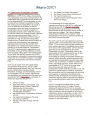
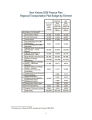
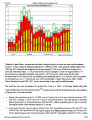
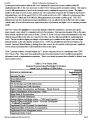
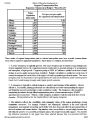
Show Demand Management 2.0 Integrated Planning & Outreach 4.5 SUBTOTAL 673.0 Values in italics are being further refined and updated in the development of the New Visions 2030 Plan. Big Ticket Initiatives As part of the development of the New Visions 2030 Plan, a list of candidate "big ticket" and "big idea" initiatives was developed. These initiatives are ambitious in scope and are not funded in the current plan. Rather they are being presented for public review and consideration as "big idea" initiatives that could be undertaken if future funding is available and other conditions are met. They would be a stretch for the Capital District, and public support, in addition to funding, would have to be established as a prerequisite. Yet they also represent a significant opportunity for the Capital District to invest in high quality transportation and communities. The big initiatives generally would be more feasible under higher growth scenarios, and in many cases would provide the opportunity to manage the growth in a way that protects and enhances the region's quality of life. CDTC's New Visions 2025 Plan puts 92% of available resources into system operations, maintenance, preservation and facility and service improvement and into intermodal facilities. The existing plan is cautious regarding major highway expansion, and commits to progressive bus oriented transit projects (Bus Rapid Transit) while reserving rail for further consideration. Through this approach, the plan expects to achieve steady improvements in pavement and bridge conditions, bike and pedestrian accommodations and street/ streetscape design while enhancing traffic operations and traveler information and redesigning transit service delivery. This appears reasonable given the generally effective regional transportation system and the pace of population growth. Urgency for system expansion is not present and past events such as the local failure of the 2000 and 2005 State Transportation Bond referenda indicate that locally there is no clear willingness to pay for major highway or transit expansions. However, a shift in the pace of growth from the current 2,500 - 3,000 new residents per year to a 10,000 person per year or higher pace would create pressure for transportation system enhancements and expansions. In this context, it makes sense to evaluate the big initiatives to determine under what conditions they will be feasible and how they can help to manage the region's growth in order for the region to maintain quality of life and quality transportation. CDTC conducted studies of a number of metropolitan areas and their regional transportation plans. Funding supports the levels of spending on big initiatives in other areas and based on the study's findings, a number of metro areas are planning higher levels of spending for expansion and enhancement than the Albany area. Table 3 shows annual long-term per capita budget for: expansion and enhancement (highway widenings; new highways; intelligent transportation systems (ITS) deployment; innovative land use - transportation initiatives; demand management; additional buses; rail transit construction or expansion). CDTC's fiscal reach is comparable to Buffalo's; the two New York areas are the most restrained in committing to system expansion. Table 3 1/7/2010 Effects of Alternative Development Sc… cdtcmpo.org/policy/june07/wa-doc.htm 47/60 |