| OCR Text |
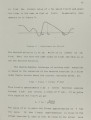
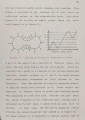
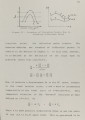
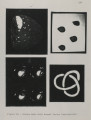
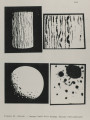
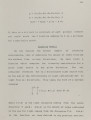
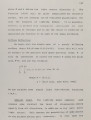
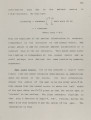
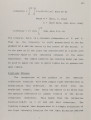
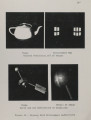
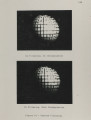
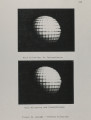
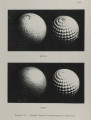
Show 149 Mathematical Background Sampling Sampling is the process whereby any continuous signal is represented or encoded by a list of its values at (usually equally spaced) parameter values. In the case of digital image generation, the continuous intensity function of X and Y is sampled at an array of equally spaced points in X and Y called picture elements or raster points. The simplest and most straightforward of image generation algorithms compute the intensity of each picture element as the intensity of the geometric point at the center of the element. Intensities of points between picture elements are not considered. The discretization of the picture in this way is usually quite obvious to anyone looking closely at the picture. The individual picture elements are appar errt , especially along sharp edges of the scene. Alias ing The subject of digital signal processing deals directly with this situation, although more routinely in the context of digitizing real images or time varying signals {such as audio signals). A basic theorem in this discipline is the, so called, "s amp.l Lnq theorem". This states that a sampled signal cannot re?resent frequency components higher than half the sampling frequency. Translated into visual terms, this means that the discrete display grid cannot correctly display images of objects whose intensity varies faster than |