| OCR Text |
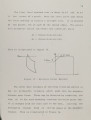
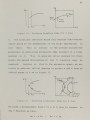
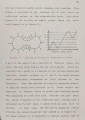
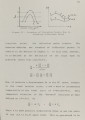
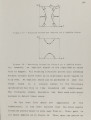
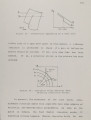
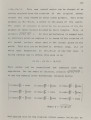
Show 84 linear, especially for smooth patches, this gives a much better initial guess at u,v. .The result is an average number of iterations per point of less than one since some initial guesses satisfy the termination condition without any iterations. Second and higher order extrapolations can be performed but they may not help much and tend to worsen the situation for sharply curving parts of the patch. silhouette trackers. Others will be defined below. These Fast Algorithm We can expect the algorithm described above to be fairly slow in scanning out the picture, primarily due to the X scan portion. The X scan must do a bivariate Newton iteration at each picture element for each intersection point. This section decribes a version of the algorithm which avoids the detailed iteration by approximating the intersection curve by a number of straight line segments called spans. The junctions of these segents define a collection of iteration points whose positions are tracked from scan line to scan line. We have already seen two types of iteration points, the boundary trackers and the iteration points are linked together' in the order in which they occur while tracing out the level curve. This list is doubly linked with one pointer moving in the "forward" direction of the level curve {along (-Yv,Yu)) and the other in the "backward" direction. The preservation of this directional information is important for re-establishing the proper connectivity when the scan plane passes a saddle |