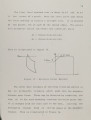
| OCR Text |
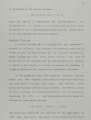
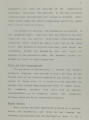
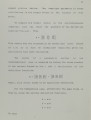
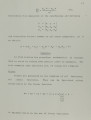
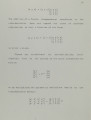
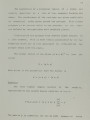
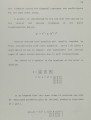
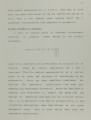
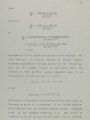
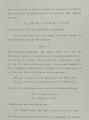
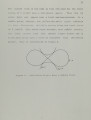
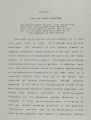
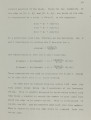
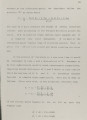
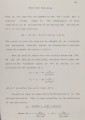
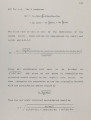
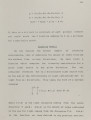
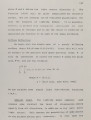
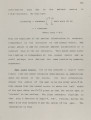
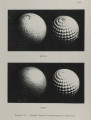
Show 2 surface between which to interpolate intensities. Methods for Renderinq urved Surfaces standard polygon drawing algorithms. approximating and applying The facetted Curved surfaces are most easily drawn bv them with a set of flat polygonal faces appearance can be smoothed over by interpolatory shcding but the polygonal approximation still manages to make itself apparent, notably at the contour edges. Such problems can be alleviated simply y not approximating the surface with polygons. The picture may be generatep directly from the mathematical description of the surface. Algorithms for doing this can be categorized according to the types of mathematical surface representation with which they deal. The early methods of Mahl [12], MAGI [11], and Woon [20] operated on quadric surfaces but could be extended to any algebraic surface, i.e. those defined as c function F(x,y,z)=O. Computer aided design deals more often, however, with parametric surface patches. These are surfaces traced out by, functions X(u,v), Y(u,v), Z(u,v) as the parameters u and v vary, typically between 0 and 1. Catmull [4] produced one of the first algorithms to draw this type of surface by recursively subdividing each patch into smaller and smaller fragments, until they reached the size of one raster element. Since this process generates the fragments in a somewhat scattered order, the hidden surface problem must be solved by a depth array having the same resolution as the screen. Two main problems which |