| OCR Text |
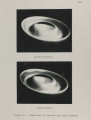
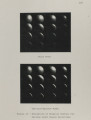
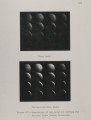
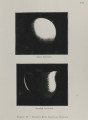
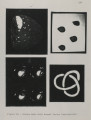
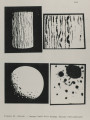
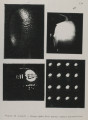
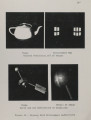
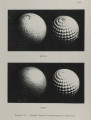
Show 4 The most accurate light reflection functions used to date, e.g. by Phong [3], for computer generated images have used only simple models of how light should reflect off surfaces. There has, however, been much work done by physicists and illumination engineers in measuring the amounts of light reflected from real surfaces. A semi-empirical model has been proposed by Torrance and Sparrow [17] which models a rough surface as a collection of microscopic facets pointing in various directions. Chapter 6 derives this highlight function in a form appropriate for image synthesis. The result is a highlight function which has approximately the same computational complexity as Phong's model. The main difference is that the brightness and shape of the highlights will change with this model as the light direction varies. For most directions this variation is not large, but for light coming tangentially to the surface the highlight is quite bright even for very diffuse surfaces. Even with a very accurate lighting model the rendered surfaces tend to look artificial due to their extreme smoothness. What is needed is a means of simulating the surface irregularities that are characteristic of real surfaces. These could, of course, be generated by explicitly modelling each wrinkle and fold. Hopefully, there are methods for avoiding this. Catmull introduced the idea of using the patch parameter values to index into a texture definition function which scales the intensity of |