| OCR Text |
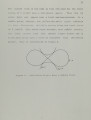
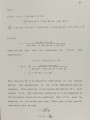
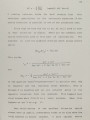
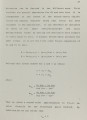
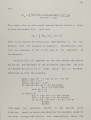
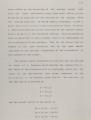
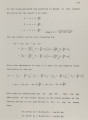
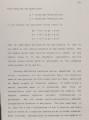
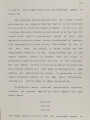
Show 101 the direction of the normal vector must not change and that are: processing entering local maxima, updating the the sign .o f "J:' must not change. If either of these conditions is not met, a damping step must be performed. Experience with the algorithm has shown that this checking mechanism is crucial to its proper operation. The Y Scan The Y scan portion of the fast version of the algorithm has the same basic components as the accurate version. They positions of iteration points, and deleting exiting points. In addition, any changes to the set of points must keep them properly connected to their neighbors along the level curve. Local maxima. The processing of local maxima is similar to that for the accurate algorithm. In this case, however, a local maximum represents a whole connected string of iteration points which must be generated. The order in which they are connected is determined by the previously stated fact that the "forward" direction must move clockwise around the local maximum. In creation of an iteration point, a flag bit must be generated which tells the sign of for that point (to be used in the damping test in future iterations) . For edge and corner maxima (where both Fu and Fv are not both zero) this can be determined by evaluating 7 at that point. For strict local maxima the value of is degenerate since T=S=O. It can be shown that the sign of for points immediately surrounding such a point is the same |