| OCR Text |
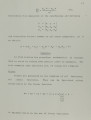
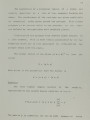
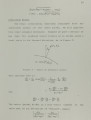
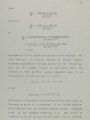
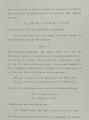
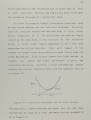
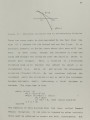
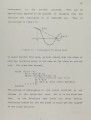
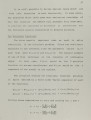
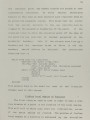
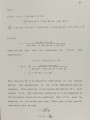
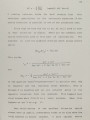
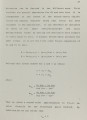
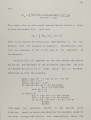
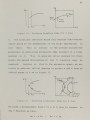
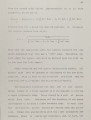
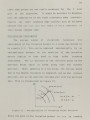
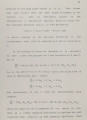
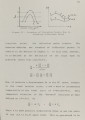
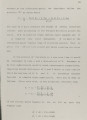
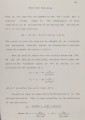
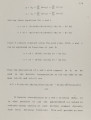
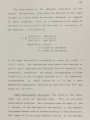
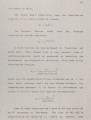
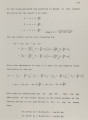
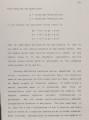
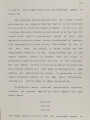
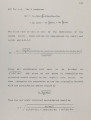
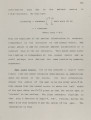
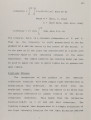
Show 61 Without any explicit knowledge of the form of f(u), techniques to solve this problem must be numerical. We start at an initial guess, uO, and improve upon it. By condition (1) above we need to find the zeros of the function f' (u). Newton iteration can be used and yields the iterative scheme wh i I elf I (u) I > E-U = U - f' (u)/f" (u) This will converge to a zero of f' (u) but it could be be a local minimum of f instead of a local maximum. We can tell if we have converged to a local minimum if f"(u»O at the stationary point. It would be better, however, to catch the iteration early on to determine what type of stationary point is being approached. We can do this by examining f"(u) at each step. Note that if f"<O then (-f'/f") has the same sign as fl. Thus the iteration will proceed in the "uphill" direction and f(u) will increase. If however f">O then (-f'/f") has the opposite sign from fl. We are then going downhill towards a minimum. When this occurs we can instead use a au which moves in the other (maximizing) direction. Just using du=f' (u) is as good a choice as any. Thus our iteration step becomes while If I (u) I > £ if f"(u)<O then du=-f' (u)/f"(u) else du=f I (u) u = u + du Next, as with the regular damped Newton iteration, it is a good idea to monitor the convergence of this process. At |