| OCR Text |
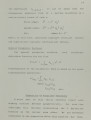
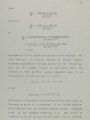
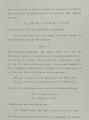
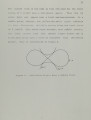
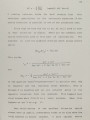
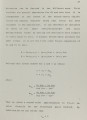
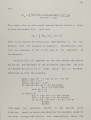
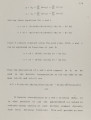
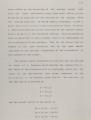
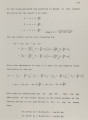
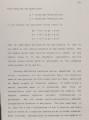
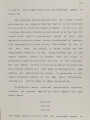
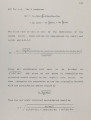
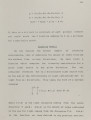
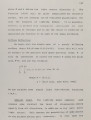
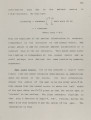
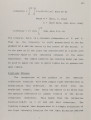
Show 95 use can be made of intermediate values generated during the computation of S, T, Tu and Tv. By adding up the number of multiplies and adds it turns out that it takes as much time to calculate the quantities Tu, Tv, Su, and Sv as it does to calculate T and S. Further, the u,v extrapolation method (described in the section on accelerating convergance) greatly reduces the number of times these derivatives need to be evaluated. Even so, it may be hoped that a much simpler definition could be found for functions to use for S and T. Several attempts at this have been made, all without success. The important property of Sand T, that they both go to zero only at stationary points of the Y definition function (in perspective space) of the patch, seems hard to reproduce with anything simpler. The level curves at a particular scan line are, then, represented by a chain of iteration points, each one flagged by the index into the sin, cos table which describes the angle formed by the vector (S,T). This angleatan(T/S), varies continuously as the level curve is traced out. We therefore expect that the index flags of the iteration points will differ by exactly 1 between any two connected points (except for the end of the table wrapping around to the beginning). One other case that can occur, however, is that the function can have local maxima/minima along the level curve, in which case the index value changes by 0 between |