| OCR Text |
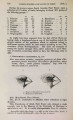
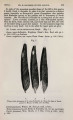
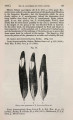
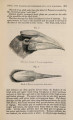
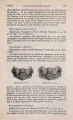
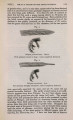
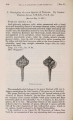
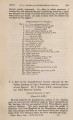
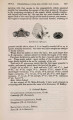
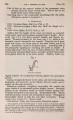
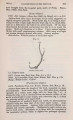
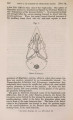
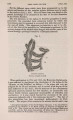
Show 1878.] COLLECTED BY PROF. STEERE IN SOUTH AMERICA. 137 tris and its representative forms (O. maximiliani, O. occidentalis, and O. melas) by its black bill, which, as will be seen by the outline given, is also more robust than in O. crassirostris. There is a small white speculum, which does not extend onto the outer web of the three outer primaries, and is concealed by the greater coverts when in their natural position. On the under surface of the wing the white extends barely half an inch beyond the black under wing-coverts, and then passes into grey, and at the extremities of the feathers into black. 2. PlEZORHINA CINEREA, Lafr. Guiraca cendre, Prev. et Des Murs, Voy. ' Venus,' Ois. p. 209. Guiraca cinerea, Lafr. Mag. de Zool. 1843, pl. 20 (subg. Piezo-rhina). Camarhynchus cinereus, Gray and Mitch. Gen. B. ii. p. 369 ; Bp. Consp. i. p. 542 ; Salvin, Trans. Zool. Soc. ix. p. 491 ; Tacz. P.Z.S. 1877, p. 321. M M . Jelski and Stolzmann first discovered the true habitat of this curious Finch, which, through an error of the Naturalists of the Voyage of the ' Venus,' had been assigned to the Galapagos. Prof. Steere's series contains a single skin obtained in Dec. 1872, at Sorritos, in Western Peru. It is marked " male: eyes light hazel." It agrees in every respect with an example from Tumbez (Jelski) in Sclater's collection. 3. HCEMOPHILA STOLZMANNI, Tacz. Hcemophila stolzmanni, Tacz. P. Z. S. 1877, p. 322, pl. xxxvi. fig. 2. Of this recently described Finch, from the same district, Prof. Steere likewise obtained a single example at Sorritos, in Dec. 1872. It is marked " male: eyes hazel." The discovery of a typical Hcemophila (of which the six previously known species are entirely confined to Central America) in Western Peru is a fact of the highest interest. 4. GNATHOSPIZA RAIMONDII, Tacz. Gnathospiza raimondii, Tacz. P. Z. S. 1877, p. 320, pl. xxxvi. fig.l. Of this peculiar Fringilline form Prof. Steere obtained four examples during his sojourn at Sorritos. 5. ICTERUS GRACE-ANN^E, Cassin. Icterusgrace-annce, Tacz. P.Z.S. 1877, p. 323. Prof. Steere's series contains two skins of this well-marked Icterus, described in 1867 by the late Mr. Cassin, from a single specimen in the museum of the Academy of Philadelphia, of which the exact locality was uncertain. The western sea-board of Ecuador and Peru, however, is its undoubted habitat, as the late Prof. James Orton |