| OCR Text |
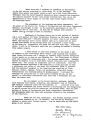
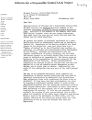
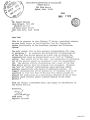
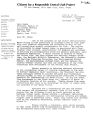
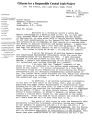
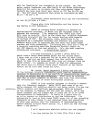
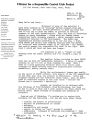
Show authorized by Congress. It appears that the Bureau is acting on conditions spelled out in a Utah State University study on the feasibility of accelerating the CUP development.* The 8 year plan is economically the most acceptable. In order to overcome contraints of hiring manpower, and costly delays resulting from normal planning to constructing procedures as well as from legal challenges, the option"suggested" is that of having Congress fund the entire CUP now and override hiring and other constraints through Compact authorization. On the surface, it appears that this could be accomplished for the Bureau under the guise of resolving the Ute Indian issue. !E believe that such a Compact has far ranging implications. There is a direct- conflict between Ute demands for jurisdiction over fish and wildlife on all its former boundaries and the Multiple Use-Sustained Yield mandates of the Forest^ Service as well as with conditions of the Wilderness Act. A High Uintas Wilderness is presently under review under RARE II. Beyond that, in the prospect of developing oil shale, tar sands, oil and gas, phosphate ore and coal in northeast Utah, such a Compact would expedite development if the Compact could be used to override the gamut of environmental legislation: Clean Air, Clean Water, Executive Orders protecting Wetlands and Floodplains, the Rare and Endangered Species Act, the Organic Act of the BLM obligating management of wildlife habitat, the Wild and Scenic Rivers Act, the Wilderness Act and roadless area reviews, and State identification of Outstanding National Resource Waters. A Compact would prevent public involvement Question The State says that if this Compact is approved by the legislature, it would be legally binding if approved by the Ute Tribe and the Secretary of Interior and enactment of the necessary legislation by Congress. This will be presented to the State legislature this session. What position will the Department of Interior take as a necessary participant in the Compact? * See CRCUP Issues Paper sent William Eichenberry for the report: V "Feasibility of Accelerating Construction of the Central Utah Project " - Hughes, James, Haws, and Israelsen, 1/16/78, Utah V/ater Research Laboratory, College of Engineering, Utah State University, Logany Utah, 84322. Pages I40,l4l,l49,150. |