| OCR Text |
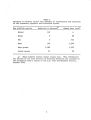
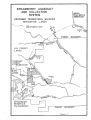
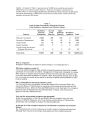
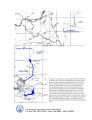
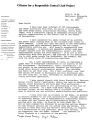
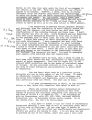
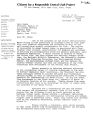
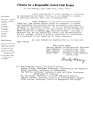
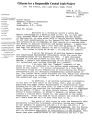
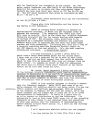
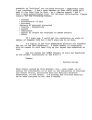
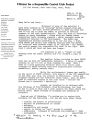
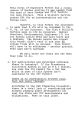
Show 8. Mitigation Costs, continued Either with or without mitigation, the estimated costs of a mitigation venture should be included in Project costs as they are most truly a good measure of the wildlife costs of the Bonneville Unit wildlife losses. Thus, is mitigation in kind or of equivalent productivity going to be provided? Whether or not it is provided, will a suitable measure of mitigation expense be included in -cost/benefit calculations and total cost calculations as indicated in Questions I, II, and III? Disparity of recreation and wildlife monies in calculations. It is our understanding that some $6,500,000 + will be made available to the Bureau of Reclamation for recreation and for wildlife mitigation of portions of the Bonneville Unit. Of this amount, ^>nly- $1,750,000 is to be spent on wildlife mitigation, the balance to be used for flatwater recreation developments. Since flatwater recreation already exists in Utah in increasing abundance, and will continue to increase from proposed CUP developments, and since Mountain Rangea A*riparian habitat being displaced is unique and more valuable in the State because of its rarity, the disparity of monies to be spent on each feature ought to be accurately reflected in Project costs. VI. Costs of Trout Stream Losses Trout streams are rare in Utah, the 2,10 9 miles remaining of all classes of stream, represent one half Utah hadj * Montana, Wyoming and Idaho each have as many miles of Class I and II alone. 6 miles of Class I stream between Deer Creek and the proposed Jordanelle Reservoir and 50.1 miles of Class I and II streams will be dewatered from developments of the Bonneville Unit alone. To stream fishermen in Utah, these trout streams have high value,' kayakers claim 10 - 12 mile stretches are the equal of Idaho's Salmon Rivers,' and other recreationists consider their natural beauty and associated wildlife as essential components of the wildlands of the Uinta Range. Even though numerous surveys in the arid west indicate a recreation pre ference for free flowing streams, the Bureau of Reclamation, in conjunction with the State of Utah has failed to address this issue since 1951. From what information we have today we can say that vie are trading off these magnificent Uinta Range trout streams for development of unlimited quantities (and for unlimited demand)of new, high quality water for agricultural irrigation and industry, as well as for culinary use of the entire Bonneville Basin while existing, alternatives for water supply until at least the year 2,000 are ignored. *2,109 miles of trout stream habitat eliminated of UtahTs 5, 377 miles of stream. |