| Title |
Strawberry Aqueduct and Collection System, Bonneville Unit, Central Utah Project: documents and correspondence, 1979 |
| Description |
From the The Dorothy Harvey papers (1902-2005), a collection of materials focusing on the Central Utah Project (CUP), a water resource development program to use Utah's alloted share of the Colorado River. Includes correspondence, Harvey's writing drafts and notes for an unpublished book on the CUP, federal documents, project litigation materials, subject files, news clippings, newsletters, programs, brochures, and maps |
| Subject |
Central Utah Project; Strawberry Aqueduct; Wildlife conservation--Utah--Uinta Basin; Rivers--Environmental aspects--Utah; Water resources development --Environmental aspects--Utah; Wetlands--Utah; Ute Indians--Claims; Water-supply--Utah--Salt Lake County |
| Creator |
Harvey, Dorothy |
| Contributor |
Citizens for a Responsible Central Utah Project |
| Alternate Title |
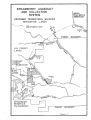
Environmental Assessment of the Terrestrial Wildlife Mitigation Plan for the Strawberry Aqueduct and Collection System, Bonneville Unit, Central Utah Project; Strawberry Collection System wildlife mitigation; Utah Lake (Utah) |
| Additional Information |
Includes questionnaire dated Aug. 28, 1978, about Central Utah Project costs; Bureau of Reclamation Environmental Assessment of the Terrestrial Wildlife Mitigation Plan for the Strawberry Aqueduct and Collection System, Bonneville Unit, Central Utah Project, April 1979; Strawberry Collection System wildlife mitigation: Fact Sheet 5, Feb. 1979; Correspondence from D. Harvey to CRCUP members, federal and state officials, and others |
| Spatial Coverage |
Colorado River Basin (Colo.-Mexico); Uinta Basin (Utah and Colo.); Uinta Mountains (Utah); Rock Creek (Duchesne County, Utah); Jordanelle Reservoir (Utah); Salt Lake County (Utah); Duchesne County (Utah) |
| Collection Number and Name |
Accn2232 bx 57 fd 4; Dorothy Harvey papers |
| Rights Management |
Digital Image © 2010 University of Utah. All Rights Reserved. |
| Holding Institution |
J. Willard Marriott Library, University of Utah |
| Date |
1978; 1979 |
| Digitization Specifications |
Original scanned on Epson Expression 10000 XL and saved as 400 ppi TIFF. Display image generated in Contentdm. |
| Publisher |
Digitized by J. Willard Marriott Library, University of Utah |
| Type |
Text |
| ARK |
ark:/87278/s6v69hj4 |
| Setname |
wwdl_neh |
| ID |
1151130 |
| Reference URL |
https://collections.lib.utah.edu/ark:/87278/s6v69hj4 |
| Title |
Page 103 |
| Setname |
wwdl_neh |
| ID |
1151083 |
| OCR Text |
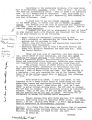
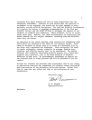
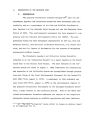
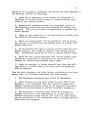
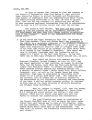
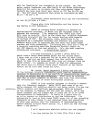
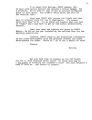
Show using Section 8 Funds as wildlife mitigation to the Ute Tribe when the 61,000 a f of Ute water was to be deferred from Ute use for 40 years. In other words it is "borrowed". The Bureau now states that this Indian water was never used so it was never lost. Does such an interpretation not negate the Deferral Agreement? On what basis, then, does mitigation with Section 8 Funds take place? Has the Department of Interior prepared an interpretation of the use of Section 8 Funds? If so, may I be supplied a copy. The Issue of Mitigation Except for mitigation for wildlife losses at Flaming Gorge NRA, there has been no mitigation program developed or carried out for continued CUP development. The Forest Service has never been able to arrive at a basis of determining satisfactory mitigation. The U.S.Fish & Wildlife Service recommendations have been ignored. Recently, the Bureau held public hearings to discuss this issue and obtain public input as to trade-offs. If the Bureau plans to develop a mitigation program on the . basis of this public input, this is a shrewd move. As you know, the real issues of CUP development - environmental degradation and costs - have never been openly discussed in Utah. The necessity for CUP water has been highly proclaimed for years. Utah's citizens appear to lack the faintest understanding of the value of river ecosystems and associated wildlife or of marsh habitat. Since a significant portion of the citizens of the State accept' the "wisdom" of those in authority, the trade-off from this public is predetermined: people over fish! The simplification of the issue is irrelevant. If this public is used to determine acceptable mitigation, what overview procedures are available to assure the development of a mitigation program which is acceptable to the land and resource managing agencies and to the nation's public? This is a serious issue in view of the apparent inability of a major involved Agency* to defend its mandated responsibilities for managing and sustaining wildlife and fish habitat in the State of Utah. The Proposed Compact Question Does the Bureau in fact recognize change of plan and purpose and subsequent costs and exceeding the authorized cost ceiling? Is the Compact proposal an opportunity to avoid legal and re-authorization challenges? The State of Utah proposed a Compact, agreed upon by the Ute Tribe, the Bureau of Reclamation, and the Department of Interior, which would "resolve" Ute civil and criminal issues, jurisdiction by the Tribe over all fish and wildlife on its former reservation boundaries, and include the CUP development. This Compact is to be approved by the State legislature and *The Forest Service |
| Reference URL |
https://collections.lib.utah.edu/ark:/87278/s6v69hj4/1151083 |