| OCR Text |
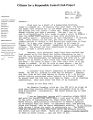
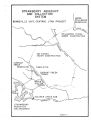
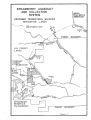
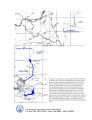
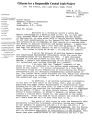
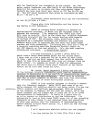
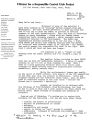
Show First, the CUP We have to assume that changes in plan and purpose by the Bureau of Reclamation stem from having to meet existing laws, Executive Orders to protect Wetlands and Floodplains, some degree of compliance with the Administration Water Policy, and Administrative Directives to do this. We have to assume, also, that the CUP has exceeded its authorized cost ceiling. We have requested pertinent information from OMB to substantiate what we hear is a 1/4 million dollar cost over the ceiling. The Question then becomes, "How much and what kind of change of plan and purpose can be legitimately included in CUP development and when does this change require re-authorization of the Project?". Where is the responsibility for determining this? A. In the Draft and Final Bonneville Unit EIS, the diking of Utah Lake marshes (Provo and Goshen Bays) was presented to the public as a necessary component of the proposed Jordanelle- Provo River M & I System. The 1 3,000 a f of water to be salvaged from evaporation would be used to irrigate farm lands in the Utah Lake region as an exchange for Provo River water to be stored in the Jordanelle Reservoir. This water was then to irrigate farmlands near the Jordanelle and to supply M & I water in the Salt Lake Valley. In the EIS, there was no Utah Lake Irrigation System spelled out, as such. When CRCUP and Sierra Club members met with Regional Director, Nelson Plummer, on July 19, 1978, who was newly appointed to that position, we asked, in written form, how the Bureau could dike the Utah Lake marshes and comply with Executive Order to protect Wetlands. (#11990) These marshes provide nesting and breeding habitat for a variety of special birds - white faced Ibis, White Pelican, Cormorant, etc., as well as for Canada Geese and other waterfowl. Utah Lake is considered by University staff people to be a unique warm water lake. The limnology of the littoral zone on Goshen Bay is directly related to the maintenance of the biological cleansing and functioning of the Lake. A million dollar research project is underway on Utah Lake by the State Division of Wildlife Resources and Brigham Young University. When we learned in August, 1978, that the Bureau was preparing a Draft EIS on the Jordanelle - Provo River M & I System and would exclude the diking of Utah Lake marshes, CRCUP and the Sierra Club again met with the Bureau to discuss the justification and consequences. The justification was based on conclusions of the Sierra Club/NRDC suit of 1974 in which the trial judge stated that each System was to have an EIS prepared. Somehow and somewhere, then, there became a Utah Lake Irrigation System which would later have an EIS preparation. (By that time, of course, the Jordanelle construction would be well along!) |