| OCR Text |
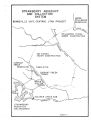
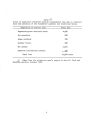
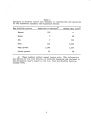
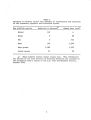
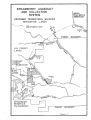
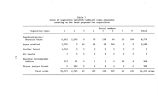
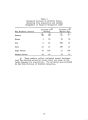
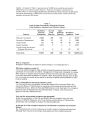
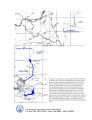
Show habitat. As shown in Table 1, approximately 14,000 acres would be permanently affected by the collection system features. Reservoir inundation would have the greatest effect on land surfaces (9,320 acres) followed by habitat isolation (3,322 acres), recreation development (1,094 acres), and finally by access roads, tunnel portals and diversion structures (267 acres). Table 1 Land Acreages Permanently Affected by Features of the Strawberry Aqueduct and Collection System Features Reservoir Inundation Recreation Development Access Roads Habitat Isolation Tunnel Portals and Stream Diversion Structures Total Acres Strawberry Reservoir Enlargement 8,690 909 131 3,322 0 13,052 Currant Creek Reservoir 290 131 35 0 0 456 Upper Stillwater Reservoir 340 54 34 0 0 428 Strawberry Aqueduct 0 0 45 0 22 67 Totals 9,320 1,094 245 3,322 22 14,003 acres What is mitigation? Mitigation means either to lessen an adverse impact or to compensate for it. What does mitigation consist of? Terrestrial wildlife mitigation often consists of acquiring parcels of land to be managed specifically for the benefit of wildlife. Management of these lands is designed to increase their capacity to support greater numbers of birds and animals and also to prevent uses of the land that would be harmful to wildlife. Many times specific animals; such as deer, elk, and moose are treated as key species to develop mitigation plans beneficial to many kinds of wildlife. Who is responsible for developing mitigation plans? The Fish and Wildlife Coordination Act and the National Environmental Policy Act require the Bureau of Reclamation to coordinate water project planning with the Fish and Wildlife Service. While the Fish and Wildlife Service is the focal point for mitigation planning, input is received from the concerned State or States, other Government agencies, and other affected entities. How was the recommended mitigation plan developed? Under the coordination of the Fish and Wildlife Service, biologists from the Utah Division of Wildlife Resources, U.S. Forest Service, and the Bureau of Reclamation pooled data and knowledge to produce the recommended plan. Is this plan all of the mitigation required for the Strawberry Aqueduct and Collection System? No. Evaluations are currently underway to consider losses to fisheries and waterfowl. Although there may be some overlap, these aspects are being treated separately. |