| OCR Text |
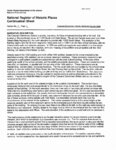
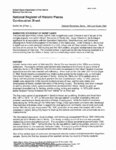
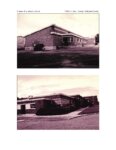
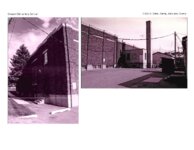
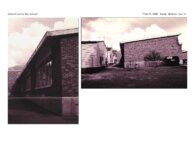
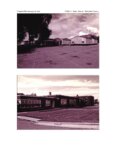
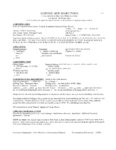
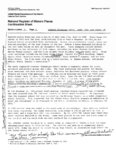
Show NPS Form 10-9OO-a Utah MS'Mlrd 4 .0 (Mac) Format (Revised Nov. 1995) OMB Approval No. 10024-0018 United States Department of the Interior National Park Service National Register of Historic Places Continuation Sheet Section number 8 Page 2 Crescent Elementary School, sandy, Salt Lake County, UT /leader Brigham Young christened the town 'Sandy' for its thirsty soil_ The first major period of development in Sandy is known as the Mining, Smelting and Small Farm Era, 1871c.1910. 3 In 1871 a 160 acre town site was platted4 ; a number of sampling mills and smelters were built and Sandy became a strategic shipping point. While the dominant economic force during the 1870's through the 1890's was mining, the local agricultural community also developed. Beginning as early as 1869 a series of wells and ditches were dug to supply water to residents, farmers and smelters. New business enterprises arose to support the local agricultural community, new schools were built, and in 1893 the city was incorporated. s Sandy City was nearly overwhelmed by mining, but in the 1890's the sugar beet industry gave agriculture a boost as an important cash crop. Financial subsidies encouraged farmers to reserve a portion of their land for the beets, and the LDS Church founded the Utah & Idaho Sugar Company. The atmosphere in Sandy followed the fortunes of the Emma Mine in Little Cottonwood canyon. Silver ore production peaked in 1917, steadily declined, and by 1930 production had ceased. Without the presence of miners, Sandy City began to clean up the saloons and brothels, and concentrate on civic improvements. 6 The Specialized Agriculture, Small Business, and Community Development Period, 1906-1946 is the second period of development in Sandy. It was a period of transition for the city encompassing the first four decades of the twentieth century. The mining, smelting and small farm era (1870-c.1910) was gradually replaced by a more diversified economy. The population of Sandy remained at approximately 1,500 between 1900 and 1940. 7 During this time the city was defining itself as the political, economic, civic and social center for the southeast Salt Lake Valley. This second period of Sandy's history lay the groundwork for the city's eventual transformation from small town to suburb. One of the earliest signs of community development was the creation of subdivisions from large farm parcels. During the first four decades of the twentieth century the majority of Sandy residents continued to live on farms. Most of these ,r esidents survived economically by combining subsistence farming with other occupations, primarily cottage industries and ercantilism. Other farmers created large specialized agricultural enterprises such as poultry and dairy farms. nity &. Social Development ~'* \ s 1863) there were only four homes between 7200 South and the point of the mountain. Thomas Hill Allsop was a farmer from Yorkshire, England who joined the LDS Church in 1856~and emigrated to Utah in 1857. After living in Provo and South Jordan, he settled in Sandy where he claimed a homestead of 240 acres; nearly half of the land which 3 4 5 6 7 8 Balle. Wayne. Historic Resources of Sandy City, Multiple;Rf9perty NR Nomination. 1992_ Rich Roxie. N_ The History and People of Early Sandy, 19~ Daughters of the Utah Pioneers_ Tales of a Triumphant People: A History of Salt Lake county 1847-1900, Sillitoe, Linda A History of Salt Lake County, USHS & SLCC. 1996. Bradley. Martha Sonntag Sandy City: The First 100 Years, Sandy City Corporation, 1993_ Bradley, Martha Sonntag, Sandy City the First 100 Years, 1993 1~ |