| OCR Text |
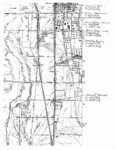
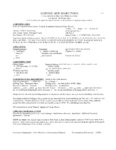
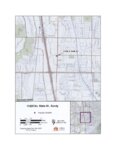
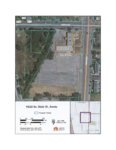
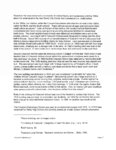
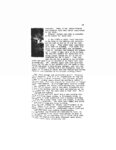
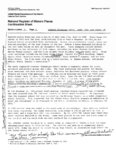
Show 14 I;) 10 THE PONY EXPRESS From the time the Pioneers entered the Salt Lake Valley In 1847 until the fall of 1851 the only communication they had with the outside was through emigrants coming into the valley or those in the valley returning help others to come here. eastward to heip Or sent to It took months for news to be brought from or in the east. any place In The news that Utah had been made a territory did not arrive in Utah for many months after the act had been passed by Congress. afte,... the U. S. Mall In 1 851 the first contract to carry ·the Sf. Joseph. Missouri and Salt and Express between St. Lake City was to John M. Hochaday and William Liggett. They used the Stage Coach and made the trip once a month. Laier they ran semi-monthly. By 1854 Congress passed an act that appropriated 8y mone money for better mail service. The stages were hOrses or Or mules which light vehicles drawn by 6 to 8 horses miles. were changed every 10 to 15 mlles. This transportauntil the close 01 of 1859. tion continued untll It was very . expensive and was costing the Government much money. In the meantime three men. William H. Russell. Alexander Majors and William B. 8. Waddell formed a comfor a pany and began experimenting and decided to ask lor contract to carry only letters and mall - no express. By 8y using horses they thought the mall could be delivered faster. lastar. The work of 01 organizing. carrying out details, detalls. buildbulldIng ing stations between those already established. hiring men, buying horses. etc. went fOrth forth quietly and without publicity. MajOrs Much praise must be given Mr. Majors whose capability capabllity of 01 planning and carrying out details made the venture a success. The stage stations were too far apart for horse travel so In-between in-between stations were made where hOrses horses could be quickly exchanged. Each station had an overseer, overseer. stock tender and a blacksmith shop. If possible the stations were situated near "possible a ranch Or It was a hard and adventurous or settlement. life liIe for both pony and rider and many a pony was lost as well as the rider. The attacks were blamed on the Indians but It was white "outlaws" 1I0utlaws ll more than Indians that caused the trouble. The Pony Express Irom from the East left St. Joseph. Missouri at 6: 30 p. m. April 3. 1860 and arrived In in Salt Lake City April Aprll 9. 1860 at 6: 25 p. m. The Pony Express from the West left I eft Sacramento, Sacramento. California at 1 2 p p.. m. on April 3, 3. 1 860 and arrived In in Salt Lake April Aprll 7, 7. 1860 at 11 :45 p.m. While VVhlle It it was not a profitable venture. venture, It it enabled the readers of the "Deseret IIDeseret News" News ll to learn of Abraham Lincoln's election as President eight days after he won 20, about 11 p. m. a rider the election. AI so on April 20. splashed into town through a downpour of 01 rain with the news newS that 8 days before belore (April 12) South Carolina had fired on Fort Sumpter and the Civil war had begun begun.•. Soon came the Telegraph and th~n then the TranscontinTranscontInental Rall Rail Road that could take the place of 01 the Pony Express. There were 42 stations east of 01 Salt Lake City and there were 56 stations west of Salt Lake City. There were 1 23 riders. The Pony Express Station in Salt Lake was on Main Street between 2nd and 3rd South and the route passed through Dry Creek about 15 miles south along State Street. THE CEMETERY The town Cemetery Is located at 11100 South. It Is is east of State Street and the land gradually rises to the east boundary. No record has been kept of when it was bought so no dates are avail abe at this writing. When the ward was organized In 1896 the Bishopric 8ishopric would naturally acquire a cemetery cen,etery cite as e\lery community must have a church, church. school and cemetery. However, Ii have a record that gives a burial date 01 ever. of July, Bishop Jensen acquired the site and the cemetery 1898. was on the east part and a tithing yard was next to the road. A granary and weigh scales were built and a root cellar near by as many members gave produce for tithing which was kept there. The tithing yard was later abandoned and the granary was sold to Fred Jaynes. The land was kept with the dream of ·someday seeding the land to grass and Improving improving the cemetery. At this writing (1964) the dream Is is coming true. Work and improvements have been going on for two years and it is now ready to be planted to grass . A water system has been Installed, electricity has been put in In to run the pump, the roadway has been blacktoped and soon the little hili hlll where sleep many of the men and women who pioneered this little town will be as lovely a cite as any place in the valley. God bless them and may their posterity honor them for the sacrifices they made and the heritage they left us. In 1963 the 4H Clubs of Crescent raised money and paid for a flag and flagpole which was placed in the center of the cemetery plot. The 4H leaders in charge were Ora Fairbourn, Fairbourn. Selma Olsen, Eddus Hyde, and Leone Lloyd-.- · ---. held at the flagpole cite Dedicatory services were heid June 14. 1963 and It was dedicated by Hyrum Hardcastle |