| OCR Text |
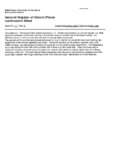
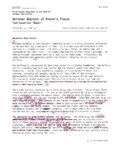
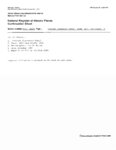
Show _ lIPS For-. 10-900 -. Uh~ WordPerfect 5.1 Forut (Rlvised Fib. 1993) 10. '0024· 00'8 United States Department of the Interior National Park Service National Register of Historic Places Continuation Sheet Section No. ~ Page-,- Crescent Ele.entary School, Sandy, Salt Lake County, UT During the period 1862 through 1893, the number of school districts in Utah Territory grew from 76 to 342. 2 The relative effectiveness of districts varied dramatically and often depended on the abilities of local trustees as well as teachers. Clearly students throughout the state were not being offered equal educational opportunities. Consolidation and grouping the districts by counties not only made administration more efficient but made progressive curriculum available statewide. A further development impacting educational quality was the replacement of the Mormon school system with a free public school system after 1890, part of the accommodation reached between Mormon and federal government leaders following the abandonment of the practice of polygamy in 1890. The consolidation of districts and school facilities as well as the establishment of a tax-supported school system had a direct impact on the educational architecture that followed. Fewer but larger schools were built. While the first schools had been constructed of log, lumber, or adobe, followed a few years later by more substantial brick and frame buildings, it wasn't until c.1917 when the Utah legislature created the State School Buildings Commission that school plans and buildings were examined by professionals. Between 1917-18, fiftytwo schools were underway but were delayed due to conditions related to World War I. This period marks a shift in the ideas surrounding the way in which school should be built. The Parowan school, a one-story structure with eleven classrooms, quarters for manual training and domestic science, principal's office, janitor's room, store room, toilet rooms, library, teachers work room, swimming pool and gymnasium, was regarded as a model of school architecture. Ventilation and health issues were also important to those in the education system during the 1910s and 1920s. 3 These changes demonstrate the desire of the school boards to improve teacher and student conditions with the introduction of specialized rooms and healthier conditions in the 1910s and 20s. Although education in nineteenth-century Utah was influenced by the conflict between Mormons and non-Mormons, the twentieth century saw national social, economic, and political environmental influences. For example, there was a call for more -X- Moffet, John C. The History of Public Education in Utah. Noble, Warrum, pp. 365-71. Salt Lake City: See continuation sheet Deseret News Press, 1946, pp.204-09. |