| OCR Text |
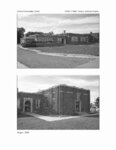
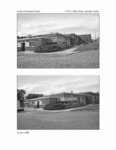
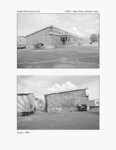
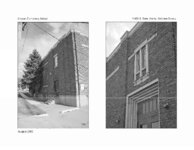
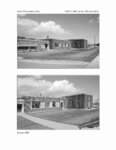
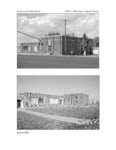
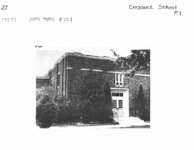
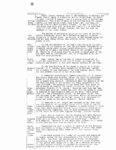
Show 164 CROOKED--CROYDEN CROOKED-CROYDEN CRYSTAL James P. Jensen was the first Bishop of Crescent Ward; he acted until 1918, and was suchis death, May 7, 1913, ceeded by William Fairbourne, who died Aug. 4, 1918, and was succeeded by Arthur C. Morris, who was succeeded in 1924 by Edward Fairbourne, who presided as Bishop Dec. 31, 1930. On that date the ward had 293 members, including 70 children. A modern, brick meeting house was erected in Crescent in 1900, the older structure being acquired by the school trustees of the district. In 1927-1928 the ward erected a new meeting house at a cost of ,,5,000, $45,000, the former ward chapel having been destroyed by fire. Crescent Ward belonged to Salt Lake Stake until 1900, when it became a part of the Jordan Stake, and when that stake was divided in 1927 it was transferred to the East Jordan Stake. ten, and then proceeded by the main road four miles to a point near Crooked River, where the company dismounted and, leaving a few men to guard their horses, the remainder proceeded on foot toward the enemy's camp. Capt. Patten divided the expedition into three companies, taking command of the first himself, and placed Charles C. Rich ames Dur~ in charge of the second and JJames fee of the third. Capt. Patten made a short speech exhorting the brethren to trust in the Lord_ for victory. During Lord~for the battle that ensued Capt. Patten was mortally wounded and Gideon H. Carter and Patrick O'Banion were killed and others wounded. The mobbers claimed the loss of one man and some wounded. The mobbers were dislodged and the men kept as prisoners were rescued; the posse then returned to Far West with their dead and wounded. David W. Patten was one of the Twelve Apostles and in his military experience he was known among his comrades as "Capt. Fear Not." In combating the attacks of the mobocrats he made the remark that he would rather die than to witness such a condition in his country. (For further details see "Historical Record," Vol. 5.:54.) BATI'LE. Late CROOKED RIVER BATl'LE. in the evening of Oct. 24, 1838, news reached Far West, Caldwell Co., Mo., that the Rev. Samuel Bogart (a Methodist) with a. mob of about 75 men were committing depredations on Log Creek, destroying property and taking prisoners. On hearing the reCROYDON WARD, Morgan Stake, port, Elias Higbee, the judge of Caldwell County, ordered Lieut. Col. Geo. Morgan Co., Utah, consists of LatterM. Hinkle, the highest military officer day Saints residing in a string town in command at Far West, to raise a on Lost Creek. ·The village of Croydon to disperse the mob and retake is near the boundary line between force to the prisoners whom it was reported Morgan and Summit counties and is they intended to murder that night. about ten miles east of the town 'of The trumpet sounded and tM brethren . Morgan (the county seat) and 13 assembled on the public square in Far miles northwest of Coalville, Summit West about midnight. Capt. David W. Co. Near. the junction of Lost Creek Patten, Parley P. Pratt and Charles C. and the Weber River was the famous Rich, with about 40 other volunteers, "Thousand Mile Tree" marking a spot responded, which number the judge 1,000 miles west of Omaha, Neb. thought sufficient, but, upon the sugspring .of 1862, George Shill, In the spring. gestion of Charles C. Rich, who be- James Wl4ker W~ker and George Knight vislieved a battle was inevitable, more ited the little valley in which Croydon men were raised by him in the small was later built. They returned to their settlements on Goose and Log creeks, homes in Salt Lake City, but came which increased the force to about 75 back in July of the same year with men, who all met together about six the intention of locating a settlement, miles from Far West. The company being accompanied by Jesse W. Fox, was divided into smaller companies of who surveyed some town lots and also some farming land. In Novemoer of the same year a company of twelve brethren settled on the townsite, namely, George and Charles Shill, Gibson and Thomas Condie,' Levi Savage, James Walker, George Knight, William Chapman; Charles Bunting, Abel Mitchell, William Probert and Thomas Walker; four of these brethren had their families with them. They built cabins in fort style but did not continue the stockade; other settlers, who joined them, scattered out along the creek and thus formed the string town referred to. Levi Savage took the lead in ecclesiastical matters in the beginning of the settlement, or until a branch was organized in October, 1863, with George Shill as presiding Elcier. EIller. Meetings were held in the cabins of the settlers until 1864 when a log school house was built, which after that was used for all public purposes. George Shill was succeeded in 1865 by James Walker, who was succeeded in 1869 by George Knight, who, after having acted as presiding Elder during the summer months, was succeeded in the fall of the same year by Ephraim Swann, who was succeeded in 1874 by George Thackery. At the organization of the Morgan I, 1877, the saints Stake of Zion July 1, on Lost Creek were organized as the Croydon Ward, so named after a town in Surrey, England. John Hopkins was chosen Bishop. The history of Croydon has been largely preserved by letters written by John Toone (one of the early settlers) for the "Deseret News." A Sunday school was organized at Croydon as early '-as as 1867, but a more perfect organization was effected in 1887, with Joseph Blackwell as superintendent. A Relief Society was organized in 1875 with Mrs. Ellen C. Thackeray as president, a Y. M. M. I. 1. A. in 1877 with John London as president, a Y. L. M. I. A. in 1878 with Mrs. Sarah A. Toone as president, and a Primary Association in 1879 with Mrs. Elizabeth Blackwell as president. 11 Bishop John Hopkins was succeed in 1887 by George Knight, who act until his death Dec. 21, 1895. 1895, He w succeeded in 1896 by George R. Thac eray, who was succeeded in 1908 Frank D. Hopkins, who acted un 1907, after which Thomas R. Coni ConI and Fred W. Clark, respectively, act as presiding Elders for· for two years, until 1909, when William H. Toone 'VI VI called to act as Bishop. He was Sl ceeded in 1917 by James Melvin Too: Claudwho was succeeded in 1926 by Claud· C. Toone, who presided Dec. 81, 19 On that date the ward had 104 me to bers, including 18 children. The to population of the Croydon Precl Preci was 441 in 1980, including both Cr don and Slide wards. CRYSTAL WARD, Pocatello Sts St8 Idaho~ consists of the II Power Co., Idaho, ter-day Saints residing in that J: of the county which irrigates frot fror number of small creeks rising springs near the base of that rang( rang! mountains which separate PortIi Crystal'' Valley from Bannock and Crystal leys on the west. · The main strel heading in these springs are Rat snake, Muddy, Clofter's, Crystal Midnight creeks. All these form ] tlesnake Creek, which is a tribu1 of Bannock Creek. About one-hal the inhabitants within the limit: the ward are non-Mormons. Som. the farms are irrigated from streams mentioned, but the people chiefly on dry-farming, which is successful when rain is plentiful; t: has been much loss of crops by drou The center of Crystal 'W ard, or place where the L. D. S. meeting h stands, is about 11 miles northea: the Meadow meeting house, 18 r northeast of Arbon, 21 miles se west of Pocatello, and 88 mile: nearest road southeast of Ame] Falls. Near the center of the war the forks · of Rattlesnake and M· creeks, is a small village, about tl fourths mile southwest of the L. : meeting house. The area of the .is about 50 square miles; it ex1 |