| OCR Text |
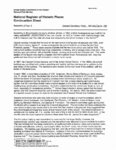
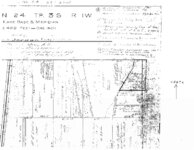
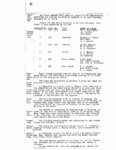
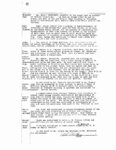
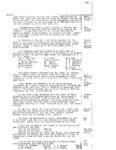
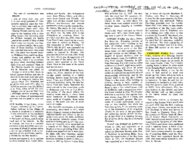
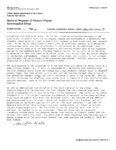
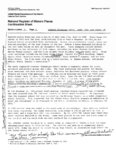
Show 3 In 1870 J Senjamln Barr Neff, who with his father and family had been Pioneers Into inlo the Valley In 1847, and were now living in the Mill Creek area, took Brigham Young's advice and as he had married and had a family of his own since coming to the valley, he came to the Dry Creek area and bought the land from Mr. Bell. It was in his home that the first Telegraph Office south of Salt Sell Lake City was operated by his wife, Mary Ellen Love Neff, Nov.12,1870. Nov. 12,1810. About this time also came Milo Andrus Andru. end and took up land MI". Nelf. Nell. south of Mr. querter section of Edwin Brown also homesteaded a quarter land In the southern part 01 of the area, erea, (11400 south-11800 south ). Then came William Taylor In 1875 1815 homesteading the'Gulley' west to the Jordan River ; a piece of land from the'Gulleyl 1679, taking up land from the River Joseph Bullock In 1879, south to 11400 south. Also John N. east between 11000 soulh Eddins who \/IItIo bought some land from Mr. Andrus. In 1879 came Hyrum Lancaster and John Lloyd end and Pehr August Dahl In 1880 from the West Jordan area and settled the North part of the area. In 1877 1671 William H. Smith came. Andrew Shulsen and John Wilson settled seWed next 10 to Ihe the Lloyd property. In 1882, 1682, Frederick August Olson bought 80 60 acres of \/\/het Is land east of State Street from what is now 10800 south to 11000 south. However he did not move here till 1883. In 1885 from the Cottonwood area came William Falrbourn, Albert G. Brown, William V. Morris, James B. Cunliffe and Henry W. Brown and bought the quarter Section from Edwin Brown. William H. Atwood bought land east eest of that property but did not Immediately occupy It until later. Soren Jensen and a son James (Jens) Peter Jensen bought 60 acres of 01 land east of State Street In 1885 as did Nels AugAug" ust Nelson who bought property which William G. Taylor had acquired at 10200 south - 10600 south, east eest of State Stete Street. Now, many more people began to move Into the Dry Creek area but these people are ere considered as the Pioneer Builders 01 of the Dry Creek area. Most of the land was covered with Sunflowers, sage brush and greasewood. The river bottoms were swampy. As the land was being cleared, the rren rTBn who were able took their teams and helped to make the Eest Jordan Canal from the Narrows Into the Valley, along with men and teams from Draper. Albert G. Brown and William FalrF alrbourn made the Canal from Cook's COOklS lane Into Crescent, (11400 south), while Nels A.Nelson, Fred Jaynes, Fred Olson and others worked from there on. Weirs and headgates heaeigates were made along the way and dltche. ditches were dug to take the water to the various fields. Then the desert began to blO.som blOssom a. the 1'0". 1"0". The Tha gound tan a. aa a mania man's was rich and fertile and alfalfa grew as tall waist. Some sugar cane was grown and the housewives made sorghum molasses which they used as a sweetner. Grains were also raised and potatoes and sugar beets were raised. No modern harvesters did they have to plant or harvest the crops. Potatoos were laid In the sun lor two or three days to Irlpenl "turned out IIll to 'ripen' and then the family IIturned cut the sets. Then as a furrow was plowed the sets were dropped about a foot apart In the furrow, then covered by another furrow and so on till the field was planted. The harvesting was done In a similar manner, a furrow being plowed and the potatoes were picked up by hand, placed In buckets and then put Into sacks. At the end of the day they were hauled In the wagon and placed In pits or cellars until needed for use. Sugar beets were harvested In much the same way. Of course they were planted by machine. Then came the task of thinning, which was done by a IS man Icross-hoelng 'cross-hoeing'l and then youngsters thinning the beets, leaving only one beet between the cross-hoe. They were paid a few cents a row but no one got got'I rlch rich'l although they did make a little spending money. Then the harvest; they were plowed by a team of horses; the harvesters pulled them out of Ihe the ground, &hook shook off the dirt, placed them In plies, then wilh with long knives cut off the tops, threw them Into plies after\/IItIlch the wagon went down the furrow, furrow t the beets were which thrown Into the wagon and hauled to the beet dump and loaded by hand Into the cars. Man I that was work! Aa tIme As time paned, passed, Inventions were made which \/IItIlch took much of the hard work out of beet-raising beet-raIsing which \/IItIlch today can be men t one driving the machine and the other done with two men, driving the truck. In the early settlement of the valley the threshing of the grain was done with flail. flails which beat the grain from the straw but by the time Crescent eresc:ent was settled, a threshing .traw company had been formed who went about doing the lhe thresh\/IItIlp which \/IItIlch kept the Ing. Hyrum Lancaster cracked the whip team. teams going round and round which \/IItIlch kept the machinery goIng round and round Inside the seperator, which \/IItIlch shook the grain from the straw and chaff. John Lloyd sacked the grain as II It came from the chute on the side of the seperator Charle. Charles Smith was wes the $eperator seperator man, and Albert Lunnen ' and Ike Goff took care of the straw and chaff. The farmers' wives fed the threshing company as long as they were on the Job. JOb. The farmers, being neighborly, exchanged labor threshing time. It was an exciting time with each other at Ihreshlng lor the children too, and some even got excused from school to go home to watch the amazing work of the threshIng machine and the horses going round and round. Time ~'1d. ~n.d. J!:IVJ!ntlon Jrav_~ntlon has certainly taken the hard work end wonder oul of and 01 farm work. Remember how the farmer walked behind the hand plow which \/IItIlch made one furrow at a time .nd and was pulled by a faithful team teem of horses? He worked from dayllghl daylight till dark as a. soon •• as Ihe the frost was out of the ground to get hi. 'spring plowing' done ready for plantplent- Ing. . |