| OCR Text |
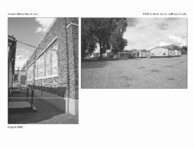
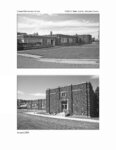
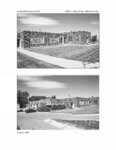
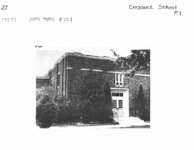
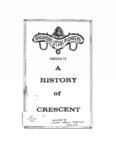
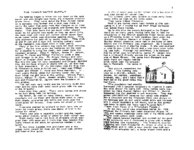
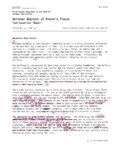
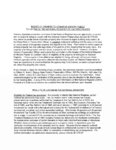
Show OMS No. 1024-0018, United States Department of the Interior National Park Service National Register of Historic Places Continuation Sheet Section No.j! Page L Crescent Elementary, Sandy, Salt Lake County, Utah continued to live on farms. Most of these residents survived economically by combining subsistence farming with other occupations, primarily cottage industries and mercantilism; other farmers created large specialized agricultural enterprises such as sugar beet, poultry and dairy farms. Sandy residents also continued to work in the mining and smelter industries in nearby communities even after the smelters in Sandy closed down. COMMUNITY DEVELOPMENT & SOCIAL HISTORY By 1863 there were only four homes in the southeast area of the Salt Lake Valley.6 William H. Smith received a patent for the land on which the Crescent School is built. In 1881 Smith sold the land to William Bird, who sold it to Elias A. Smith [Probate Judge Salt Lake County] in 1885. Barton Snarr was next to acquire the property and in 1889 sold it to Emil Erickson for $600.00. One year later, Snarr bought the property back from Erickson for $800.00. Snarr must have been a shrewd investor, as in 1897 he sold the land to Frederick D. Jaynes for $1,475.00. In 1905 Jaynes sold the land to the Sixty-Seventh School District; two years later it was deeded it to the Jordan School District. Crescent was a quiet little neighborhood located between Sandy to the north and Draper to the south. The physical boundaries included the area between 9800 South to 11800 South, from the foot of the Wasatch Mountains to the east; to the Jordan River on the west. The area was known during the 1860s as Dry Creek or Pleasant View, and early settlers included Benjamin Barr Neff, Milo Andrus, Edwin Brown, William Taylor, John N. Eddins, Pehr August Dahl, William H. Smith, and Frederick August Olson. By 1896 a sufficient number of farmers had moved into the area, and an LOS ward was established. The new ward needed a name, and "Crescent" was chosen. Residents suggested the name as their valley was shaped like a crescent; others made an analogy that as the crescent moon was always on the increase, so was the population of the new ward.? The first schools in the area were one-classroom buildings appropriately called the North School and the South School. On occasion, the South School building was used for adult social functions. A photograph of the North School reveals that it was a simple building with a hipped or pyramidal roof. The fayade was symmetrical, with an arched doorway in the center and double hung windows on either side. Around the turn of the century the County School District began to consolidate the neighborhood schools and provide funds for new buildings. The County suggested that some of the children of Crescent be sent to school in Draper, and some to Sandy. However, the people of Crescent wanted their children to remain together. A location was chosen for the new school at the corner of State Street and 1110 South; this was closer to the center of town and a more convenient location . The first school was built in 1894; it was one of the first public buildings in Crescent. The first teacher was Mr. Marchant. 8 When the new building was completed, the former North School property was sold to Nels August Nelson. The school building and surrounding land adjoined his farm. Nelson's farm was located on the east side of State Street at 10300 South. Nelson "liked to buy land ... He owned more land in Crescent than any other person."g He and his family eventually moved in to the North School building after their house burned down. ~ BradleYl Mgrtha Sonntaq. SrndDOC~ty the First 100 Years, 1993. Tales 0\ a Triumphant fTe0.!€le, , ,947. Jordan School Ulstnct, 194 . 8 9 A History of Crescent. DUP, 1962-64. |