| OCR Text |
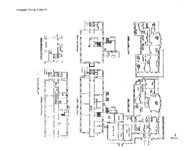
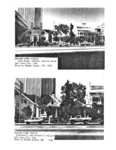
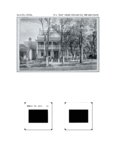
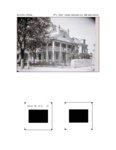
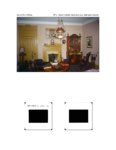
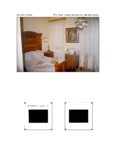
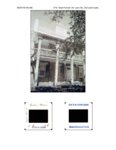
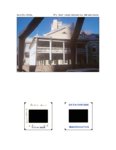
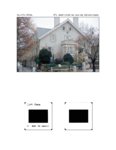
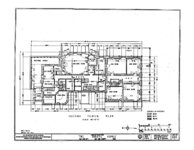
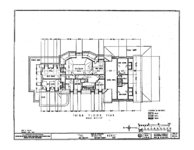
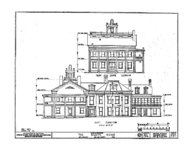
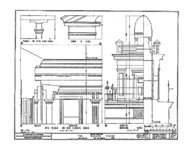
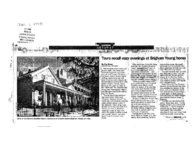
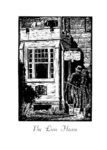
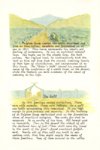
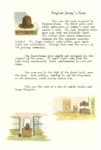
Show Built in 1855-56 as . home of Brigham Young, the Lion House. )snow used as a soci3l centet.r and museum, and is open to the public. ~ .~ Lion ~ was 'home' to Br.igham Young by A. Director, R. Utah RIGHAM YOUNG, · the Moses of modern Israel, built ,and .. occupied sevei'al .houses with , his, family during ·his life~ time. Several have been larger and more imposing and, perhaps ' more important as the official residences of the president of the. LOS Church and the governor of the territory U~~ " However, none has generated more Interest, use, and affection over its ; long IUe than the Lion House. Perhaps it Is not _a gem of architecture, neither has it been known for its grandeur or its palatial appointments. . However, of all the old ,houses in Salt Lake ' City, the Lion House is the most outstandlng for its uniqueness and quaintness. In spite of its simple rectangular shape, reminiscent 'of a barracks, it still carries an air of picturesqueness, personality and charm all its own. As an official before his people and the world, Brigham Young built and occupied houses that were used as his official residences. The .White House, also referred to as the Man· sion, and the Beehive House both served this func.tion. The Garda House under construction at the time of the president's dea th was also to serVe this use. The Lion House on the other hand was B of " Mortensen :Blatorlcal Society his "home." Here lived several _of his wives, and here also were born several of his children. , . ~. ~ RIGHAM YOUNG was go~ernor of the territory of Utah in 1855 when the Lion House waS built The three stOried building was con- " structed . of adobes and has very · · thick. walls. It Is J'ather long for its . width, being 40x116 feet, with the narrow side lacing the street. For all intents and purposes it is connected with the Beehive house to the east by a smaller office building which for many *years served as the president's office and the general · offices of the Church. The main exterior features of the house are the rows of gabled windows, ten in num· ber on both sides of the top floor, . and the recumbent lion, from which · the building gets its name, set on top of the front portico. ' The lion was carved by the ii.nl;1Ish lirtist, William Ward, who also made the famous stone font .in the Nauvoo Temple. He had consider· able ability as a sculptor 8:Jd architect, and it is said that both the Lion House and the Beehive house were designed by Ward and Truman O. Angell, the first practicing architects in Utah. William Wm'd arrived in ' the territory in the early 1850's but after a few years returned to the eastern states. B 'Salt Leik. City, Sundciy, · April 14, 1957 The interior arrangement of the ' house admirably suited the needs of its occupants. All three floors had central ' corridors running through the entire building from north to south, with stairways going up at ' each end of these halls. On the basement floor there were two large vegetable and food cellars. In the center of the building, a narrow hallway ran eastward to the court outside where, in the earliest days, there was a well of water. ' UNNING north of this little hallwas a series of other rooms.' One was' used as a weaving room and contained looms · of different sizes for weaving cloth and carpets. ,Spinning wheels ' and other clothmaking apparatus were here also. Beyond the ' weaving room 'was a ' sittlrig room, and beyond that a • dairy room where was kept the milk, . . butter and cheese. Also in the basement was a community kitchen and dining room and, of course, the necessary pantries. . Th'e dining 'room could accommo., date from 50 to 70 people at meal· times. The second or main floor CQl'ltalned the living room. The large one . on the southwest corner was known as the large parlor, or prayer room, for there it was the custom of the family to meet night and morning for devotional exercises. _ It was furnished with "store carpets" and also contained a' piano for singing and other musical, exercises. Ample cupboards in this room also held household supplies, hymn books, and photographs from many countries. Comfortable chairs) tables, and sofas completed the furnishings of this room. North of the parlor were four ·other living rooms; and on the east side cif this floor were five more liv· Ing room5---4l11 appropriately furrushed with closets, mantelpieces, R • ' .\ .;. .. : - ;.. and later on with sman open.lace<! ": stoves which would burn either wood . or ,coal. ' . .' . On , the upper ' floor there were . .twenty bedrooms, ten on each side of the main hall;with a dormer window . ,to each room. It was here where the .children slept A feature long·slnce gone was a porch which 'ran the entire length of the· building on the west side. 'ON , THE third floor at the head of the landing was always kept a little light stand on which a candle burned at night so the children could see their way about 'wIthout stub, bIng their toes. . The front door was a rather maS. slve affair, ' about two Inches in ,thickness. · It· had an enorinous lock and key to It. It was made of iron and ' was ' about · five inches long. When . the children became 'DId enough to step out, the key was faithfully . carrIed in ' their pocket It ~ saId that about twelve wives, as well as nineteen daughters and eight sons, lived there at one time. What happy tiines the house must have seen! Certainly it never suifered from lonesomeness. It was in the Lion House where ' Brigham Young was taken ill and where he died on August 29,1877. Over the. years it has been used for a variety of purposes. In recent years it has become a social'cegter where sma~l group meetings, luncheons, and dinners can be held. In the basement is a large and well-patronized cafeteria. The rooms on the upper floors still contain numerous personal effects of Brigham , Young and his family. Few buildings In Salt Lake City are better known or more deeply loved.. For the Lion House serves a dual purpose as it serves the present generation and stands asa memorial to a way of .l ife in the past. "o ' . . |