| OCR Text |
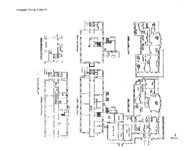
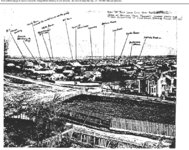
Show 'Unlted States Department of the Interior National Park Service National Register of Historic Places Continuation Sheet Section number ~8_ _ Page~8 __ upper porch to sleep. In winter the enclosed porch was a "winter playground." He also built passages connecting the building~ of the Complex, such as the one the children called the "crooked hall" that ran behind his offices to Lion House and Beehive House. The Governor and President's Offices and the Beehive House reflect fewer polygamous or unique architectural elements than does the Lion House. The physical arrangement of the three buildings in the complex in a U-shape and the way that they were functionally integrated for efficiency and harmony, however, reflect Young's view of the organic Mormon community in which "private" and "official" affairs merged. The arrangement of the buildings emphasized the proximity of working and living spaces, yet the rooms were divided into welldefined domestic and official functions. In the Beehive House, the "official residence" of the Church President and Territorial Governor, these functions were combined. At the peak of habitation by Young's extended family, 12 of Young's wives lived in Lion House, along with 19 daughters and 8 sons. Yet another wife and her children resided in the Beehive House. In addition t o Young's wives and offspring, the complex also housed spouses and offspring of married children, nonconjugal wives, adopted children, and hired help. The structures in the complex combined church, government, and domestic affairs in one compound, integrating all aspects of the lives and work of its inhabitants. Jeffery O. Johnson, historian of this unique 19th century household, describes it as !fa fluid social organization that managed its resources well enough to provide for the needs of many people mOf~ loosely connected with the family," as well as those of the family itself. . Angell designed the buildings of the complex under the careful scrutiny of Young. These buildings, especially the Lion House, illustrate Young's careful spatial planning to create an ideal physical environment for the polygamous household. Family harmony and efficiency were assured through spatial arrangement, division of labor, and the separation of the Young domicile into private and offical households in the two main houses. Despite Brigham Young's wealth, the household operated on the principles of frugality and utility. A contemporary observer in 1867 wrote of the buildings and grounds of the complex: Everything bears the mark of utility and nothing is expended for show. or merely to gratify taste. No expensive flower-garden or green-house is to be seen, and this is perfectly characteristic of the Pro~ijet, who is thoroughly utilitarian in all his views and tendencies. Spatial planning for family harmony and efficient functioning was especially evident at Lion House. Most illustrative of Young's practicality and sanitary |