| OCR Text |
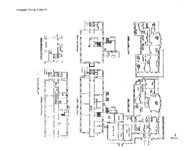
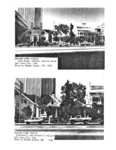
Show United States Department of the Interior National Park Service National Register of Historic Places Continuation Sheet Section number .-.:::...,8_ _ Page~5 __ desire to organize my own family first into a society for the promc.tion of habits of order, thrift, industry, and charity; and, above all things, I desire them to retrench from their extravagance in dress, in eating, and even in speech. The time has come when the sisters must agree to give up their follies of dress and cultivate a modest apparel, a meek deportment, and to set ~ example before the people of the world worthy of imitation. Thus Young expressed the belief that his familial organization was the model for the larger Mormon community. Young moved his own bedroom to the Lion House from the Beehive House when Lucy Decker's family was "growing up" and almost no children resided there any longer to disturb his tranq~ility. (The first of Young's 56 children was born in 1825, the last in 1870.) He died in this room in Lion House of a ruptured appendix on August 29, 1877. The eulogy offered upon his burial signified the enormous impact of his leadership upon the Mormon community. "He has been the brain, the ear, the mouth and hand for the entire people of the Church," the eulogizer intoned, " . . . from the greatest problems connected with the organization of this Church down to the smallest minutiae." It was noted that Young not only had organized the Church, he also had directed the settlement of Utah Territory and the creation of its government. In these endeavors he had attended to every detail of the built environment from the shape of the ~emple seats to the construction of his own family and official dwelling place. During Young's lifetime and for over a decade after his death, family structure continued to be the most obvious aspect of Mormon life to set the Latter-day Saints apart from gentile intruders and was the primary provocation for antiMormon prejudice. Attacks upon the doctrine and institution of polygamy ultimately were successful, but not until 1890, 13 years after Young's death, did the Church disavow the doctrine. Until then it served a powerful cohesive function and gave Mormon culture a distinction that set it apart from other frontier communities. According to historian Thomas Carter, Mormon "rejection of the traditional family structure required a basic reordering of the household structure--a reordering which is perhaps most fundamentally visible at the level of housing itself." Like other utopian sects that contemplated a new social order, the Mormons were forced to create a new domestic architecture. This they did, not by adopting an official housing policy, but by responding on a individual basis to the needs and spatial necessities of polygamous family life. Accommodation was made both for "integrated (several families in one house) or non-integrated (separate houses for each family) households." Young intended the LionBeehive-Office complex as a prototypical living space for the integrated |