| OCR Text |
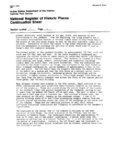
Show . . . FomI I04IIIN (NIl United States Department of the Interior National Park Service National Register of Historic Places Continuation Sheet Section number _..;;:.8_ _ Page ---::3:....-_ petitioned Congress for admission to the Union as the State of Deseret. The i r petition was denied , and instead Utah Territory was created by the Compromise of 1850. The new residents of Utah endured territorial status for 46 more years, until 2 decades after Young's death. The murder in 1853 of a Federal railroad survey crew blamed on the Mormons, along with prejudice against Mormon doctrine and practices, especially polygamy, caused Mormon-Federal relations to deteri6rate rapidly after the creation of the Utah Territory. In 1854 President Franklin Pierce refused t o nominate Brigham Young to a second term as Territorial Governor. Pierce relented under pressure, however, and allowed Young to continue in office. But Mormon relations with the Federal Government reached a nadir in 1856. A second petition for Statehood failed, and the Territorial Secretary Almon W. Babbitt . appoin ted by President James Buchanan, was killed by Indians in Wyoming. Again Mormons were blamed. Conflict with the Federal Government focused primarily on the judiciary appointed to the territory by the Federal Government. After the office of Justice George P. Stiles was raided and his papers burned in the summer of 1857, he reported back in Washington that the Mormon community was in rebell i on against the U.S. Government. Within a month President Buchanan issued another revocation of Young's governorship and commanded General W.S. Harney to Utah with the Army of the West to put down the alleged rebellion. Young declared martial law in the territory and ordered MOl~on colonie~ elsewhere to gather for the defense of Zion; the Utah militia began drills. This commenced the so-called "Utah War." But reports by Federal officers sent to interview Young were sympathetic, and the conflici; was defused. Captain Ste~/ard Van Vliet, sent to talk with Governor Young, reported a "cordial reception" in which he had a personal tour of Beehive and Lion Houses and was allowed to se~ the workings of what he called the "peculiar institution" (of polygamy). The Mountain Meadow Massacre of a party of gentile migrants in southern Utah in September 1857, threatened to renew hostilities. However, scandals in \<,'ashington, the revelation that several million dollars were spent on the Utah campaign, and the realization that the Mormons intended to put up a strong defense, turned public sentiment against the Federal administration instead of the ~10rmons. The Utah War was renamed "Buchanan's Blunder" in popular folklore. Meanwhile the Civil War began to occupy the U.S. Government and military, providing tho Mormons a respite froID Federal intervention in their afrp.irs. In 1862 a third constitution was drawn up for the "State of Deseret"; Young was again elected C~vernor and a legislature formed. Rather than grant Statehood to the Mormons, however, Congress passed a new law against polygamy (Morrill Anti-Bigamy Act of 1862), and for a second time troops were dispatched to Utah. Celonel Patrick EdwA.rd Connor led 300 California-Nevada volunteers |