| OCR Text |
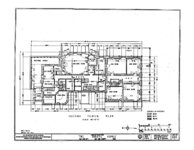
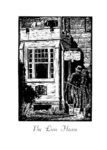
Show United State. Department of the Interior National Park Service National Register of Historic Places ' Continuation Sheet Section number _8_ _ Page ....;1=1_ _ prayers. The main parlor at Lion House also served as the ent::iiinment room for those of "fa£~er's girls," as Young's daughters called the "', 1ves, who were of courting age. " . The "favorite wives," Emeline, Lucy Bige).ow, and Clara Decker, received Mormon callers in their rooms on this level. (Gentiles were received usually only at the Beehive House . ) Emeline first resided at the northwest end of the house but was moved up to just behind the prayer parlor because, as one observer alleged , "Brigham, in going to her' room, was obliged to pass several other rooms, thus creating remark and jealousy aatOng the other' Women. He therefore had a hall constructed leading from his office to her new room." Youn&~often moved wives with numerous children to outside residences. With the in'c reasing number of wives, he moved Mary Ann Angelleand her five' chi:~ren to the separate "White House" in 1854 on the same block. ~ . ' The 20 bedrooms on the second ~story of L~on House, marked on t he exterior by the 10 gables on each longitudinal side of the house , symbolized Young' s intent to provide "equal comforts" for his wives according to their child-bearing roles in the family . Just as the: dining" arrangement reflected a hierarchy related to propagation, "the living space of individual wives rev. ed their rank in the family order~ Whil~ most wives with chi ldren had thei r bedrooms on the main floor connected to their-sitting rooms, thosec~o were childless , along with one or two h~red hands, had both sitting roam and bedroom upstairs where the rooms essentially were identical . The rest of the 20 chambers were occupied by the children .. ;r; ;;:;.' Besides providing formal ' space to offer hospi tali ty in a more tradi ~7.on~ ." atmosphere to non-Mormon ~ "isitors, Beehive House was Young"s primary personal domicile where he combined business and leisure. His private office on the first story in the southwest corner was connected to the Governor and President's Offices via a private entry. This office in Beehive House is restored to what was believed to be its original condition as "a plain, neat, room" over 25 feet square, and "furnished with a large writing-desk and money safe, tables, sofas, chairs and a 'store' carpet." Behind it was Young's private bedroom in Beehive House "where no one could enter without special permission. If he wished the company of one of his wives, an observer recalled, "he notified her by measagej when ill, he chose one of them to care for him." In the summer he inhabited a large chamber in Beehive House with a high vaulted ceiling on the east side of the second story over the reception room. In winter he slept on theff"rst floor in a smaller chamber across from the parlor on the west and behind his private office . As he slep~ fairly late after work~ag the quieter eveningsJ he at e a "quiet breakfast" -~ft ~he official residence. The north end of the origirtal house contained a large .kitchen and men's dining room . An elaborate 1890s addition has obliterated a sense of the original interior space of this wing. -¥ |